About this artwork
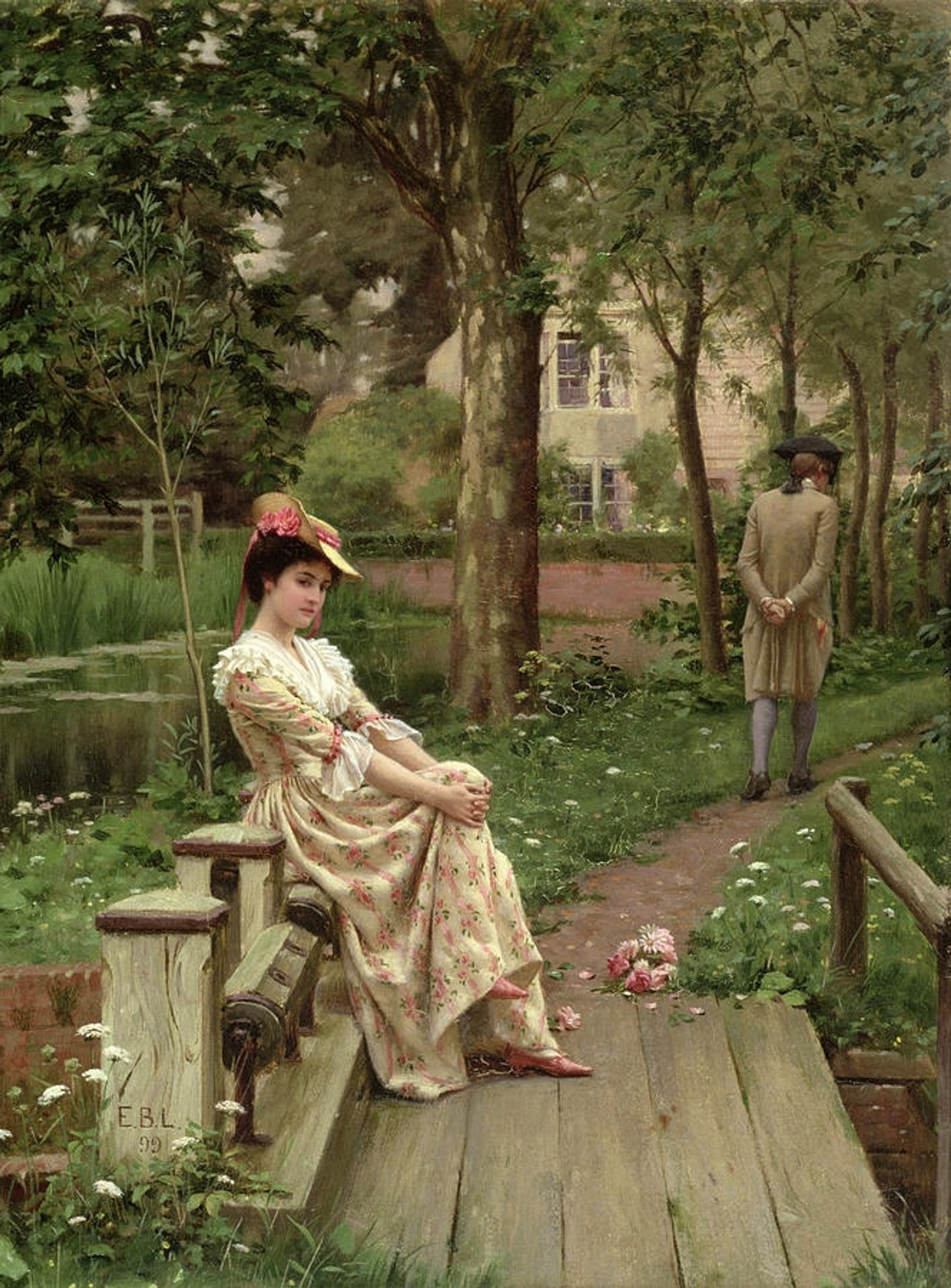
Painted in 1901 by Edmund Blair Leighton, this scene unfolds with a bouquet of scattered roses at the feet of our forlorn maiden. Flowers, especially roses, traditionally symbolize love and beauty. Yet, strewn and discarded as they are here, they evoke a painful ending. This motif echoes through centuries; think of Ophelia, from Hamlet, adorned with wildflowers before her tragic end. The rejected bouquet carries a powerful emotional charge. The averted gaze and slumped posture of the woman convey a sense of defeat, a visual language reminiscent of countless depictions of grief and heartbreak. This echoes through time. It reflects a shared human experience, where collective memory and subconscious understanding amplify the image's impact, engaging viewers on a deeply personal level. The symbol resurfaces, ever evolving, yet rooted in our collective consciousness.

Artwork details
- Location
- Manchester Art Gallery, Manchester, UK
- Copyright
- Public domain
Comments
Be the first to share your thoughts about this work.
About this artwork
Painted in 1901 by Edmund Blair Leighton, this scene unfolds with a bouquet of scattered roses at the feet of our forlorn maiden. Flowers, especially roses, traditionally symbolize love and beauty. Yet, strewn and discarded as they are here, they evoke a painful ending. This motif echoes through centuries; think of Ophelia, from Hamlet, adorned with wildflowers before her tragic end. The rejected bouquet carries a powerful emotional charge. The averted gaze and slumped posture of the woman convey a sense of defeat, a visual language reminiscent of countless depictions of grief and heartbreak. This echoes through time. It reflects a shared human experience, where collective memory and subconscious understanding amplify the image's impact, engaging viewers on a deeply personal level. The symbol resurfaces, ever evolving, yet rooted in our collective consciousness.
Comments
Be the first to share your thoughts about this work.