About this artwork
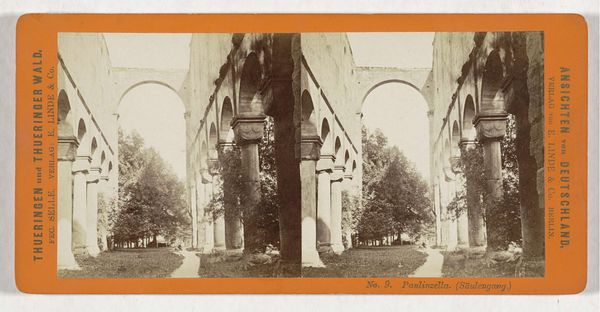
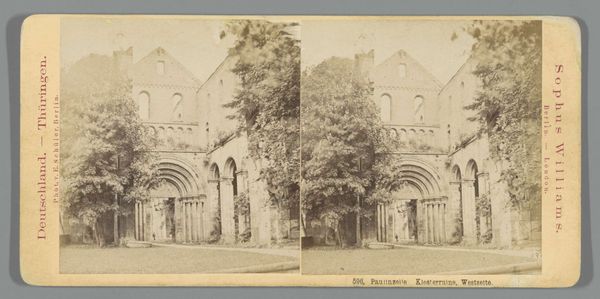
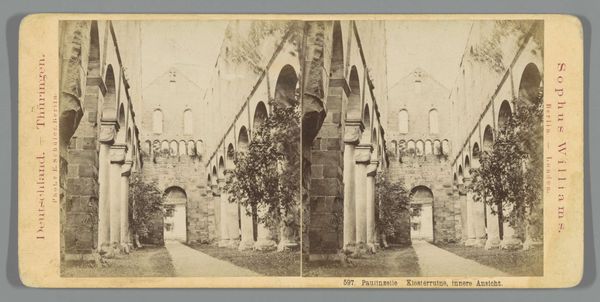
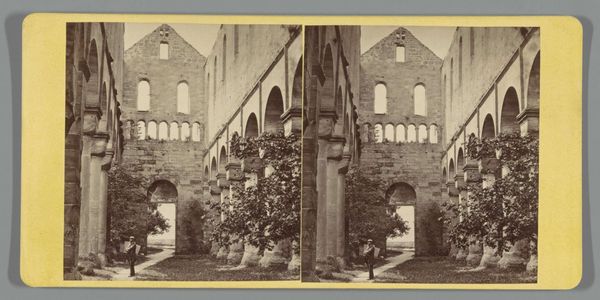
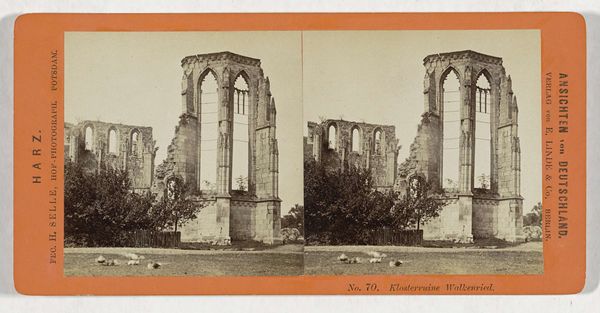
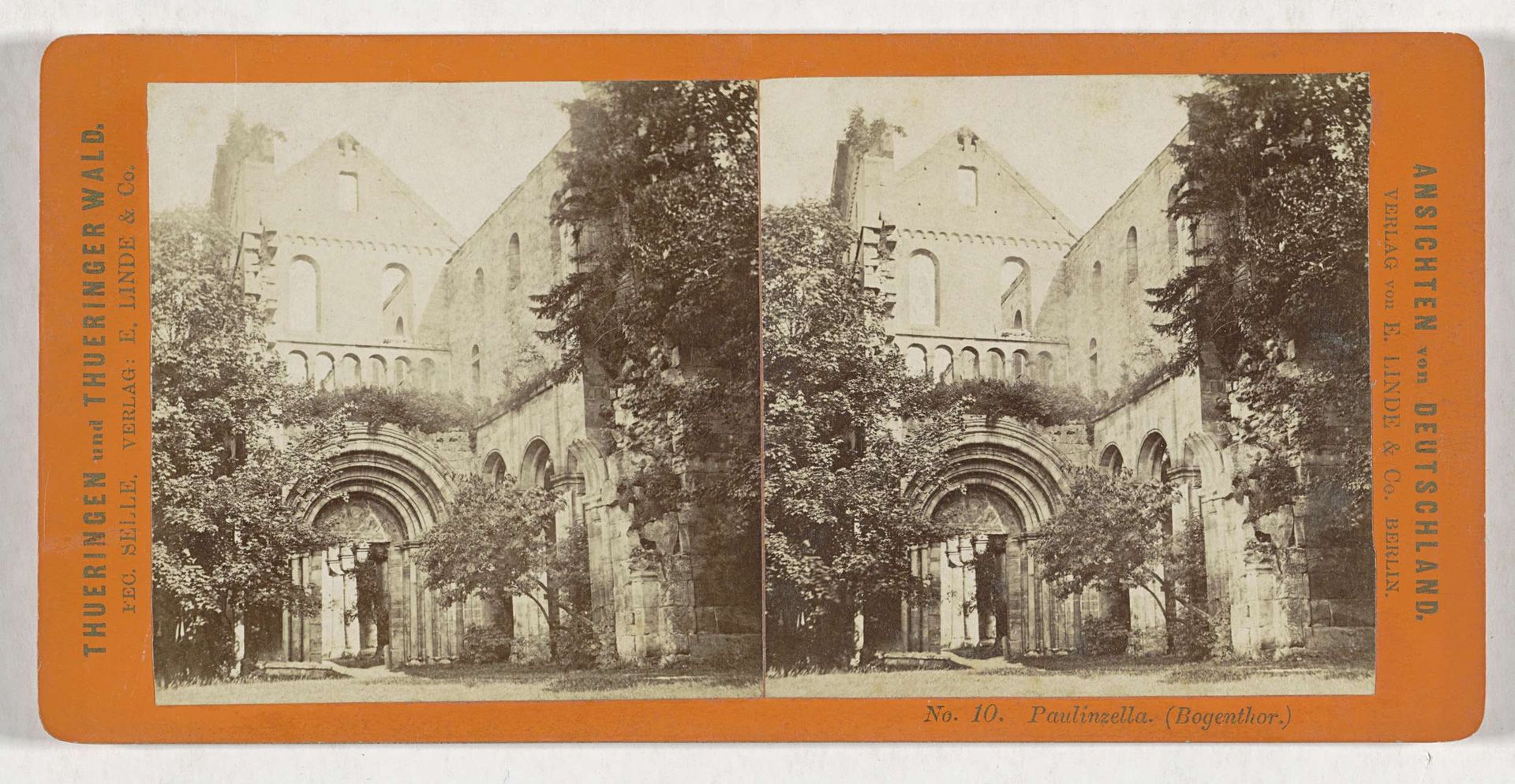
Hermann Selle made this albumen print of the Paulinzella monastery ruin in Germany during an era captivated by Romanticism and burgeoning national identity. The image presents a crumbling yet majestic monastery, its arches and walls softened by the embrace of nature, visually evoking the medieval past. Monasteries were once central to social, economic, and religious life. However, the image of a ruin reflects the shifting tides of power and the impact of secularization on religious institutions. Selle's photograph captures the visual codes of Romanticism, emphasizing the sublime beauty of decay and the evocative power of historical sites. These images, circulated as stereo cards, served to construct a collective memory and a sense of shared heritage. As historians, we look to archives, local histories, and institutional records to piece together the complex web of meaning behind this image, recognizing that its power lies not just in the aesthetic representation, but also in its connection to broader social and cultural transformations.

Artwork details
- Dimensions
- height 87 mm, width 177 mm
- Copyright
- Rijks Museum: Open Domain
Comments
No comments
About this artwork
Hermann Selle made this albumen print of the Paulinzella monastery ruin in Germany during an era captivated by Romanticism and burgeoning national identity. The image presents a crumbling yet majestic monastery, its arches and walls softened by the embrace of nature, visually evoking the medieval past. Monasteries were once central to social, economic, and religious life. However, the image of a ruin reflects the shifting tides of power and the impact of secularization on religious institutions. Selle's photograph captures the visual codes of Romanticism, emphasizing the sublime beauty of decay and the evocative power of historical sites. These images, circulated as stereo cards, served to construct a collective memory and a sense of shared heritage. As historians, we look to archives, local histories, and institutional records to piece together the complex web of meaning behind this image, recognizing that its power lies not just in the aesthetic representation, but also in its connection to broader social and cultural transformations.
Comments
No comments