

About this artwork
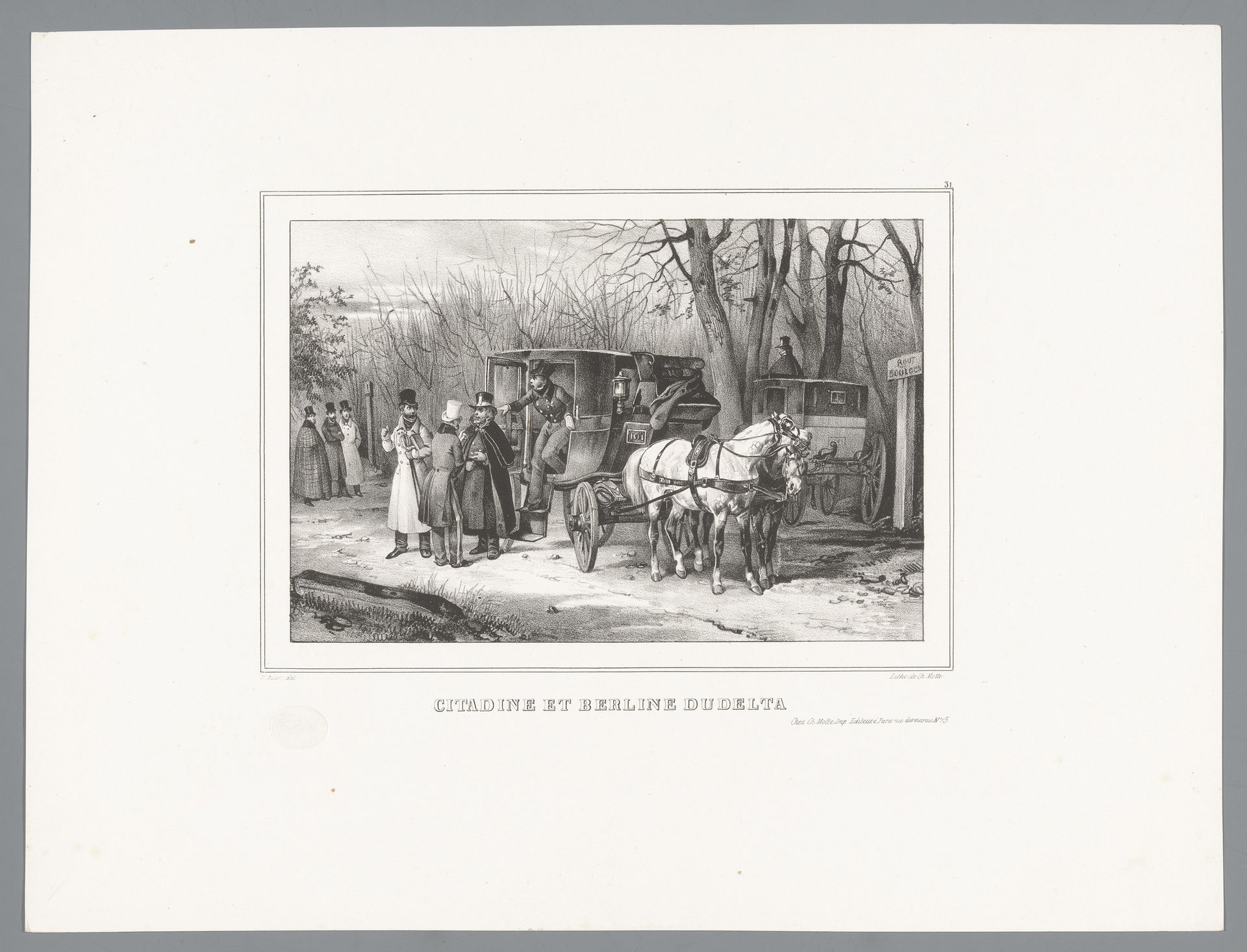
Victor Adam created this print, 'Citadine'-omnibus en berline buiten de stad, depicting a scene outside a city with horse-drawn carriages and figures, at an unknown date. Adam, born in the early 19th century, lived during a time of significant social and technological change, including industrialization and urbanization, impacting class structures and lifestyles. Consider how the artist captures a moment of transition and intersectionality through this artwork. The figures, with their diverse attire and interactions, suggest a complex social hierarchy. The carriages themselves symbolize mobility and status, reflecting the class divisions of the era. The scene seems to capture a moment outside of the city when different groups come together. This artwork evokes the tension between the romanticism of rural life and the burgeoning urban experience. It serves as a snapshot of a society in flux, reminding us of the intricate ways in which identity, class, and mobility were negotiated in the past.

Artwork details
- Medium
- drawing, print, engraving
- Dimensions
- height 262 mm, width 345 mm
- Location
- Rijksmuseum
- Copyright
- Rijks Museum: Open Domain
Tags
Comments
Share your thoughts
About this artwork
Victor Adam created this print, 'Citadine'-omnibus en berline buiten de stad, depicting a scene outside a city with horse-drawn carriages and figures, at an unknown date. Adam, born in the early 19th century, lived during a time of significant social and technological change, including industrialization and urbanization, impacting class structures and lifestyles. Consider how the artist captures a moment of transition and intersectionality through this artwork. The figures, with their diverse attire and interactions, suggest a complex social hierarchy. The carriages themselves symbolize mobility and status, reflecting the class divisions of the era. The scene seems to capture a moment outside of the city when different groups come together. This artwork evokes the tension between the romanticism of rural life and the burgeoning urban experience. It serves as a snapshot of a society in flux, reminding us of the intricate ways in which identity, class, and mobility were negotiated in the past.
Comments
Share your thoughts