About this artwork
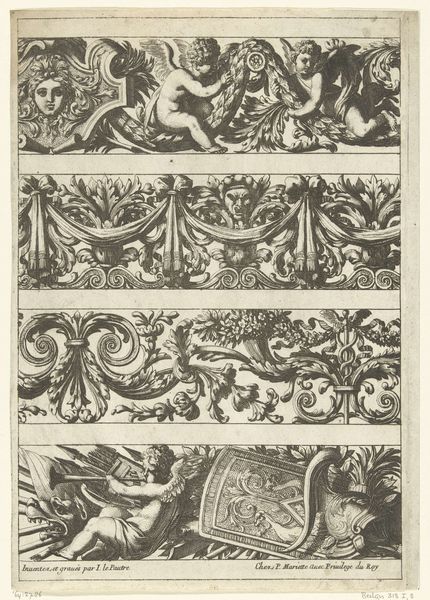
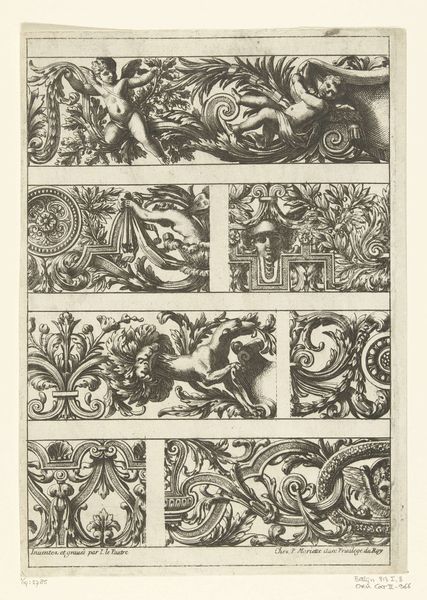
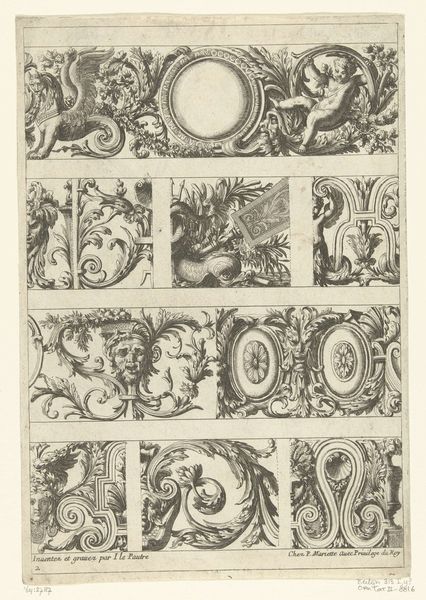
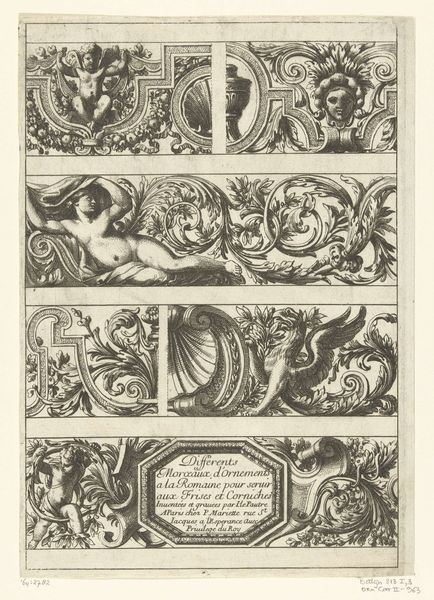
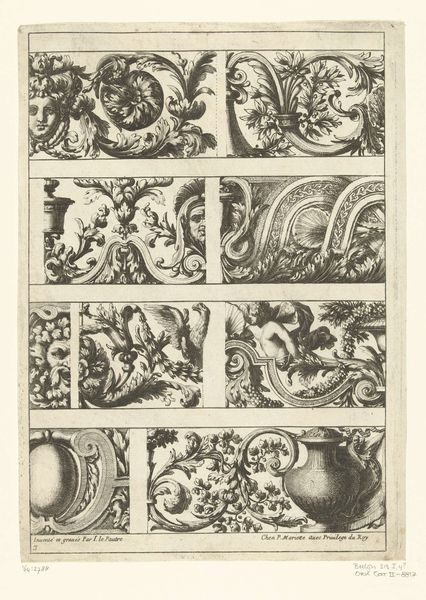
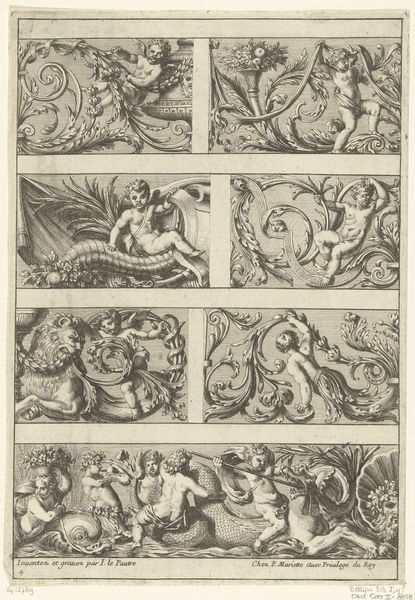
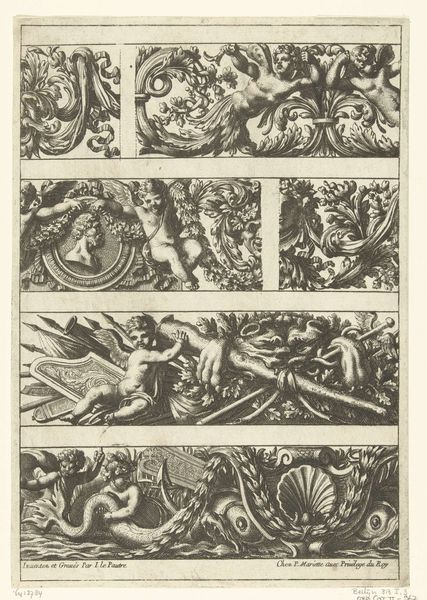
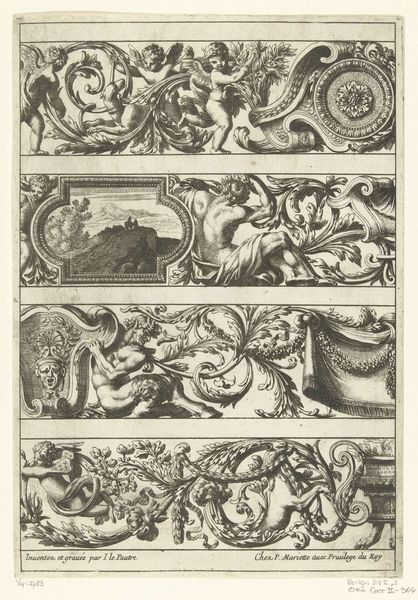
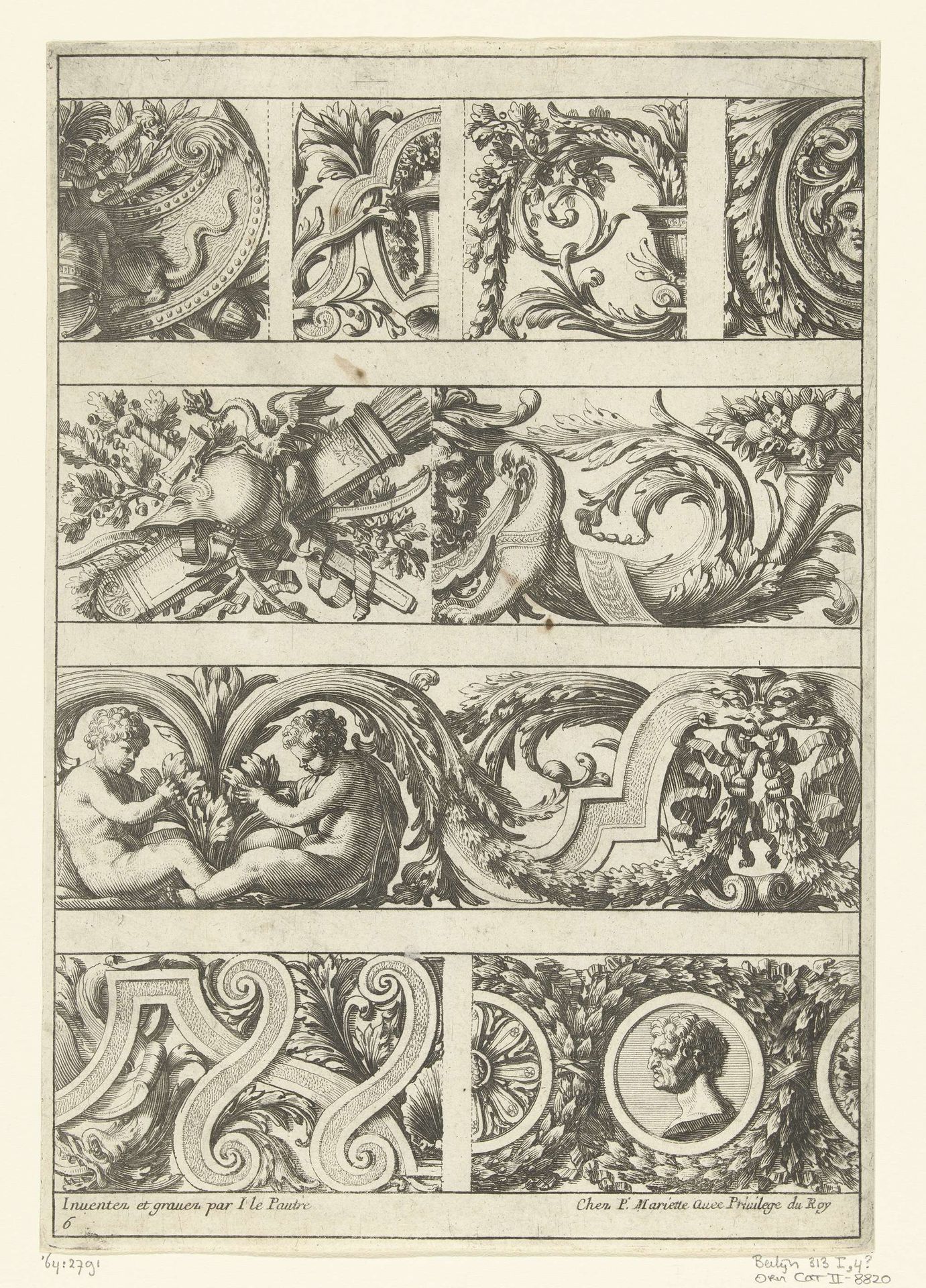
Editor: This is "Vier rijen friezen," or "Four Rows of Friezes," a drawing and engraving made before 1716 by Jean Lepautre. It’s a meticulously detailed piece. What strikes me most is the sheer density of ornamentation – it feels incredibly rich and elaborate. What do you make of it? Curator: These aren't merely decorative flourishes, are they? Lepautre is offering us a visual vocabulary, a glimpse into the symbolic language of the Baroque. Observe the recurring motifs: weaponry, flora, human figures. Consider what each of these symbols might have communicated to a 17th-century viewer. What do you think the inclusion of weaponry might signify? Editor: Power, status, maybe military prowess? But then you have these playful cherubs right below, seemingly at odds with the martial imagery. Curator: Precisely. It's not about direct contradiction but rather layered meanings. The cherubs evoke innocence and playfulness. Remember that the Baroque loved contrast and complexity. These images weren't just adornments, but carriers of cultural memory, evoking classical ideals but filtered through a Christian lens. Notice the classical profile at the bottom – a symbol of wisdom and tradition. It's about connecting with a grand past while celebrating contemporary power and luxury. How does this layering of symbolism affect your understanding? Editor: It definitely makes me think of how the present is always built upon past ideas and motifs. I initially saw only decoration, but now I recognize how meticulously assembled these historical references were and how they were arranged in conversation. Curator: Yes! The frieze becomes a canvas upon which ideas of power, legacy, and cultural identity are projected and continually reinterpreted. It speaks volumes about the enduring power of visual symbols and how they shape our understanding of the world.

Artwork details
- Medium
- drawing, print, engraving
- Dimensions
- height 273 mm, width 188 mm
- Location
- Rijksmuseum
- Copyright
- Rijks Museum: Open Domain
Tags
drawing
baroque
pen drawing
old engraving style
pen-ink sketch
pen work
history-painting
engraving
Comments
No comments
About this artwork
Editor: This is "Vier rijen friezen," or "Four Rows of Friezes," a drawing and engraving made before 1716 by Jean Lepautre. It’s a meticulously detailed piece. What strikes me most is the sheer density of ornamentation – it feels incredibly rich and elaborate. What do you make of it? Curator: These aren't merely decorative flourishes, are they? Lepautre is offering us a visual vocabulary, a glimpse into the symbolic language of the Baroque. Observe the recurring motifs: weaponry, flora, human figures. Consider what each of these symbols might have communicated to a 17th-century viewer. What do you think the inclusion of weaponry might signify? Editor: Power, status, maybe military prowess? But then you have these playful cherubs right below, seemingly at odds with the martial imagery. Curator: Precisely. It's not about direct contradiction but rather layered meanings. The cherubs evoke innocence and playfulness. Remember that the Baroque loved contrast and complexity. These images weren't just adornments, but carriers of cultural memory, evoking classical ideals but filtered through a Christian lens. Notice the classical profile at the bottom – a symbol of wisdom and tradition. It's about connecting with a grand past while celebrating contemporary power and luxury. How does this layering of symbolism affect your understanding? Editor: It definitely makes me think of how the present is always built upon past ideas and motifs. I initially saw only decoration, but now I recognize how meticulously assembled these historical references were and how they were arranged in conversation. Curator: Yes! The frieze becomes a canvas upon which ideas of power, legacy, and cultural identity are projected and continually reinterpreted. It speaks volumes about the enduring power of visual symbols and how they shape our understanding of the world.
Comments
No comments