About this artwork
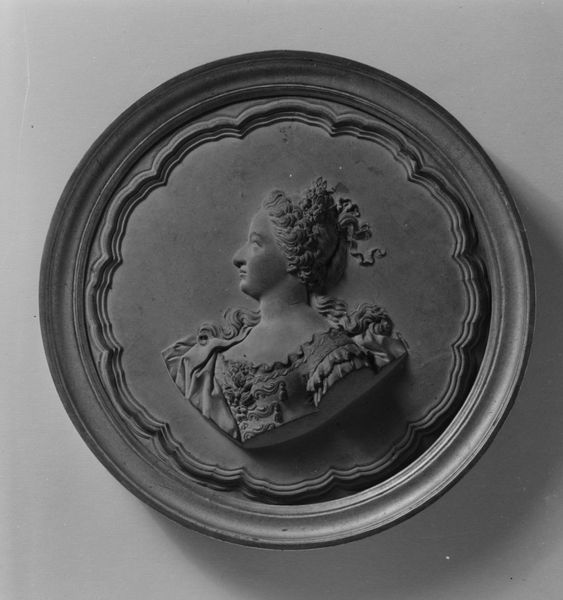
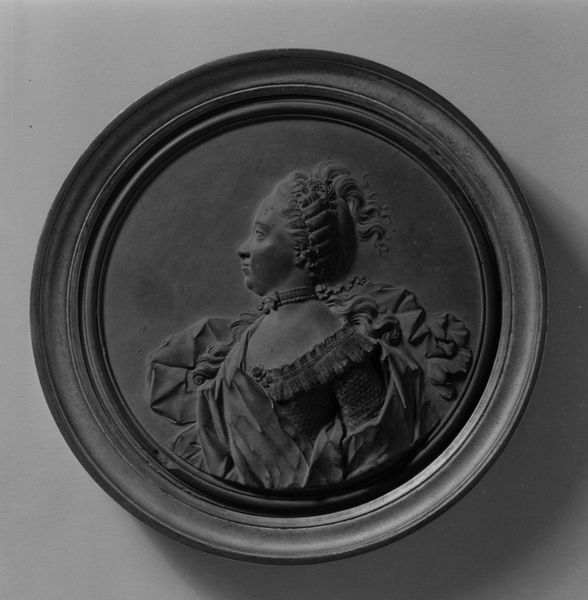
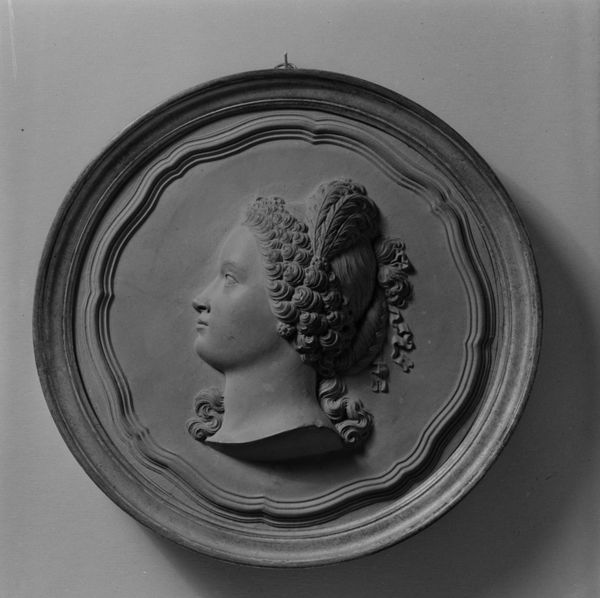
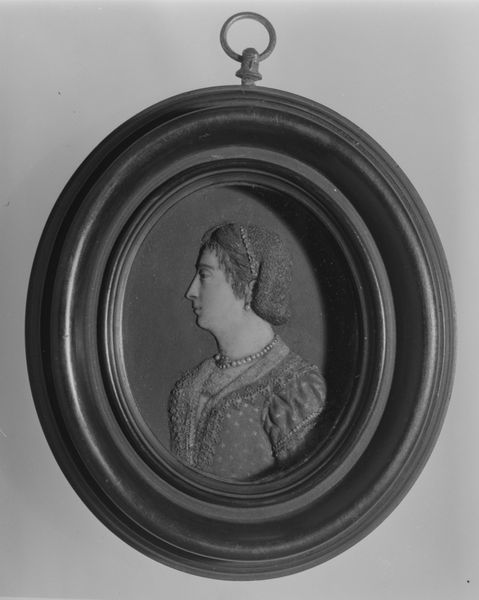
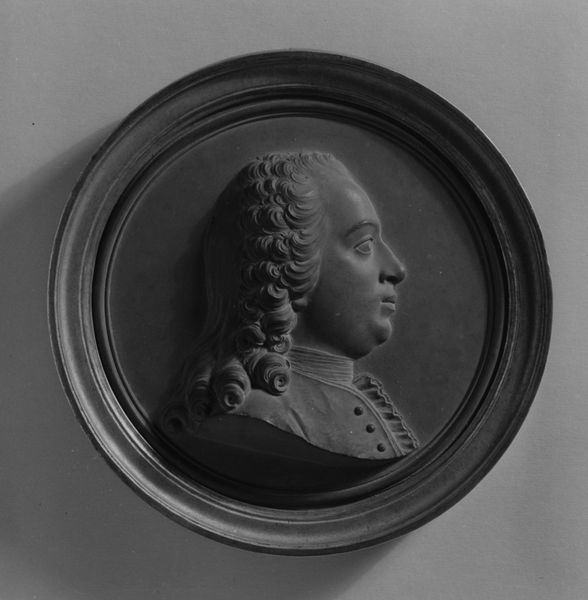
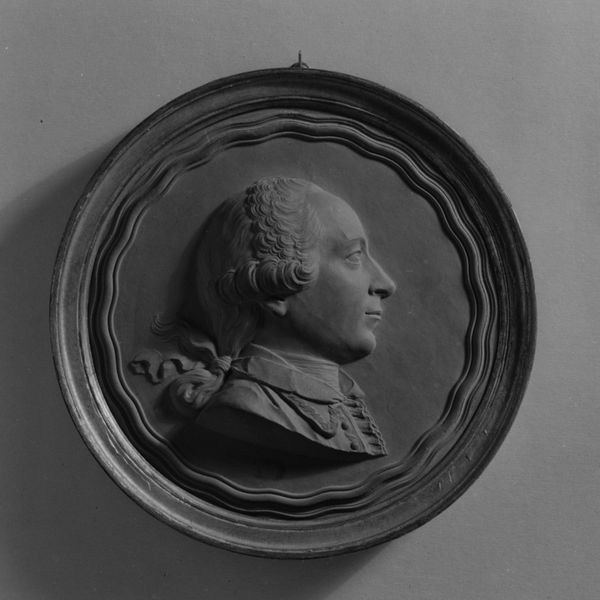
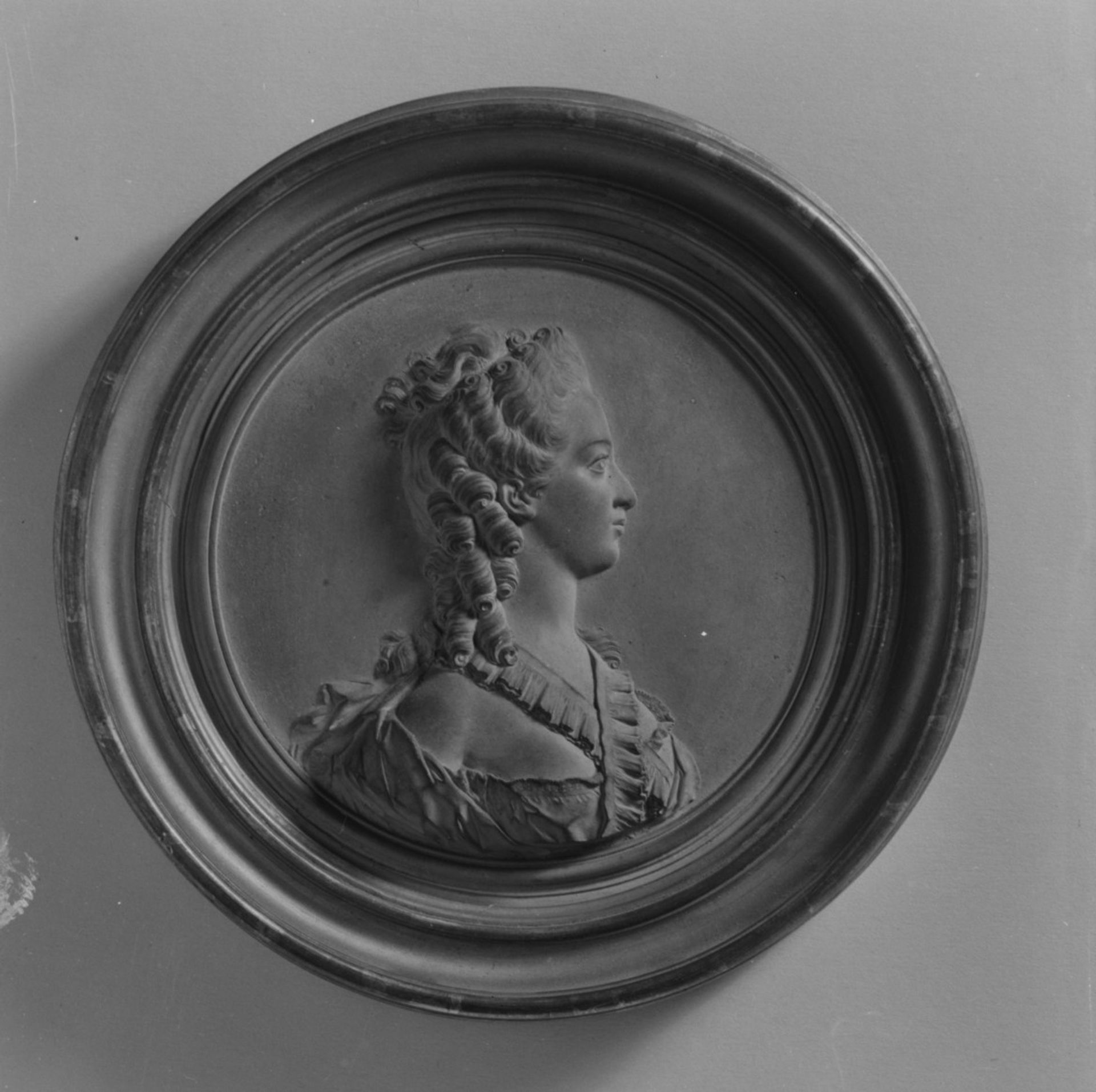
Jean-Baptiste Nini created this terracotta roundel of Suzanne-Elisabeth-Françoise de Jarente de La Reynière in 18th century France. The formal qualities, like the precise modeling, are remarkable, but so is the image’s engagement with the visual codes of aristocratic power. Consider the elaborate hairstyle, a fashionable symbol of status, and the sharp profile view, reminiscent of royal portraiture. The work reflects the hierarchies of French society, where the aristocracy wielded immense social and political influence. Nini was an Italian sculptor who worked for much of his career in France, for instance directing the pottery factory at Chaumont-sur-Loire. As such, this artwork serves as a document of the art institutions of the time, which were supported by wealthy patrons and served to reinforce social hierarchies. To truly understand this artwork, we can consult historical records, fashion plates, and genealogical information. This piece is a reminder that art is not created in a vacuum, but is deeply intertwined with the social and institutional contexts of its time.
Suzanne-Elisabeth-Françoise de Jarente de La Reynière
1769


Artwork details
- Medium
- relief, sculpture
- Dimensions
- Diameter (without frame): 6 in. (15.2 cm)
- Location
- Metropolitan Museum of Art, New York, NY
- Copyright
- Public Domain
Tags
Comments
Share your thoughts
About this artwork
Jean-Baptiste Nini created this terracotta roundel of Suzanne-Elisabeth-Françoise de Jarente de La Reynière in 18th century France. The formal qualities, like the precise modeling, are remarkable, but so is the image’s engagement with the visual codes of aristocratic power. Consider the elaborate hairstyle, a fashionable symbol of status, and the sharp profile view, reminiscent of royal portraiture. The work reflects the hierarchies of French society, where the aristocracy wielded immense social and political influence. Nini was an Italian sculptor who worked for much of his career in France, for instance directing the pottery factory at Chaumont-sur-Loire. As such, this artwork serves as a document of the art institutions of the time, which were supported by wealthy patrons and served to reinforce social hierarchies. To truly understand this artwork, we can consult historical records, fashion plates, and genealogical information. This piece is a reminder that art is not created in a vacuum, but is deeply intertwined with the social and institutional contexts of its time.
Comments
Share your thoughts