About this artwork
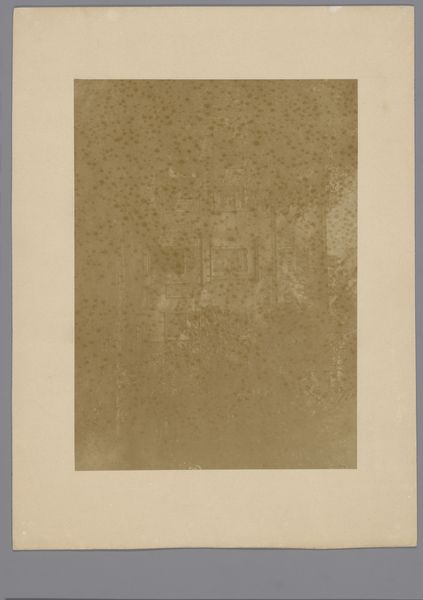
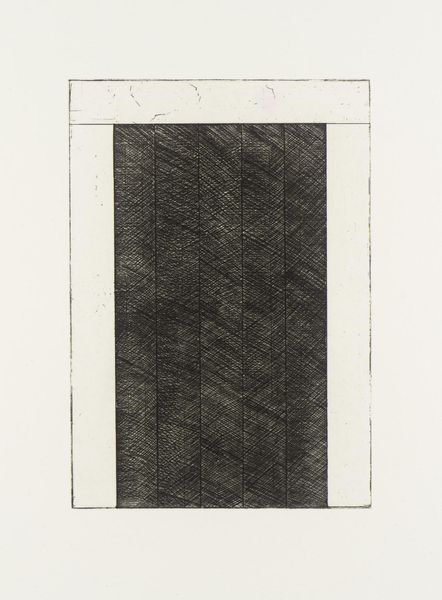
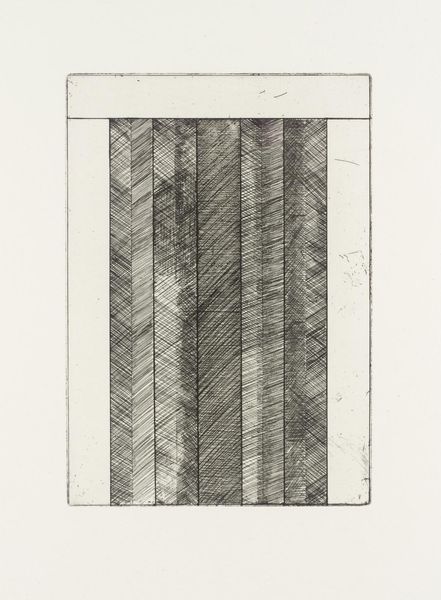
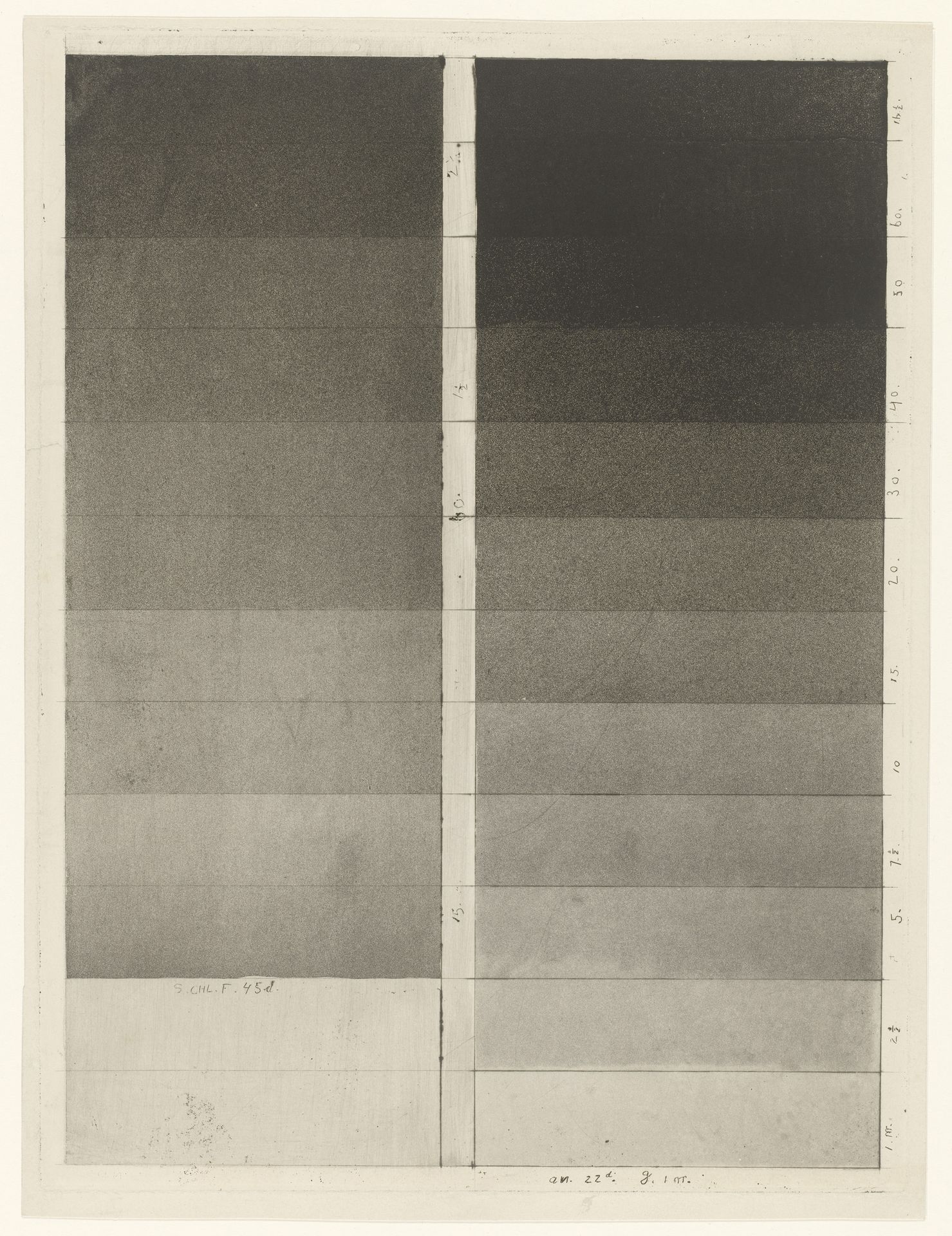
Editor: We're looking at "Proeven van aquatint-greinen," or "Tests of Aquatint Grain," made sometime between 1886 and 1912 by Emanuel Samson van Beever. It's a monochrome print, and it's basically a set of grey rectangles of varying shades. It feels almost like a study or a scientific document. What strikes you when you look at it? Curator: It's a fascinating piece. Immediately, I'm drawn to the repetition of form and value. Notice how the subtle shifts in tone create a visual rhythm, almost like a musical scale. Do you see the numerical notations alongside each rectangle? This transforms the abstract into a record. What does that suggest to you? Editor: Maybe that each rectangle corresponds to a specific formula or duration in the aquatint process? Almost like a coding key. Curator: Precisely. But consider this: aquatint itself is about capturing light and shadow, about translating three-dimensional forms into two-dimensional surfaces. This image, in a way, is the artist dissecting that very translation. How do you think this kind of rigorous testing informs van Beever’s other work? Editor: It would give his other work a strong foundation of understanding and precision with the process. He knows his materials. It is like the color theory exercises in painting class but for printmaking. Curator: Exactly! By mastering the granular nuances of aquatint, van Beever could then use it to its fullest symbolic and emotional extent. What did you gain by viewing the image today? Editor: I can better understand the nuances of tone, technique, and the bridge between technical exercise and art. Thanks!

Artwork details
- Dimensions
- height 387 mm, width 289 mm
- Copyright
- Rijks Museum: Open Domain
Comments
Share your thoughts
About this artwork
Editor: We're looking at "Proeven van aquatint-greinen," or "Tests of Aquatint Grain," made sometime between 1886 and 1912 by Emanuel Samson van Beever. It's a monochrome print, and it's basically a set of grey rectangles of varying shades. It feels almost like a study or a scientific document. What strikes you when you look at it? Curator: It's a fascinating piece. Immediately, I'm drawn to the repetition of form and value. Notice how the subtle shifts in tone create a visual rhythm, almost like a musical scale. Do you see the numerical notations alongside each rectangle? This transforms the abstract into a record. What does that suggest to you? Editor: Maybe that each rectangle corresponds to a specific formula or duration in the aquatint process? Almost like a coding key. Curator: Precisely. But consider this: aquatint itself is about capturing light and shadow, about translating three-dimensional forms into two-dimensional surfaces. This image, in a way, is the artist dissecting that very translation. How do you think this kind of rigorous testing informs van Beever’s other work? Editor: It would give his other work a strong foundation of understanding and precision with the process. He knows his materials. It is like the color theory exercises in painting class but for printmaking. Curator: Exactly! By mastering the granular nuances of aquatint, van Beever could then use it to its fullest symbolic and emotional extent. What did you gain by viewing the image today? Editor: I can better understand the nuances of tone, technique, and the bridge between technical exercise and art. Thanks!
Comments
Share your thoughts