About this artwork
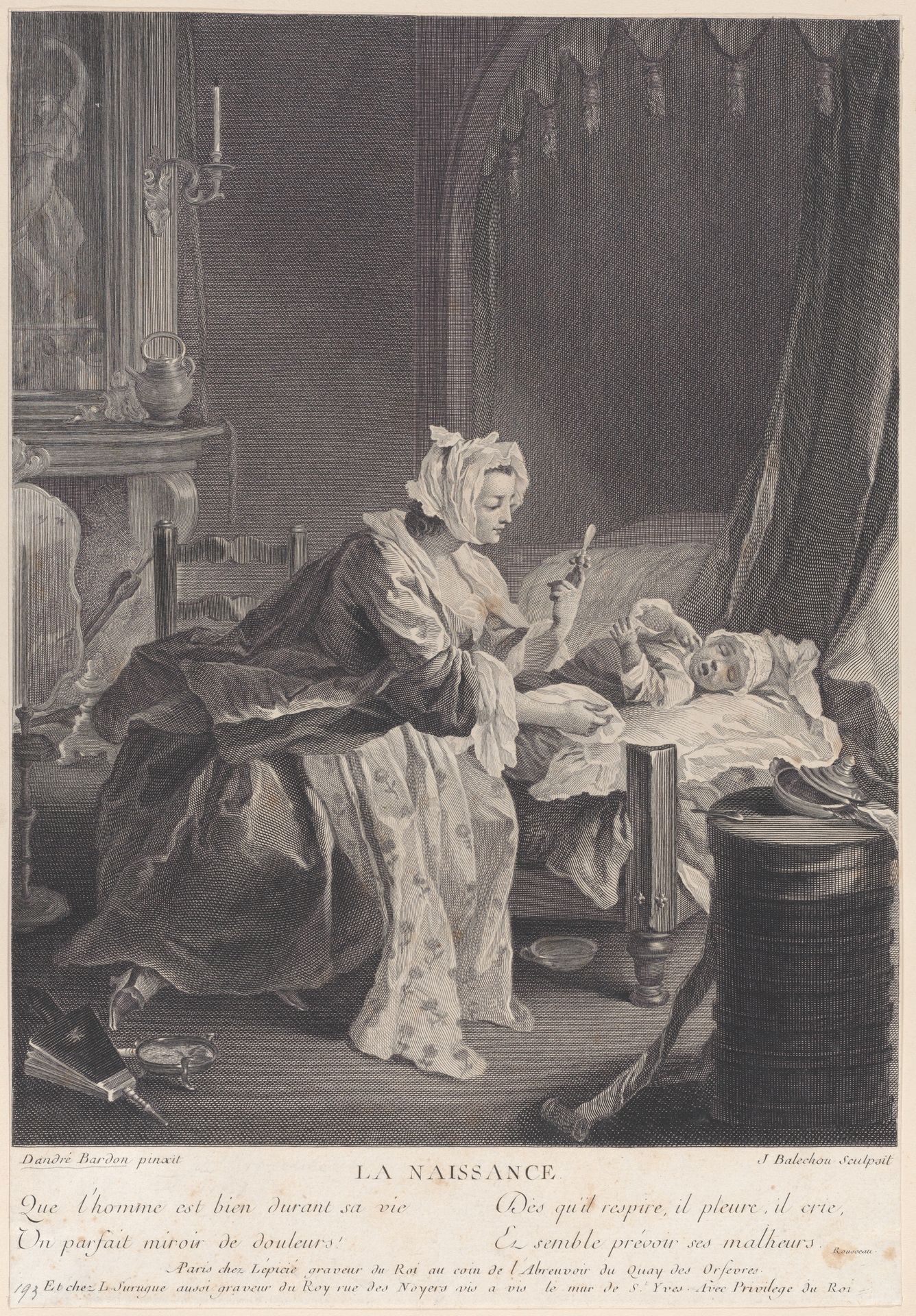
Jean-Joseph Baléchou created this print, La Naissance, or The Birth, capturing a scene imbued with the social and emotional realities of 18th-century life. The print invites us into a birthing chamber, revealing the intimate, yet fraught, experience of motherhood. During this period, childbirth was a leading cause of death for women, casting a shadow over what should have been a joyous occasion. There is a certain vulnerability in the mother's gaze, a mix of tenderness and perhaps an awareness of the perils that both she and her child faced. The presence of the caregiver underscores the communal aspect of birth, women supporting women in a society that often relegated them to domestic roles. The choice to depict birth, historically a private affair, speaks to the period’s shifting social values and a growing interest in sentimentalism, and the emotional lives of everyday people. Baléchou's work asks us to reflect on the complex interplay of life, death, and societal expectations surrounding women and motherhood.
La Naissance 1739 - 1749

Jean-Joseph Baléchou
1716 - 1764
The Metropolitan Museum of Art
Metropolitan Museum of Art, New York, NYArtwork details
- Medium
- drawing, print, engraving
- Dimensions
- Sheet (Trimmed): 14 7/8 in. × 11 in. (37.8 × 28 cm)
- Location
- Metropolitan Museum of Art, New York, NY
- Copyright
- Public Domain
Tags
drawing
baroque
genre-painting
history-painting
engraving
Comments
No comments
About this artwork
Jean-Joseph Baléchou created this print, La Naissance, or The Birth, capturing a scene imbued with the social and emotional realities of 18th-century life. The print invites us into a birthing chamber, revealing the intimate, yet fraught, experience of motherhood. During this period, childbirth was a leading cause of death for women, casting a shadow over what should have been a joyous occasion. There is a certain vulnerability in the mother's gaze, a mix of tenderness and perhaps an awareness of the perils that both she and her child faced. The presence of the caregiver underscores the communal aspect of birth, women supporting women in a society that often relegated them to domestic roles. The choice to depict birth, historically a private affair, speaks to the period’s shifting social values and a growing interest in sentimentalism, and the emotional lives of everyday people. Baléchou's work asks us to reflect on the complex interplay of life, death, and societal expectations surrounding women and motherhood.
Comments
No comments