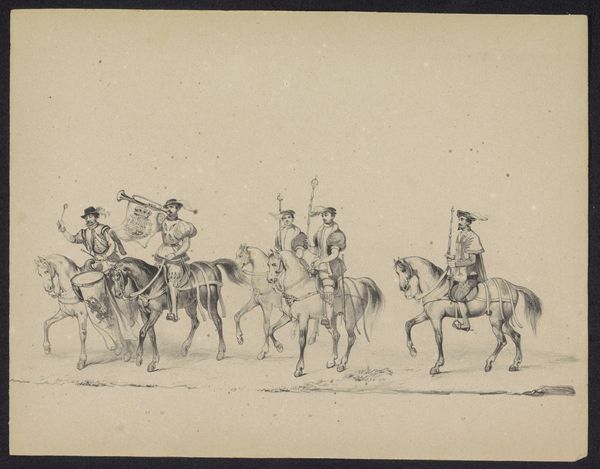
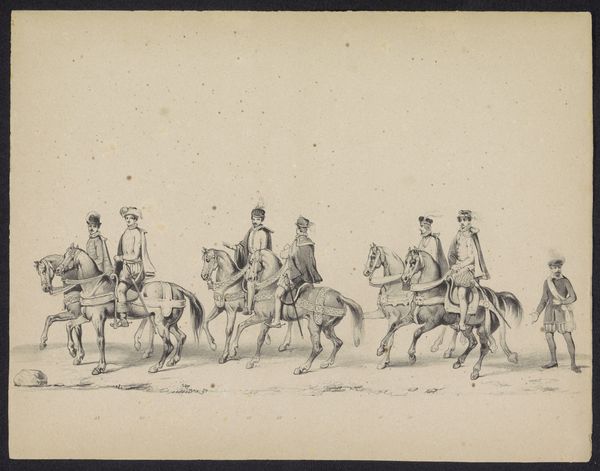
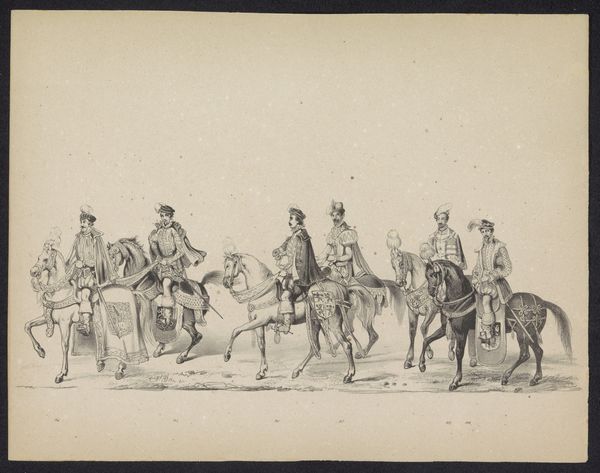
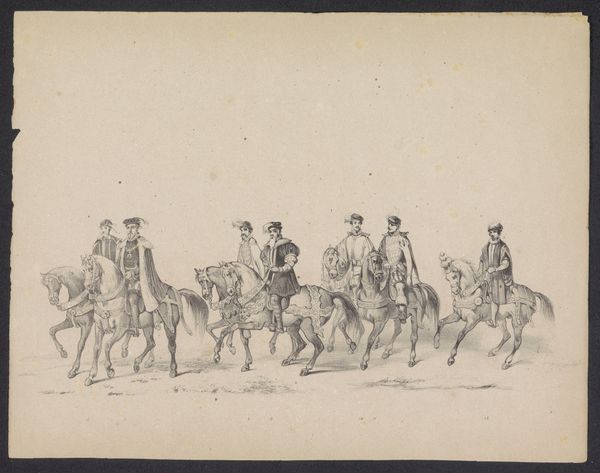
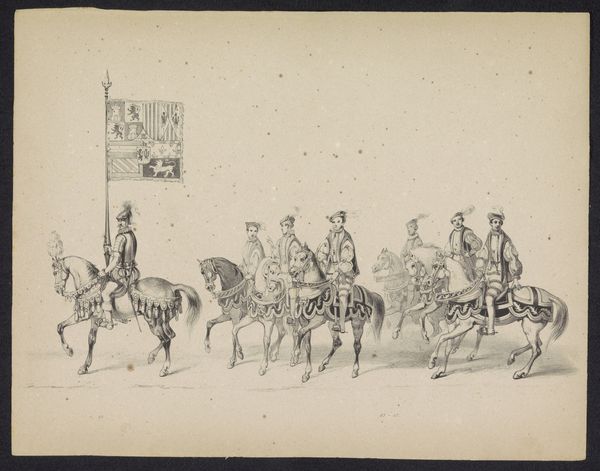
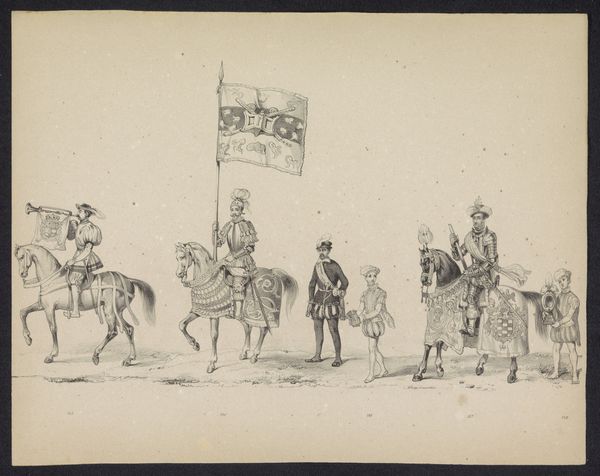
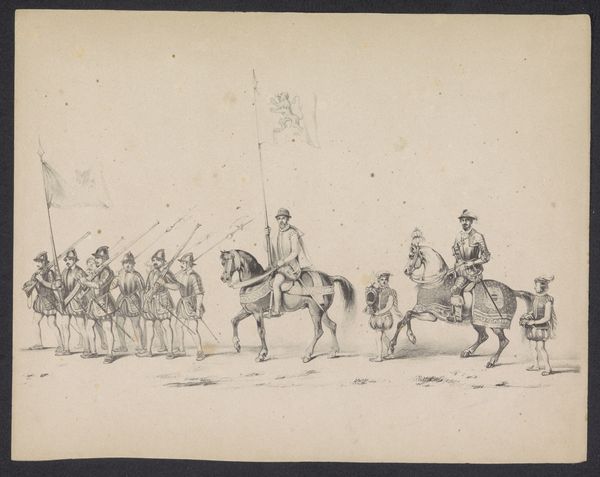
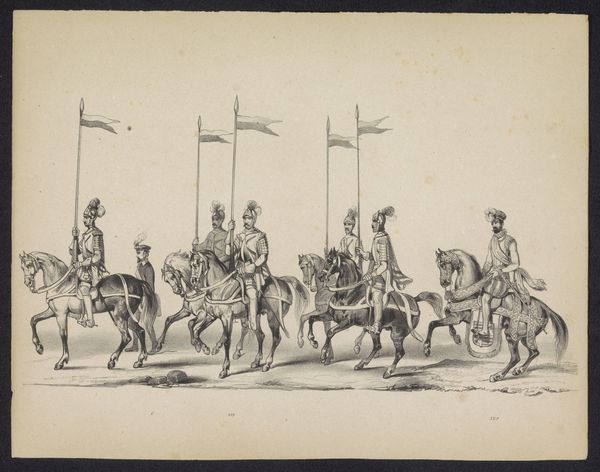
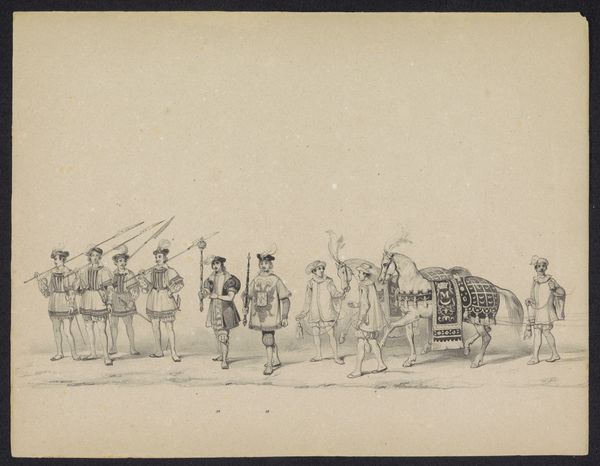
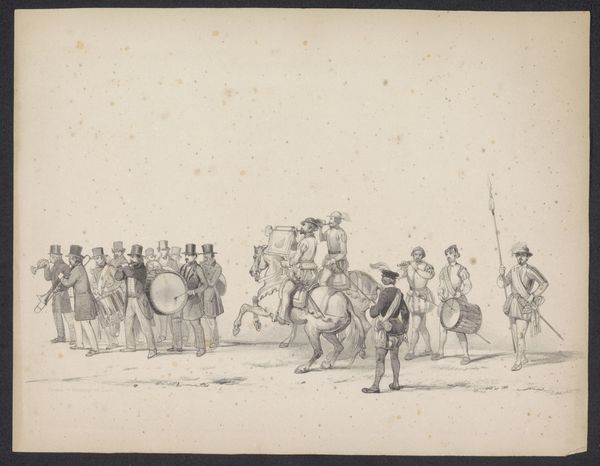
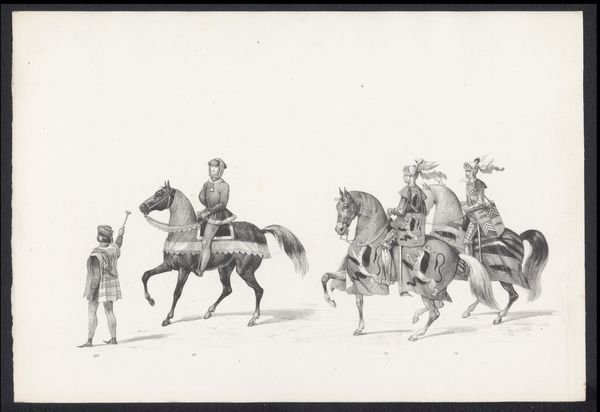
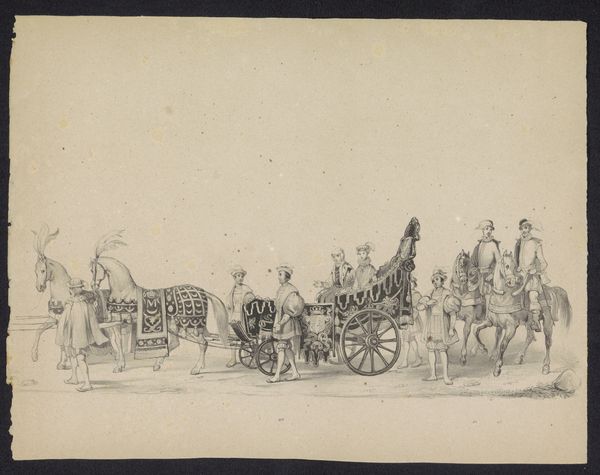
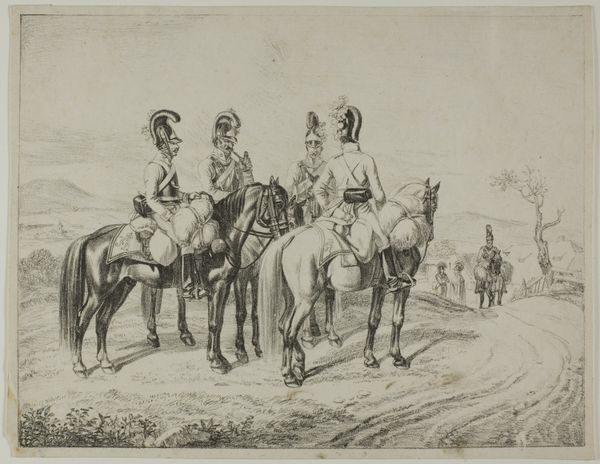
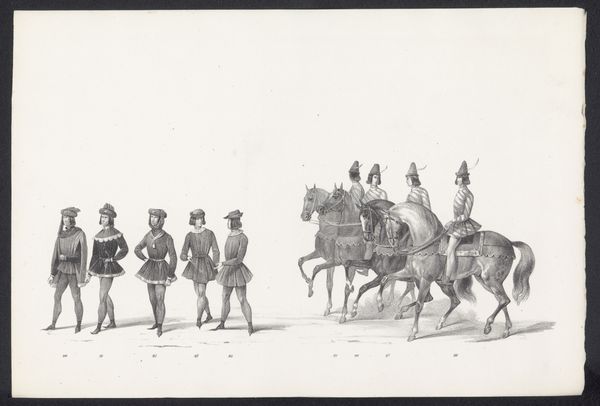
Maskerade van de Utrechtse studenten, 1846 (plaat 6) 1847

carelchristiaanantonylast
Rijksmuseum
drawing, ink, pen
portrait
drawing
ink drawing
pen illustration
pen sketch
personal sketchbook
ink
ink drawing experimentation
romanticism
pen-ink sketch
pen work
sketchbook drawing
pen
genre-painting
storyboard and sketchbook work
academic-art
sketchbook art
realism
Dimensions: height 240 mm, width 310 mm
Copyright: Rijks Museum: Open Domain
Carel Christiaan Antony Last created this drawing of the Utrecht students' masquerade in 1846. Dominating the scene, we see the double-headed eagle emblazoned on a flag, a symbol that carries the weight of empires. This striking image has ancient roots, evoking the Roman eagle, a symbol of imperial power and dominion. The double-headed eagle, which we see here, gained prominence in the Byzantine Empire, representing the dual sovereignty of the emperor over both secular and spiritual realms. The symbolic potency of the eagle is such that it continues to appear across different cultures and heraldic traditions. The flag reminds me of the Roman fasces or the standards of the legions, both emblems designed to inspire awe and project authority. The presence of these symbols suggests a deep connection to historical archetypes of power, resonating with our collective memory and perhaps tapping into subconscious associations with authority. Through such symbols, we can see how images possess a life of their own, transforming and adapting, yet always retaining a link to their origins.
Comments
No comments
Be the first to comment and join the conversation on the ultimate creative platform.
 React
React Comment