About this artwork
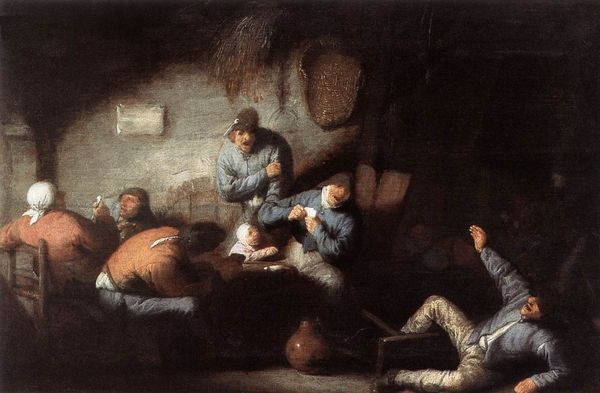
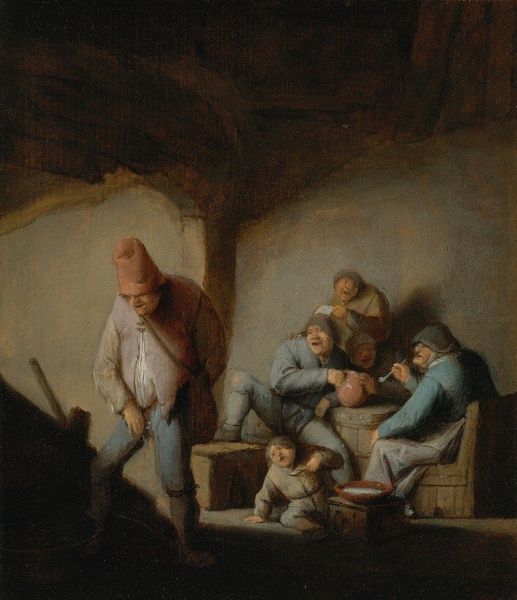
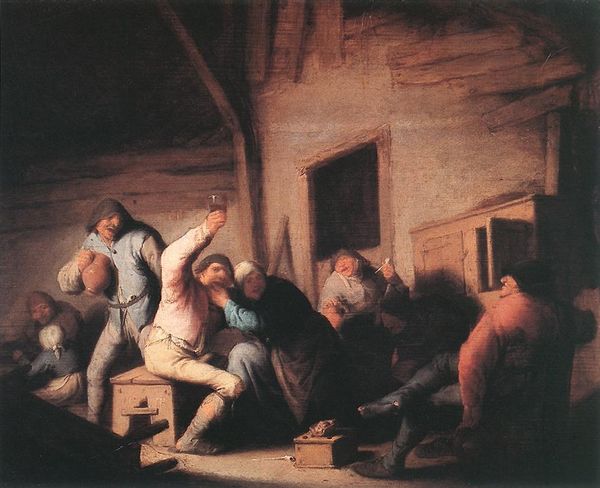
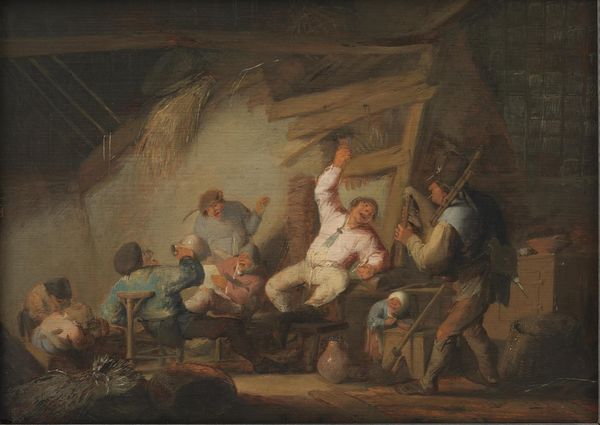
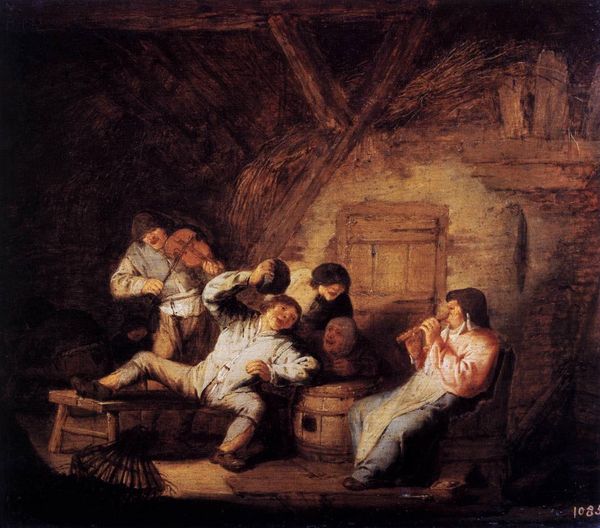
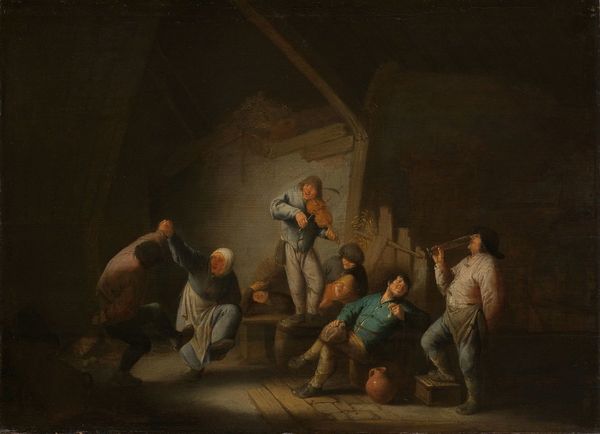
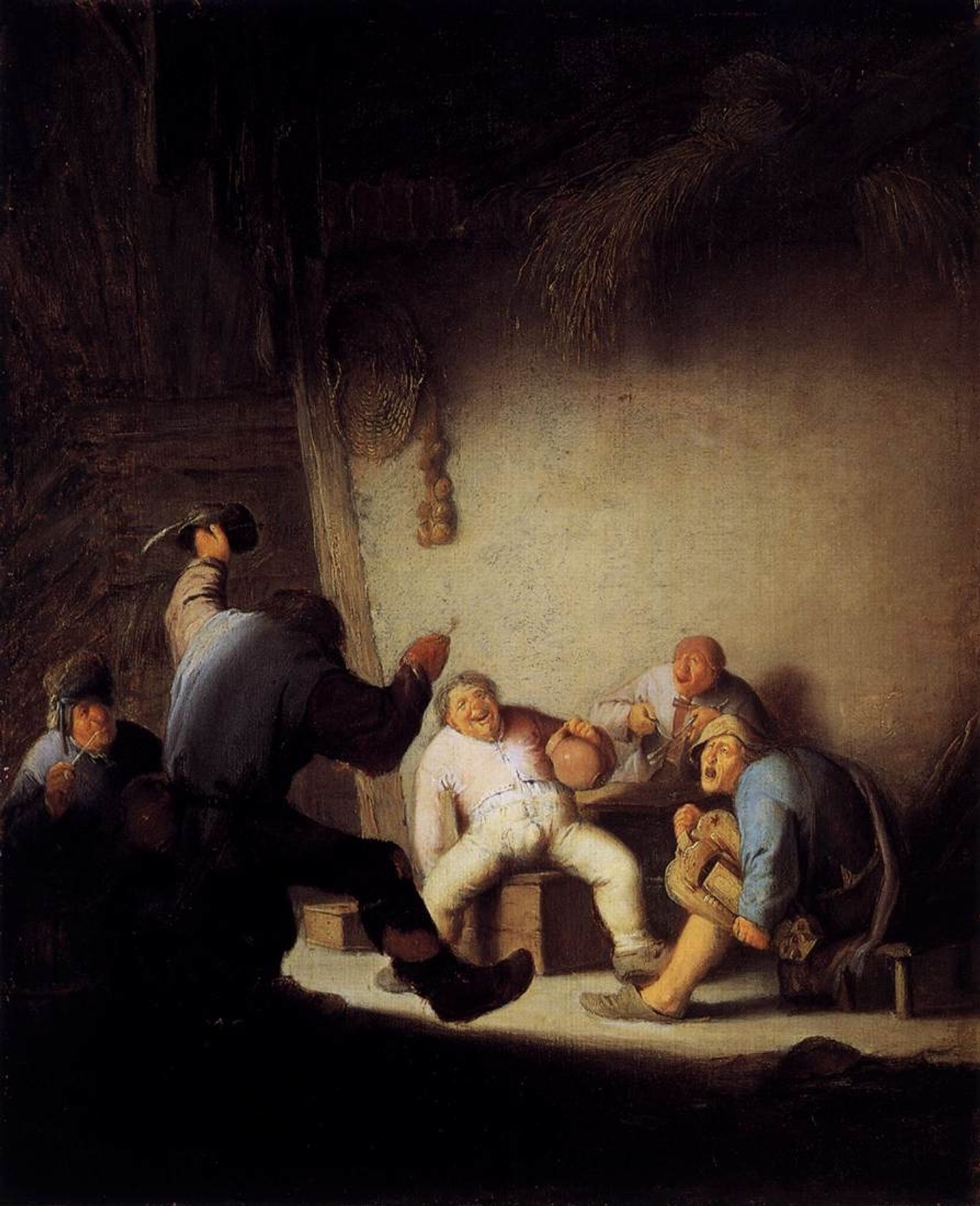
Adriaen van Ostade’s oil on panel work, Peasants Drinking and Making Music in a Barn, presents a scene of lively chaos bathed in a chiaroscuro of light and dark. The composition, contained within the modest dimensions of the panel, is a study in contrasts, setting frenetic movement against the static backdrop of the barn's interior. Van Ostade masterfully employs light, not merely to illuminate but to sculpt the forms and direct the viewer's gaze. The revelers are caught in dynamic poses, their bodies forming a series of diagonals that disrupt any sense of formal equilibrium. Here, the artist engages with the tradition of genre painting, but through his formal choices, he elevates the scene beyond a simple depiction of peasant life. This treatment reveals a keen awareness of how form can destabilize established meanings. The work’s power lies in its ability to capture a moment of pure, unadulterated expression, inviting us to consider the complex relationship between human behavior and the structures that contain it.
Peasants Drinking and Making Music in a Barn 1635

Adriaen van Ostade
1610 - 1684Location
Private CollectionArtwork details
- Medium
- painting, oil-paint
- Dimensions
- 33.7 x 27.3 cm
- Location
- Private Collection
- Copyright
- Public domain
Tags
portrait
narrative-art
baroque
dutch-golden-age
painting
oil-paint
figuration
genre-painting
Comments
No comments
About this artwork
Adriaen van Ostade’s oil on panel work, Peasants Drinking and Making Music in a Barn, presents a scene of lively chaos bathed in a chiaroscuro of light and dark. The composition, contained within the modest dimensions of the panel, is a study in contrasts, setting frenetic movement against the static backdrop of the barn's interior. Van Ostade masterfully employs light, not merely to illuminate but to sculpt the forms and direct the viewer's gaze. The revelers are caught in dynamic poses, their bodies forming a series of diagonals that disrupt any sense of formal equilibrium. Here, the artist engages with the tradition of genre painting, but through his formal choices, he elevates the scene beyond a simple depiction of peasant life. This treatment reveals a keen awareness of how form can destabilize established meanings. The work’s power lies in its ability to capture a moment of pure, unadulterated expression, inviting us to consider the complex relationship between human behavior and the structures that contain it.
Comments
No comments