About this artwork
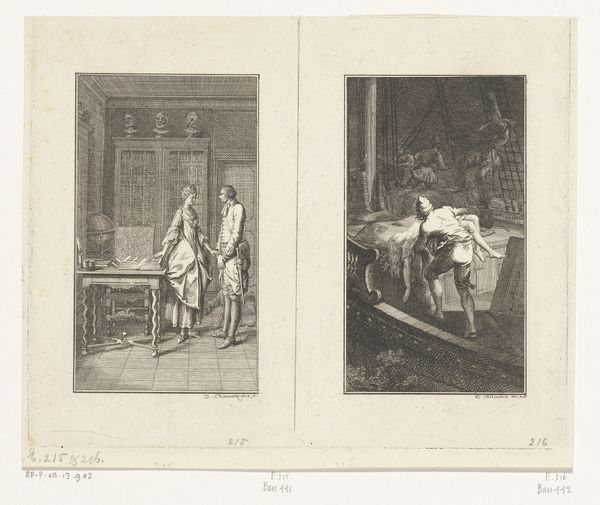
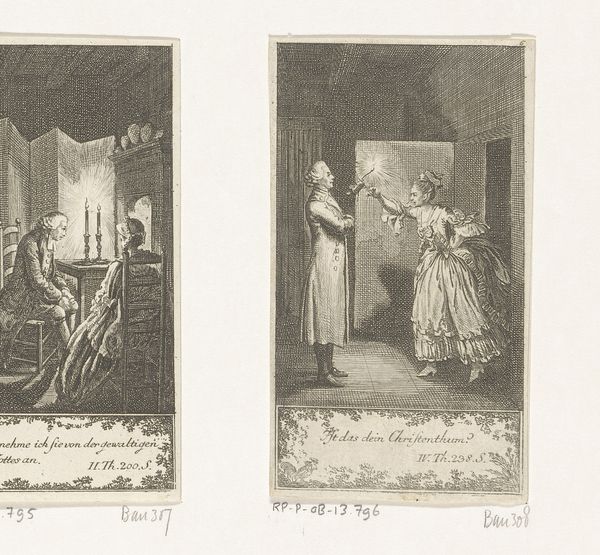
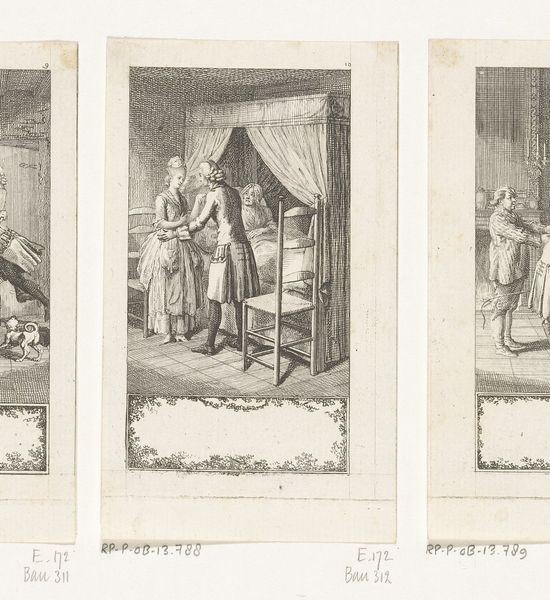
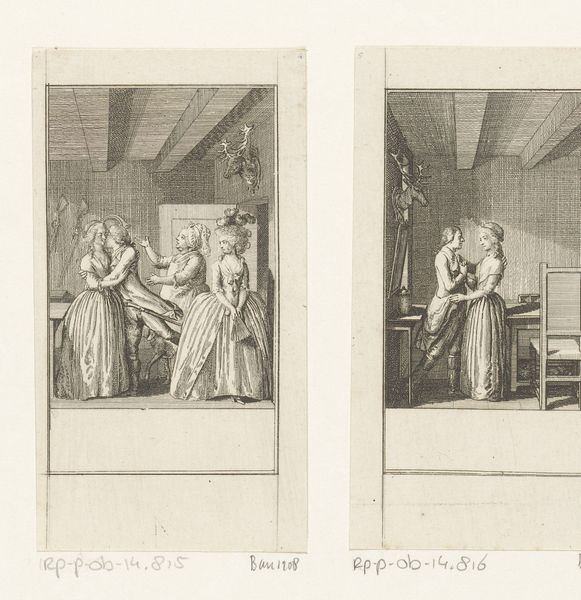
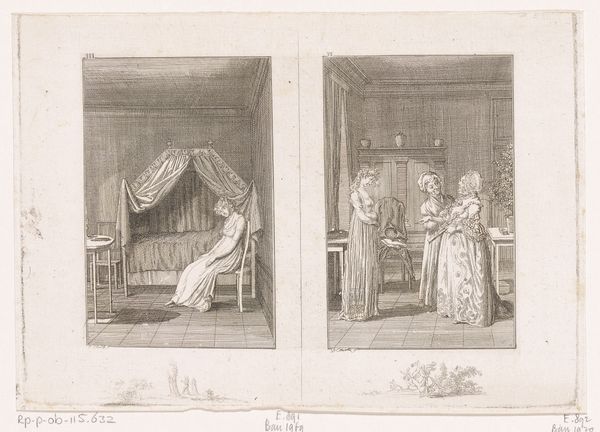
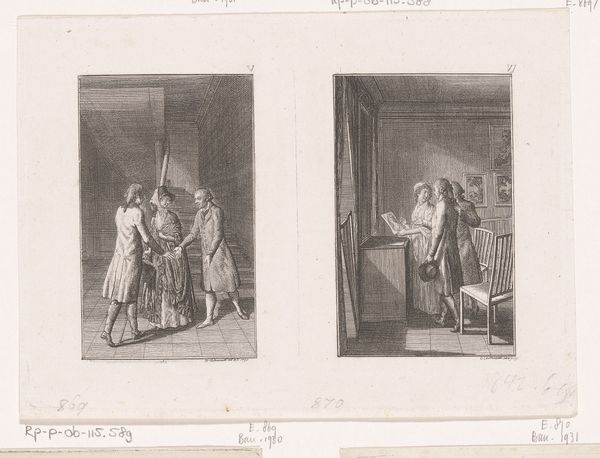
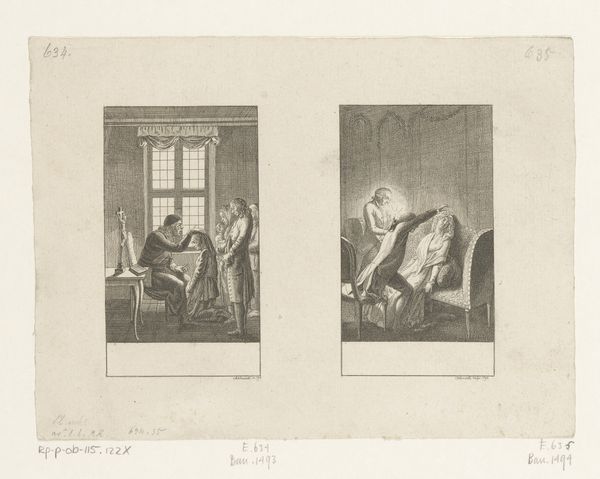
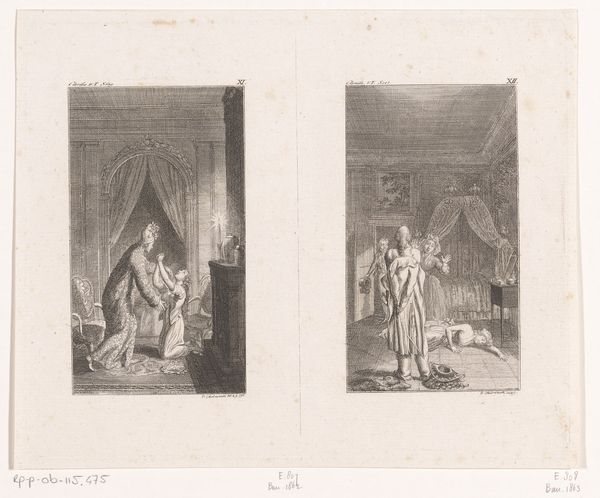
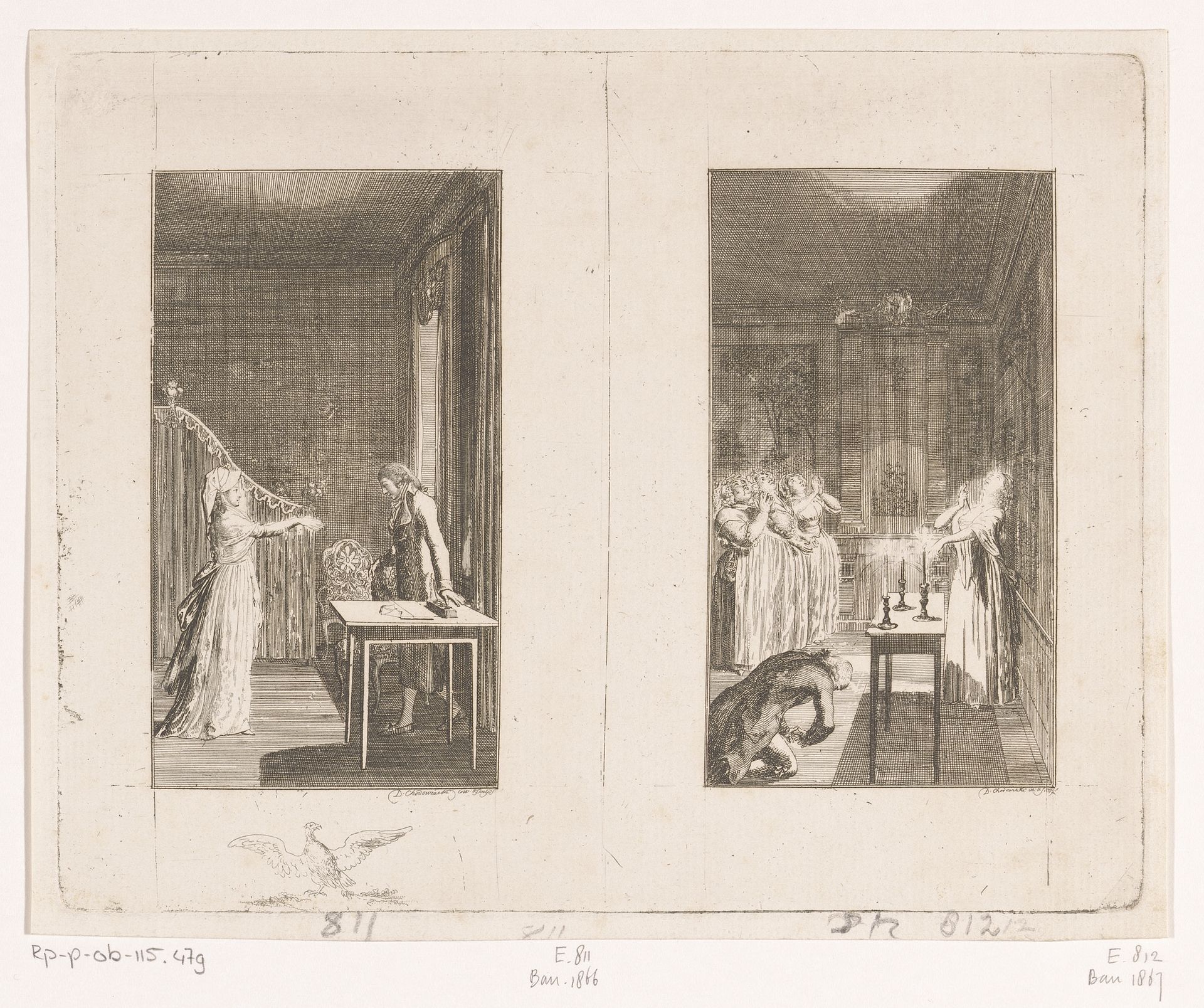
Daniel Nikolaus Chodowiecki created these two scenes from Samuel Richardson's "Clarissa." See how he uses gestures as powerful symbols? In the scene to the right, the woman leaning towards the candle assumes a posture reminiscent of countless images of penitence. The soft glow of the candle, a long-standing symbol of hope and truth, hints at an attempt to illuminate a dark situation. Note how her bowed head and supplicating posture evoke the very essence of vulnerability and contrition. We see such gestures echoed across time, from ancient religious rites to Renaissance paintings. They resurface as visual echoes of collective memory, ingrained in our understanding of human emotion, each reappearance shifting slightly, molded by its era, yet still speaking to our subconscious. The figure is a powerful force, engaging us on a deep, subconscious level. These symbols progress in a non-linear, cyclical fashion, resurfacing, evolving, and taking on new meanings across different historical contexts.
Twee voorstellingen uit Clarissa van Samuel Richardson
1796

Daniel Nikolaus Chodowiecki
1726 - 1801Location
RijksmuseumArtwork details
- Medium
- print, engraving
- Dimensions
- height 166 mm, width 210 mm
- Location
- Rijksmuseum
- Copyright
- Rijks Museum: Open Domain
Tags
Comments
Share your thoughts
About this artwork
Daniel Nikolaus Chodowiecki created these two scenes from Samuel Richardson's "Clarissa." See how he uses gestures as powerful symbols? In the scene to the right, the woman leaning towards the candle assumes a posture reminiscent of countless images of penitence. The soft glow of the candle, a long-standing symbol of hope and truth, hints at an attempt to illuminate a dark situation. Note how her bowed head and supplicating posture evoke the very essence of vulnerability and contrition. We see such gestures echoed across time, from ancient religious rites to Renaissance paintings. They resurface as visual echoes of collective memory, ingrained in our understanding of human emotion, each reappearance shifting slightly, molded by its era, yet still speaking to our subconscious. The figure is a powerful force, engaging us on a deep, subconscious level. These symbols progress in a non-linear, cyclical fashion, resurfacing, evolving, and taking on new meanings across different historical contexts.
Comments
Share your thoughts