About this artwork
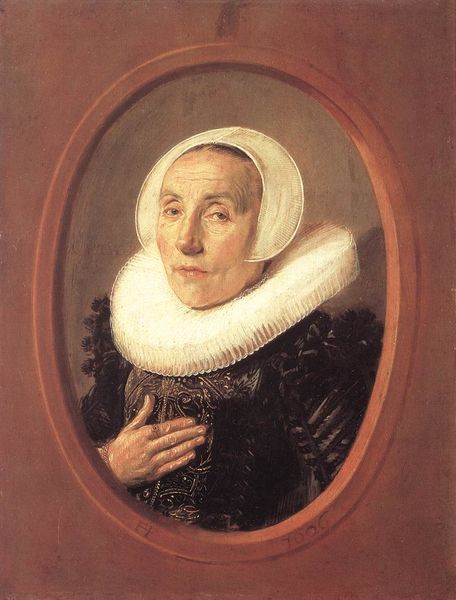
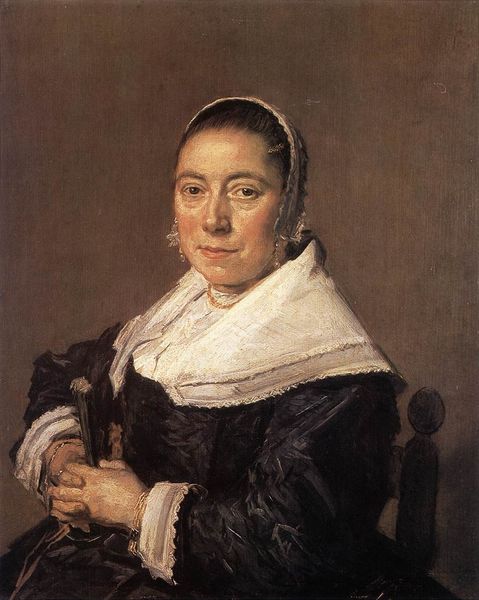
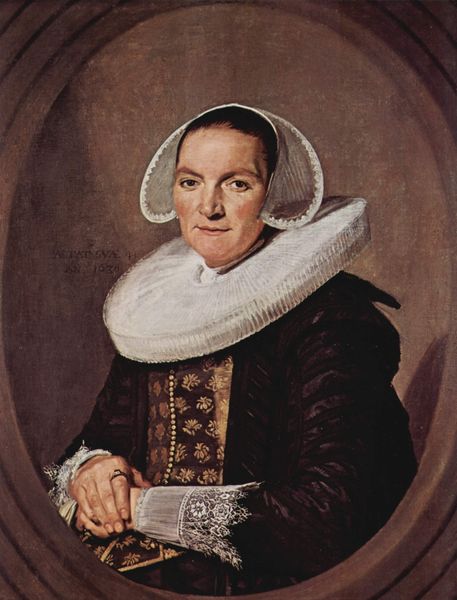
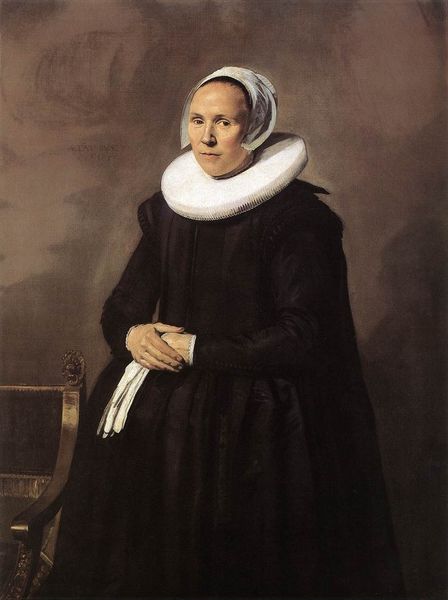
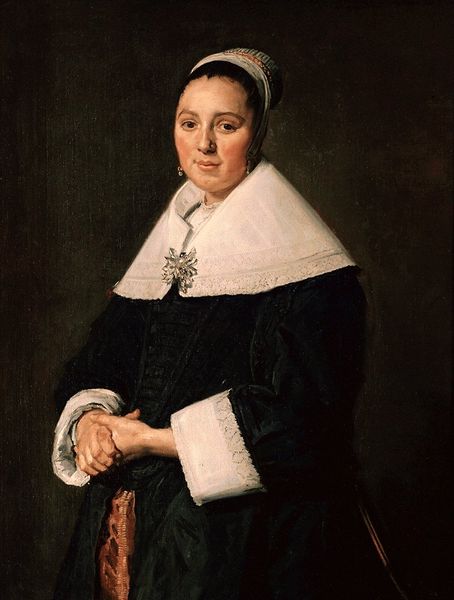
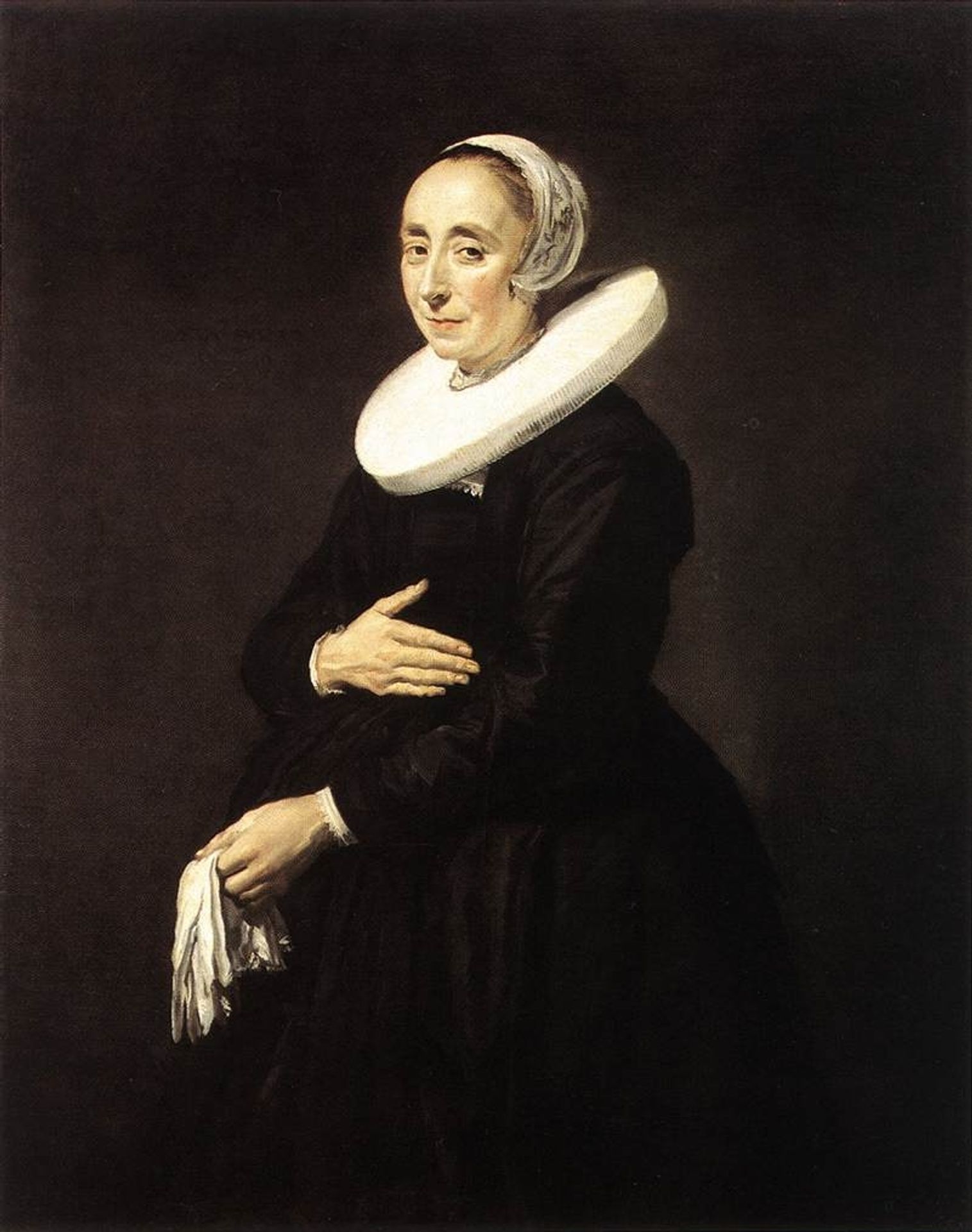
Frans Hals’ painted this striking ‘Portrait of a Woman’ using oil on canvas. The muted color palette, dominated by blacks and whites, directs our gaze towards the woman’s face and hands, drawing us into her silent presence. The composition’s stark simplicity, with the dark background enveloping the figure, enhances the tactile qualities of the ruff and the fabric of her dress. Hals’ dynamic brushwork is visible in the textures of the fabrics, adding a sense of movement and life. Her serene expression is accentuated by the geometric precision of the ruff, which frames her face and draws attention to her gaze. This interplay between the formal elements invites us to consider the role of portraiture in conveying not just likeness but also status, character, and the socio-cultural values of the Dutch Golden Age. The interplay of light and dark becomes a means of psychological exploration, prompting us to reflect on the complexities of representation and identity.
Portrait of a woman
1640

Frans Hals
1580 - 1666Location
Wallraf-Richartz Museum, Cologne, GermanyArtwork details
- Medium
- oil-paint
- Location
- Wallraf-Richartz Museum, Cologne, Germany
- Copyright
- Public domain
Tags
portrait
baroque
portrait
oil-paint
realism
Comments
Be the first to share your thoughts about this work.
About this artwork
Frans Hals’ painted this striking ‘Portrait of a Woman’ using oil on canvas. The muted color palette, dominated by blacks and whites, directs our gaze towards the woman’s face and hands, drawing us into her silent presence. The composition’s stark simplicity, with the dark background enveloping the figure, enhances the tactile qualities of the ruff and the fabric of her dress. Hals’ dynamic brushwork is visible in the textures of the fabrics, adding a sense of movement and life. Her serene expression is accentuated by the geometric precision of the ruff, which frames her face and draws attention to her gaze. This interplay between the formal elements invites us to consider the role of portraiture in conveying not just likeness but also status, character, and the socio-cultural values of the Dutch Golden Age. The interplay of light and dark becomes a means of psychological exploration, prompting us to reflect on the complexities of representation and identity.
Comments
Be the first to share your thoughts about this work.