About this artwork
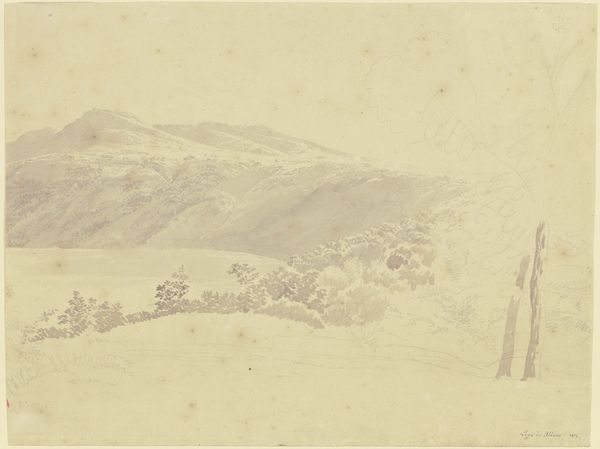
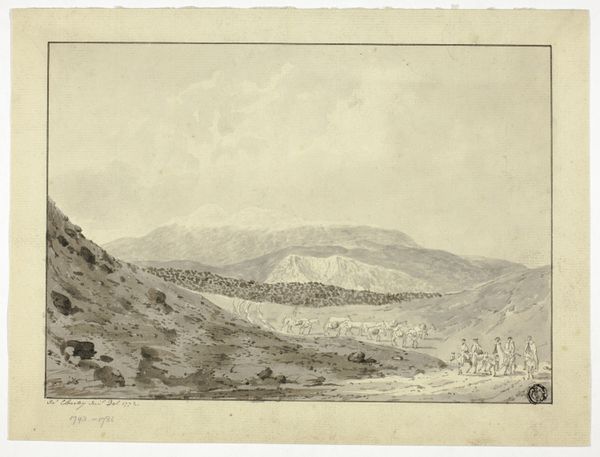
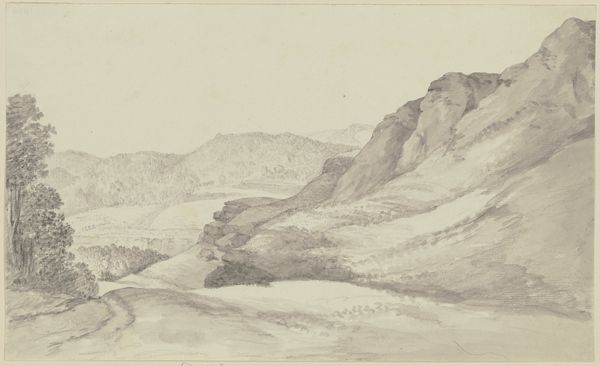
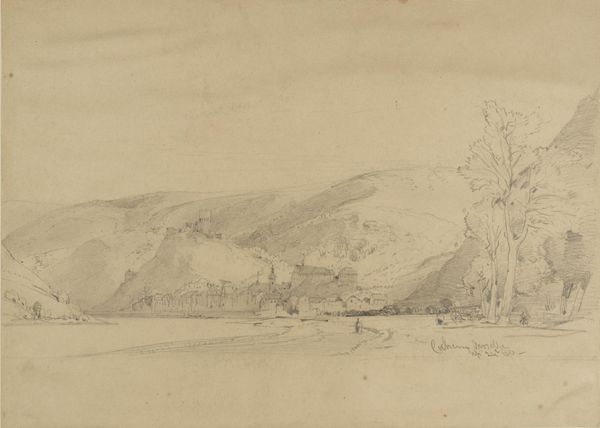
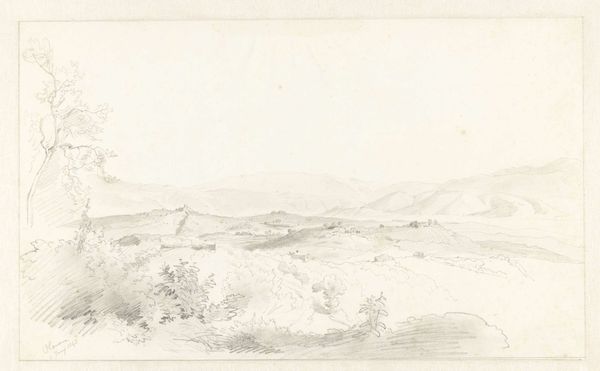
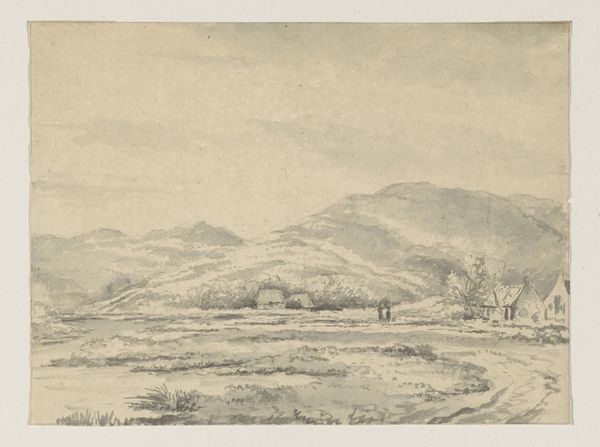
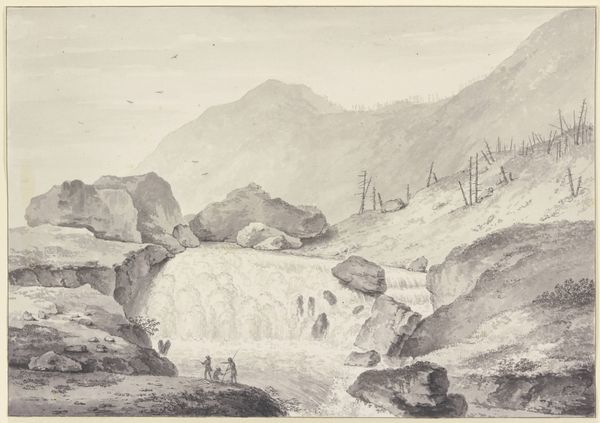
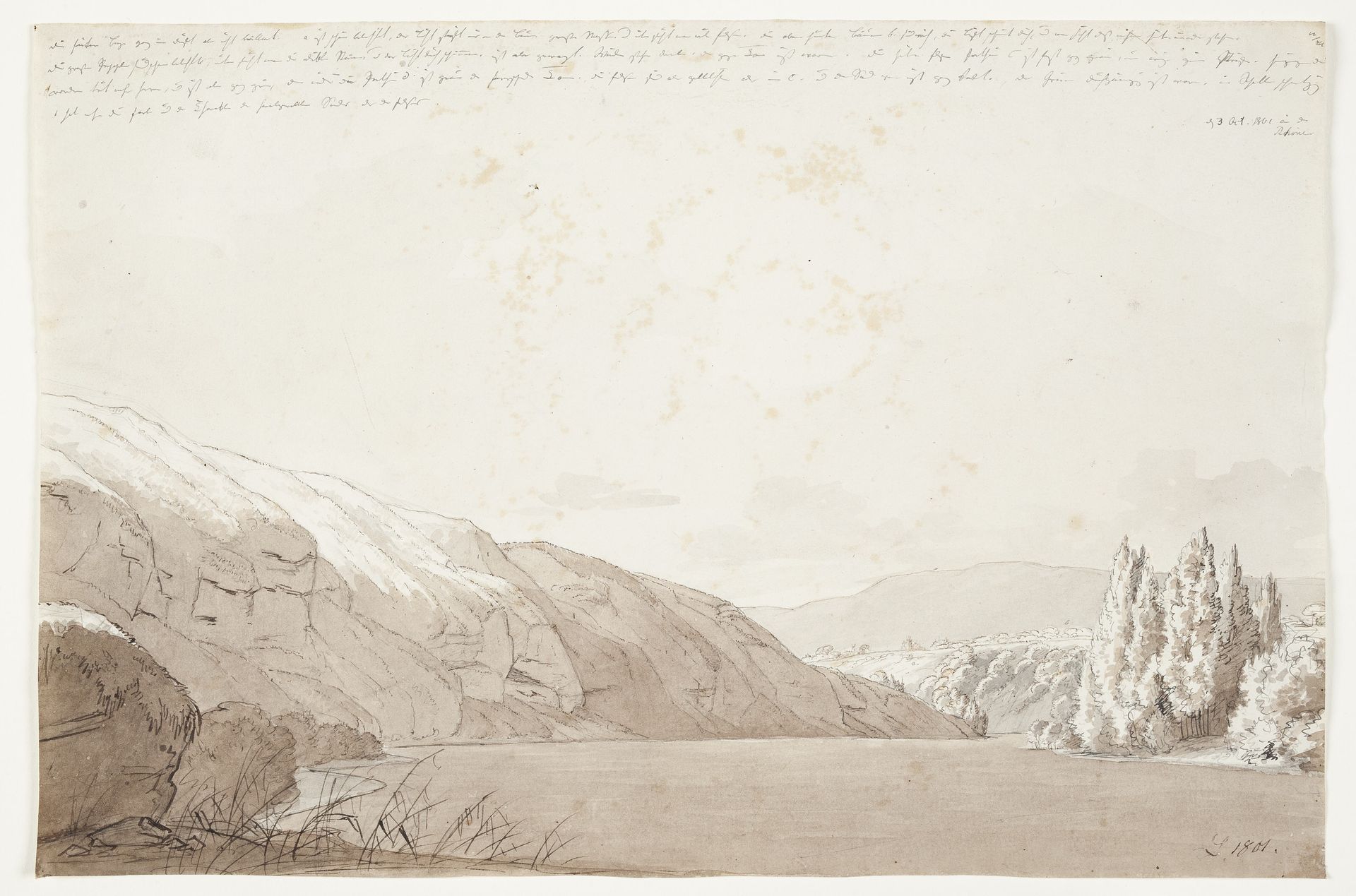
J.L. Lund created this landscape drawing of the Rhone, with pen and brush in grey ink. The composition of the drawing is divided into three horizontal registers: the script on top, the landscape in the middle, and the vegetation foreground at the bottom. The monochromatic palette is achieved by the artist diluting the ink to create the impression of the sky in the background and the volume of the mountain range at the left. Lund’s visual language reduces natural forms to essential shapes, emphasizing their underlying structure. The precise linear work captures the geological formations of the cliffs with clear contouring, and the rhythmic repetition of the tree's vertical lines echoes a formal visual language. However, the written passage across the sky destabilizes the conventional landscape aesthetic. It draws attention to how artistic representation always mediates our experience of nature. The work functions as an intersection between the real and the represented, challenging fixed perceptions.
Parti fra Rhone
1801


Artwork details
- Medium
- drawing
- Dimensions
- 250 mm (height) x 373 mm (width) (bladmaal)
- Location
- SMK - Statens Museum for Kunst
Tags
Comments
Share your thoughts
About this artwork
J.L. Lund created this landscape drawing of the Rhone, with pen and brush in grey ink. The composition of the drawing is divided into three horizontal registers: the script on top, the landscape in the middle, and the vegetation foreground at the bottom. The monochromatic palette is achieved by the artist diluting the ink to create the impression of the sky in the background and the volume of the mountain range at the left. Lund’s visual language reduces natural forms to essential shapes, emphasizing their underlying structure. The precise linear work captures the geological formations of the cliffs with clear contouring, and the rhythmic repetition of the tree's vertical lines echoes a formal visual language. However, the written passage across the sky destabilizes the conventional landscape aesthetic. It draws attention to how artistic representation always mediates our experience of nature. The work functions as an intersection between the real and the represented, challenging fixed perceptions.
Comments
Share your thoughts