About this artwork
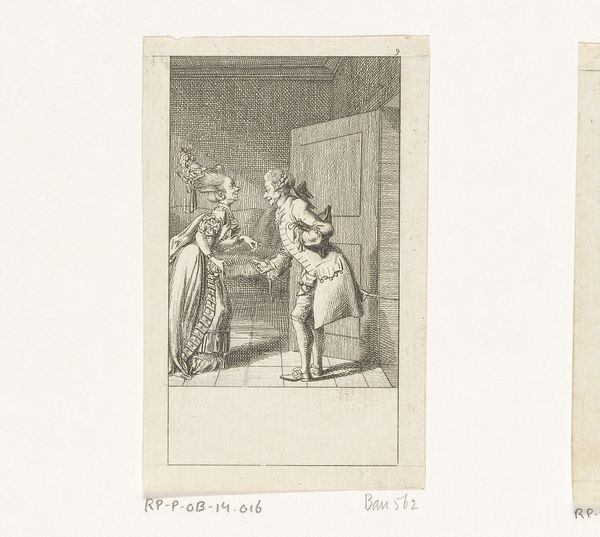
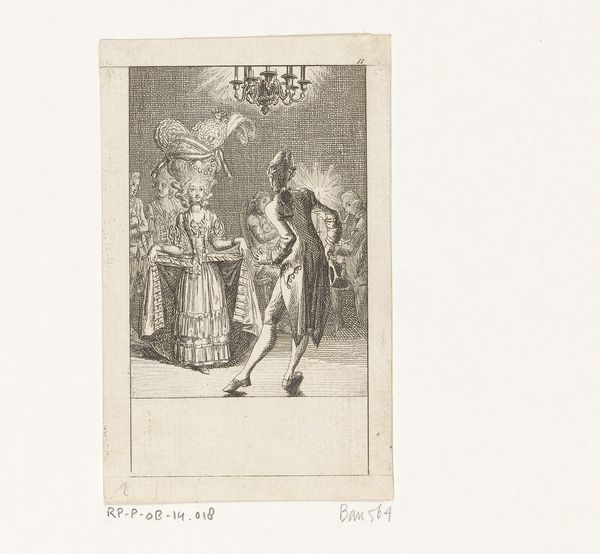
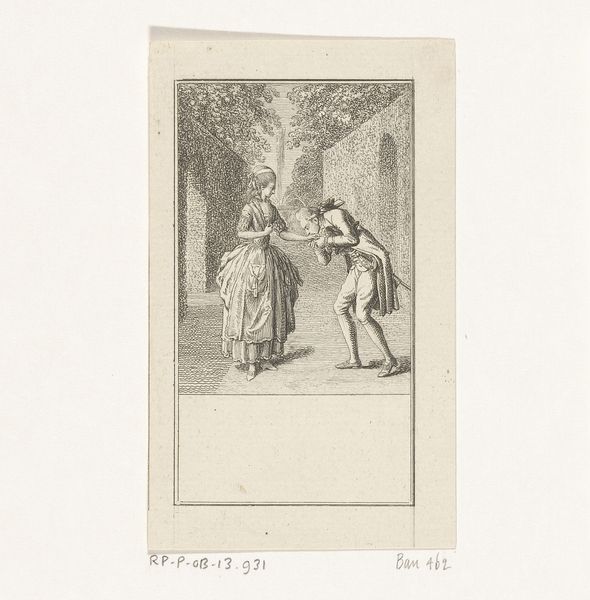
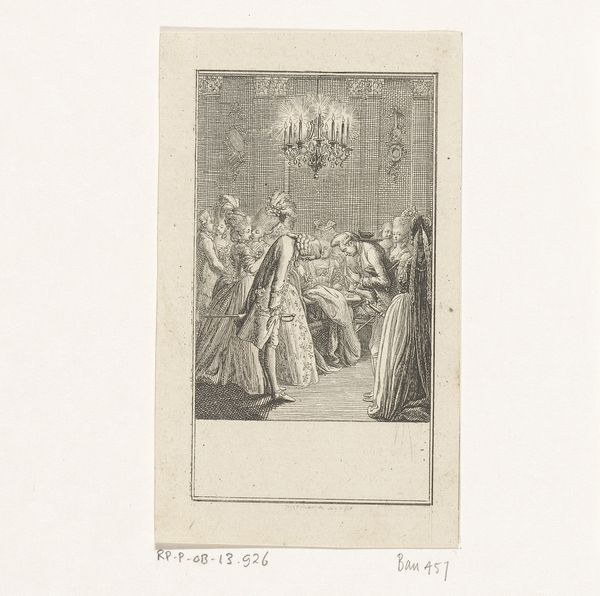
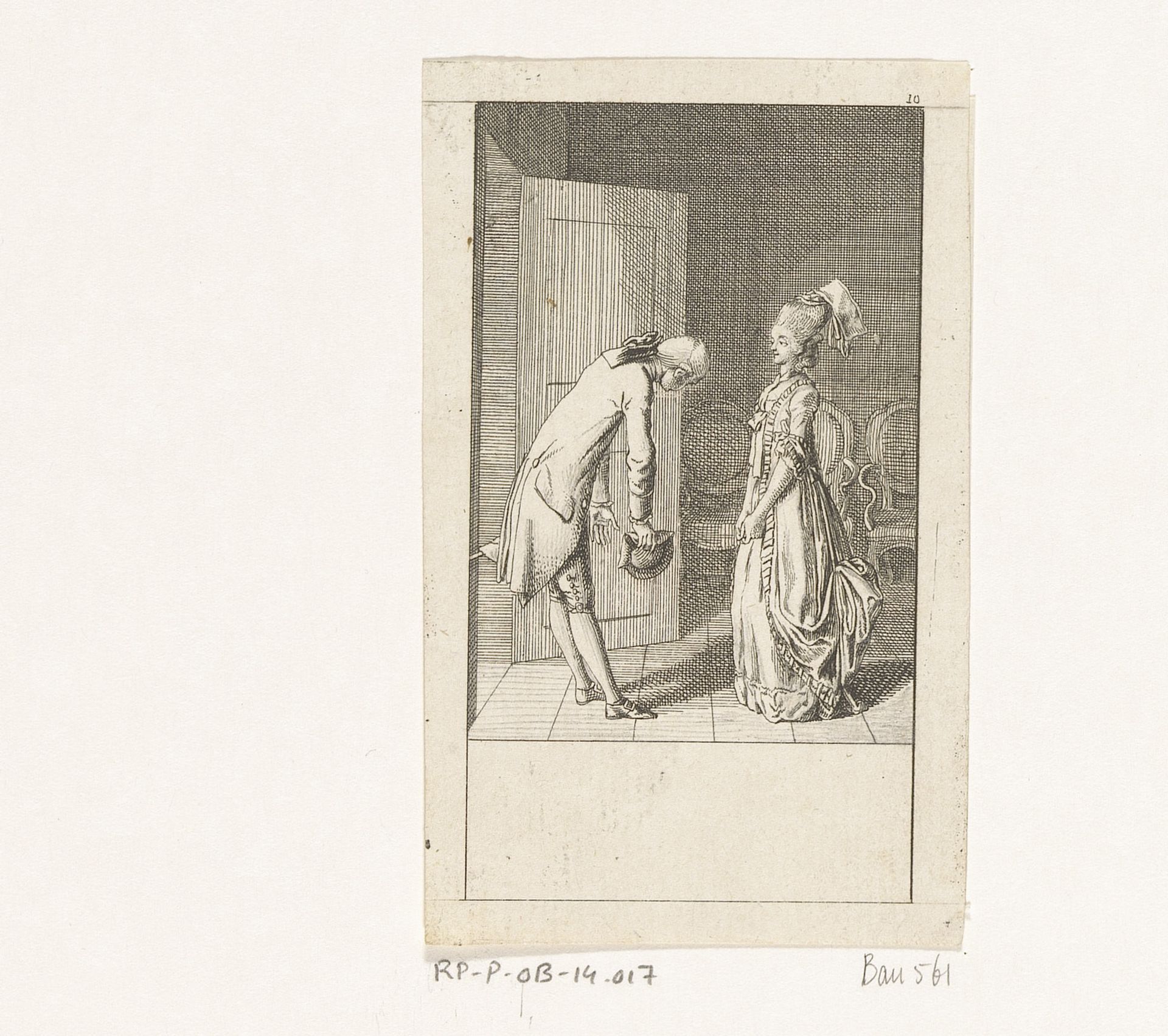
Editor: Here we have Daniel Chodowiecki's "Begroeting bij binnenkomst" from 1778, a print made with etching and engraving. There's a formality to the scene, a sense of social ritual. What do you see in it? Curator: I see an eloquent illustration of material constraints and social performance. Chodowiecki, through the reproducible medium of etching, democratized access to imagery, impacting social behaviours and understandings of class. This wasn't a unique canvas owned by a wealthy patron; it was a readily available print. Consider how the very act of bowing, meticulously rendered, highlights a culture steeped in prescribed gestures—performance as labour. Editor: So the print medium itself allowed the distribution of social ideas? Curator: Precisely. Think about the paper it's printed on – likely mass-produced. The labour involved in making and distributing prints like these facilitated the spread of ideas about manners and societal norms amongst a broader public than painting could ever reach. How did that expanded audience reshape class structures in that moment? What commodities underpinned this change in societal norms and material conditions? Editor: That’s a completely different way of looking at it! I hadn't considered the material production impacting social constructs so directly. Curator: Art is a product of its time, made using the materials available, for a specific purpose, reflecting social dynamics. Examining the materiality helps to demystify traditional notions of art as something solely aesthetic. Editor: I now see how considering the material components gives you a window into production processes and the socio-economic conditions, broadening my understanding of the artwork's purpose within a society. Thanks for sharing your insights. Curator: It's been insightful seeing how those layers can illuminate each other!

Artwork details
- Dimensions
- height 93 mm, width 58 mm
- Location
- Rijksmuseum
- Copyright
- Rijks Museum: Open Domain
Comments
Be the first to share your thoughts about this work.
About this artwork
Editor: Here we have Daniel Chodowiecki's "Begroeting bij binnenkomst" from 1778, a print made with etching and engraving. There's a formality to the scene, a sense of social ritual. What do you see in it? Curator: I see an eloquent illustration of material constraints and social performance. Chodowiecki, through the reproducible medium of etching, democratized access to imagery, impacting social behaviours and understandings of class. This wasn't a unique canvas owned by a wealthy patron; it was a readily available print. Consider how the very act of bowing, meticulously rendered, highlights a culture steeped in prescribed gestures—performance as labour. Editor: So the print medium itself allowed the distribution of social ideas? Curator: Precisely. Think about the paper it's printed on – likely mass-produced. The labour involved in making and distributing prints like these facilitated the spread of ideas about manners and societal norms amongst a broader public than painting could ever reach. How did that expanded audience reshape class structures in that moment? What commodities underpinned this change in societal norms and material conditions? Editor: That’s a completely different way of looking at it! I hadn't considered the material production impacting social constructs so directly. Curator: Art is a product of its time, made using the materials available, for a specific purpose, reflecting social dynamics. Examining the materiality helps to demystify traditional notions of art as something solely aesthetic. Editor: I now see how considering the material components gives you a window into production processes and the socio-economic conditions, broadening my understanding of the artwork's purpose within a society. Thanks for sharing your insights. Curator: It's been insightful seeing how those layers can illuminate each other!
Comments
Be the first to share your thoughts about this work.