About this artwork
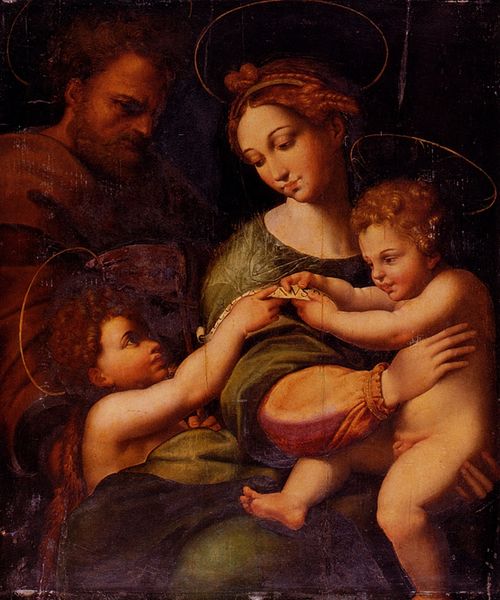
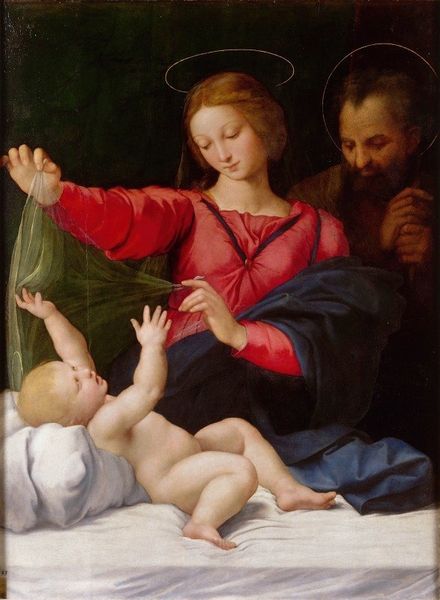
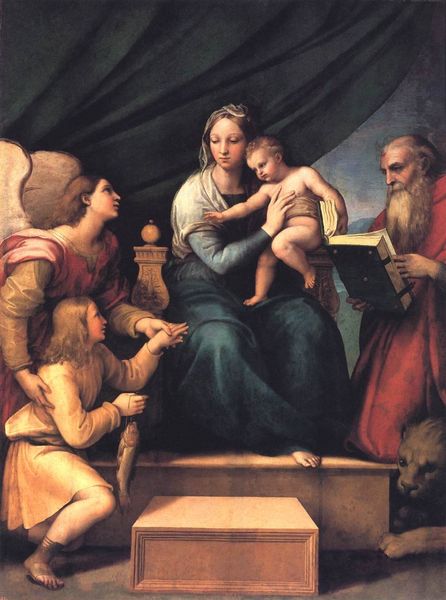
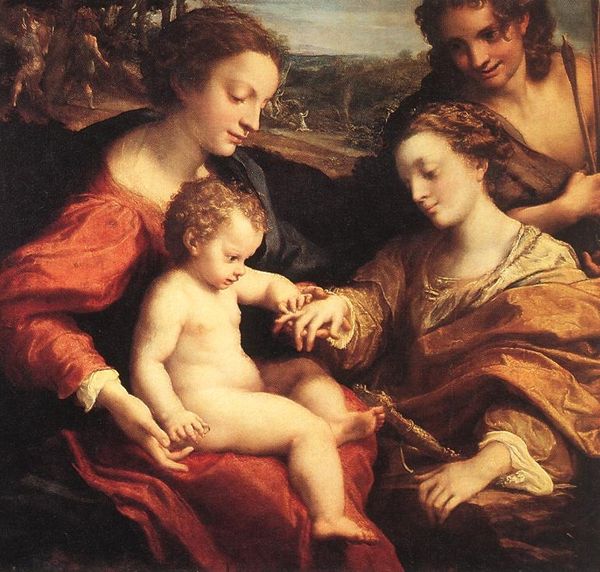
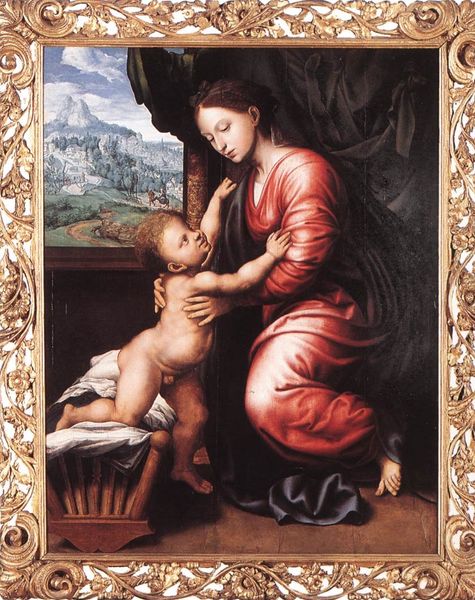
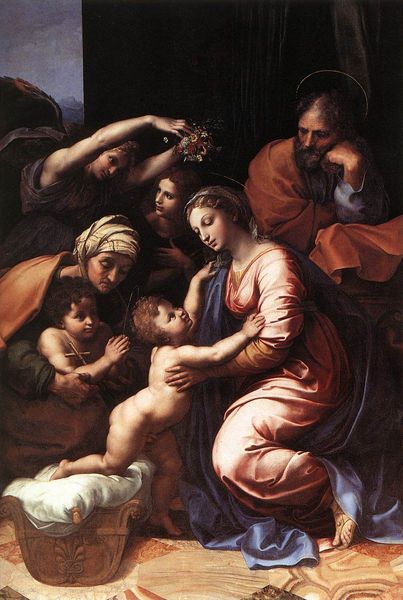
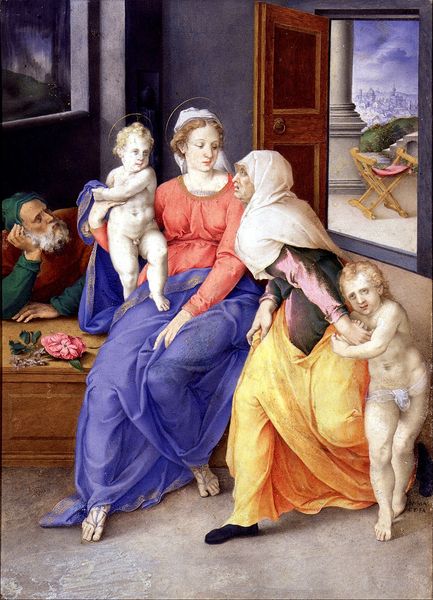
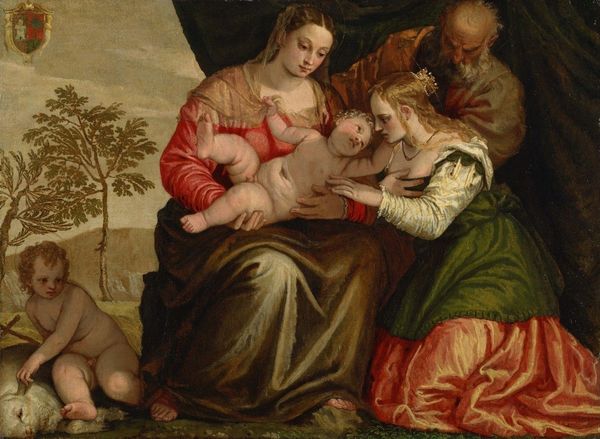
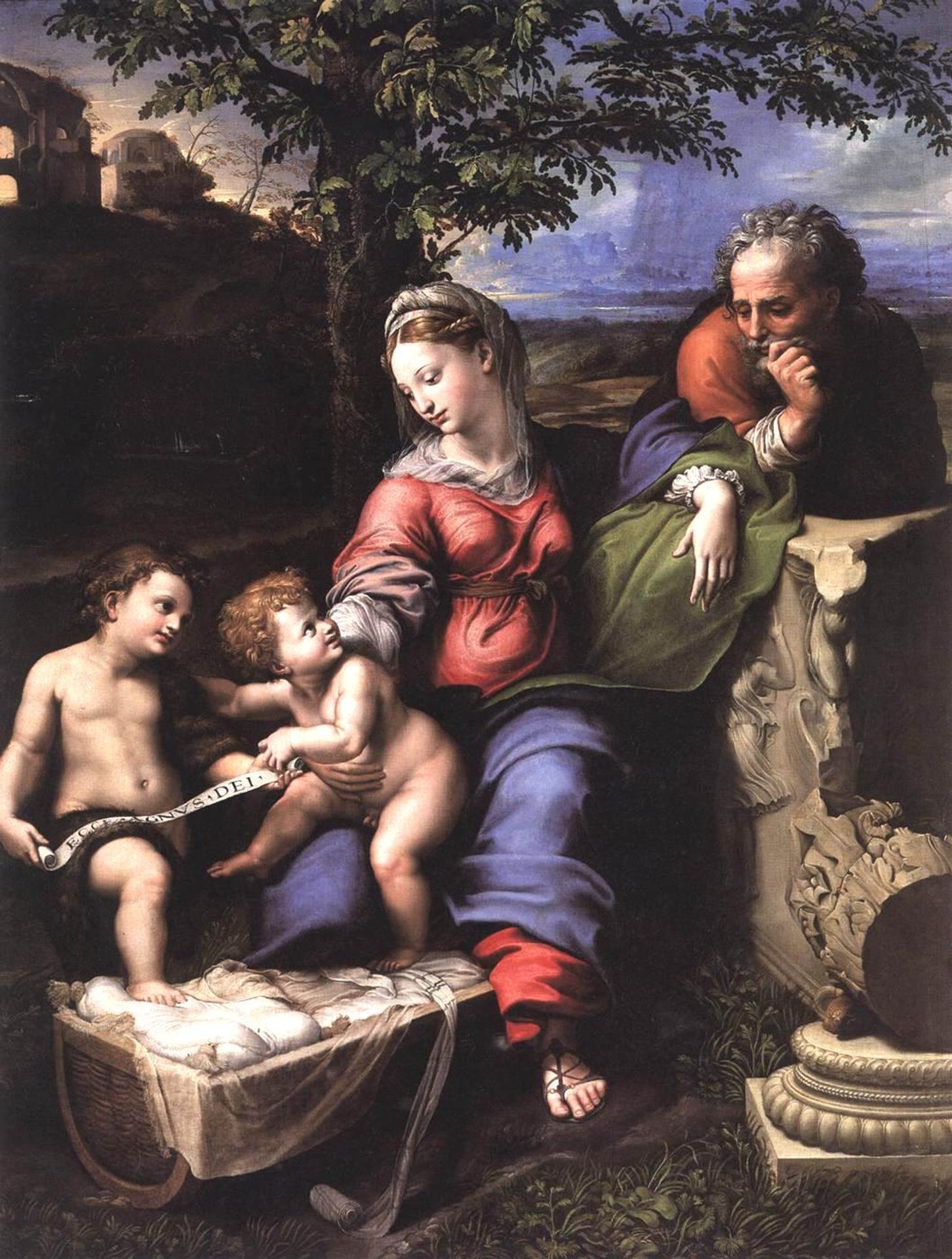
"The Holy Family of the Oak Tree" was painted by Raphael, sometime in the early 16th century. The figures are arranged in a pyramid configuration that creates a harmonious balance, typical of the High Renaissance. The painting's colours, dominated by blues, reds and greens, create a serene atmosphere. Note how the artist uses the landscape behind the Holy family and a monumental oak tree, which lends the painting its name, to frame the figures. Raphael masterfully employs sfumato, the subtle blending of colours, particularly visible in the faces of Mary and Joseph, softening the outlines and creating an ethereal quality. The painting operates within the conventions of Renaissance Humanism, which sought to synthesize Christian theology with classical aesthetics. Yet, by placing the Holy Family in a pastoral landscape, Raphael elevates the natural world. We can see the artist's attempt to harmonize religious narratives with the naturalistic observation of the world. The work embodies the era’s preoccupation with beauty, order, and the integration of classical and Christian thought, reflecting a deeply humanistic vision.

Artwork details
- Medium
- painting, oil-paint
- Dimensions
- 144 x 110 cm
- Location
- Museo del Prado, Madrid, Spain
- Copyright
- Public domain
Tags
portrait
high-renaissance
narrative-art
painting
oil-paint
history-painting
italian-renaissance
Comments
Be the first to share your thoughts about this work.
About this artwork
"The Holy Family of the Oak Tree" was painted by Raphael, sometime in the early 16th century. The figures are arranged in a pyramid configuration that creates a harmonious balance, typical of the High Renaissance. The painting's colours, dominated by blues, reds and greens, create a serene atmosphere. Note how the artist uses the landscape behind the Holy family and a monumental oak tree, which lends the painting its name, to frame the figures. Raphael masterfully employs sfumato, the subtle blending of colours, particularly visible in the faces of Mary and Joseph, softening the outlines and creating an ethereal quality. The painting operates within the conventions of Renaissance Humanism, which sought to synthesize Christian theology with classical aesthetics. Yet, by placing the Holy Family in a pastoral landscape, Raphael elevates the natural world. We can see the artist's attempt to harmonize religious narratives with the naturalistic observation of the world. The work embodies the era’s preoccupation with beauty, order, and the integration of classical and Christian thought, reflecting a deeply humanistic vision.
Comments
Be the first to share your thoughts about this work.