About this artwork
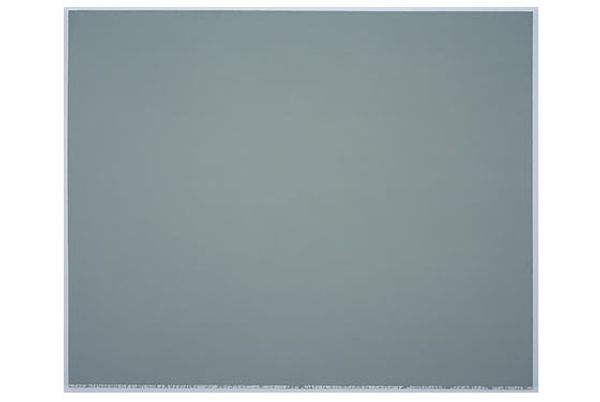
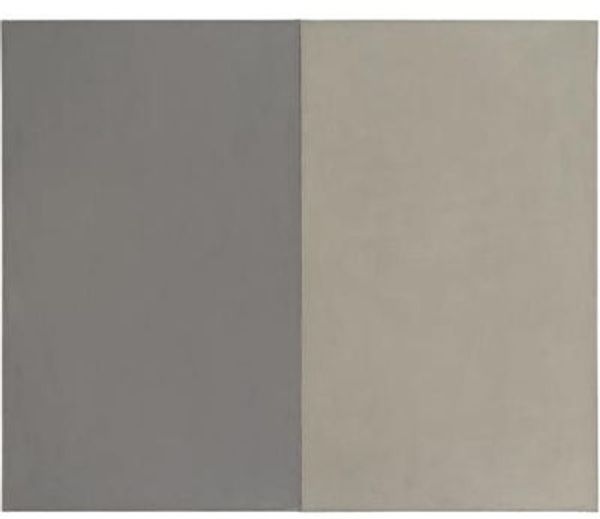
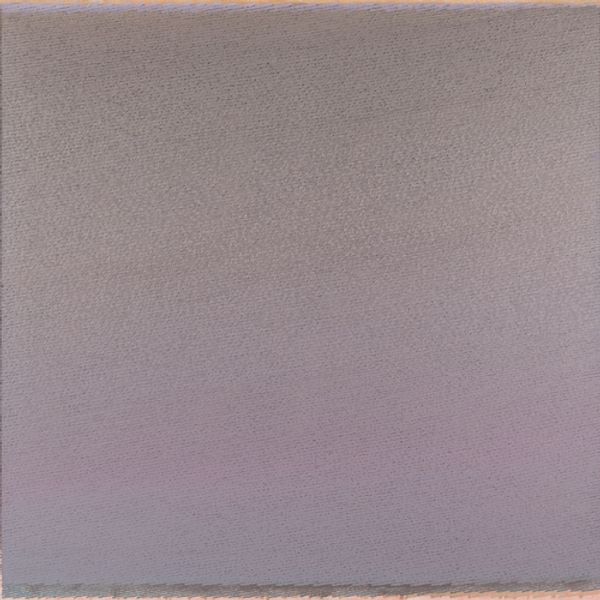
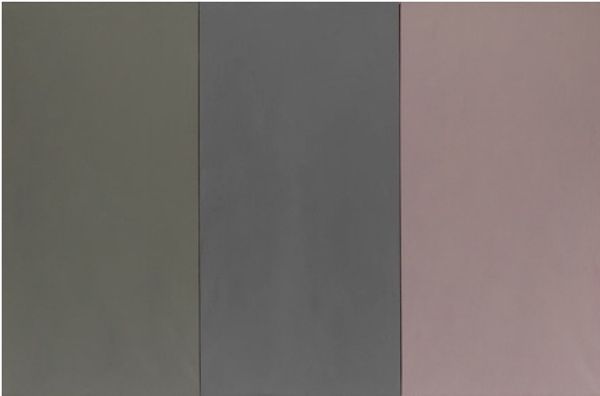
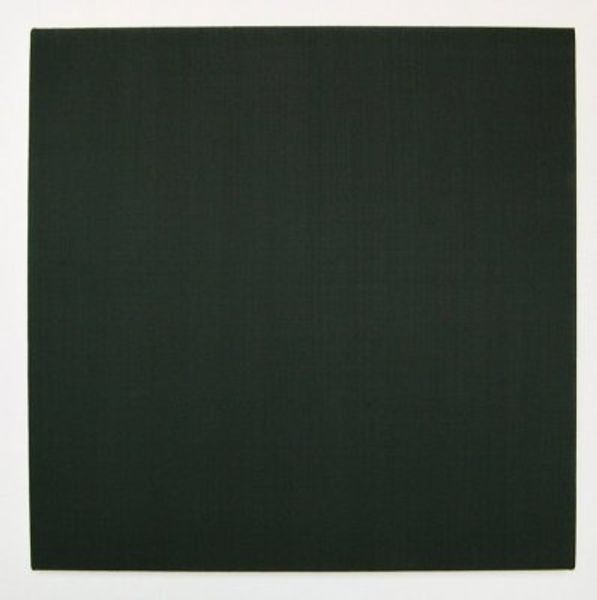
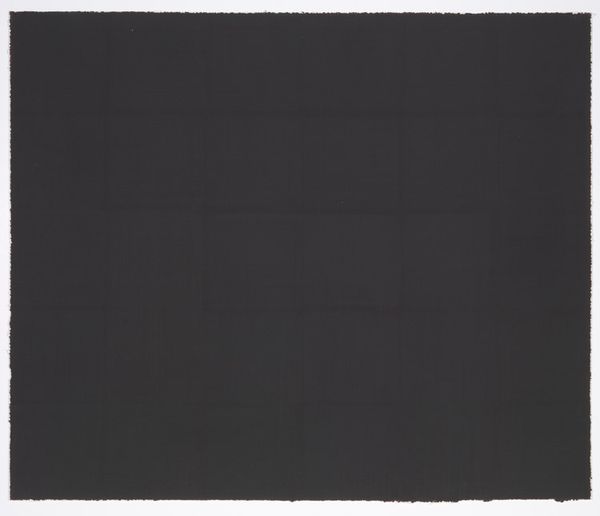
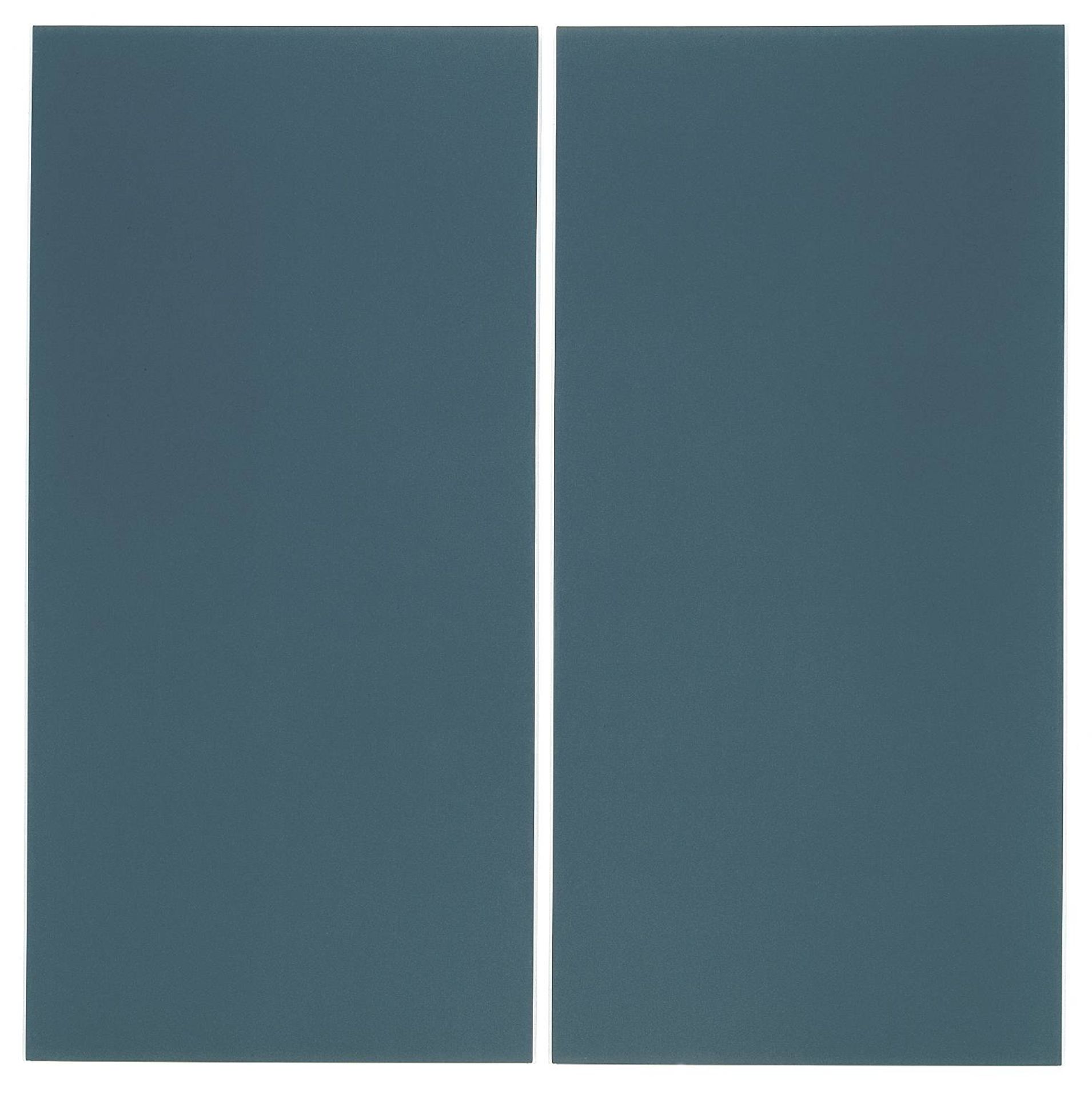
Editor: So, here we have Alan Charlton's "2 Part Vertical Painting" from 1991, currently housed at the Tate Britain. It's a minimalist piece; two adjacent monochrome canvases, in a kind of subdued blue-gray. What strikes me most is how simple yet powerful it is. What do you see in this piece, from a formalist perspective? Curator: From a formalist reading, the painting's power resides precisely in its reduced elements. Consider the relationship between the two vertical rectangles. Their adjacency creates a dialogue, not of representation, but of form, color, and surface texture. Notice the subtle variations in the monochrome fields; how does this internal contrast affect your perception of the whole? Editor: I do notice it, there's a kind of quiet tension in those very subtle color differences and even the very slim, hard edge that separate the two forms. It feels…deliberate. Curator: Precisely. The artist manipulates the most fundamental aspects of painting – surface, color, shape – to explore the limits of visual perception. Does the work succeed in reducing painting to its basic structure and materials? Is it, ultimately, visually engaging? Editor: I think it is. The subtleties make you look closer, longer. It makes you aware of the physical space and its components as part of the artwork. Curator: And that’s a valuable observation. It shows us how minimalist art, like this, can redirect our attention, to think about and become hyper-aware of form. What is perceived, or rather, how visual elements can convey an aesthetic meaning within the artwork, as a direct material relationship. Editor: This has totally changed the way I'll look at abstract art going forward. Thank you. Curator: The pleasure's been all mine. Looking closely and talking about formal elements can open new doors to understanding and seeing.
Artwork details
- Medium
- painting
- Location
- Tate Britain, London, UK
- Copyright
- Alan Charlton,Fair Use
Tags
Comments
Share your thoughts
About this artwork
Editor: So, here we have Alan Charlton's "2 Part Vertical Painting" from 1991, currently housed at the Tate Britain. It's a minimalist piece; two adjacent monochrome canvases, in a kind of subdued blue-gray. What strikes me most is how simple yet powerful it is. What do you see in this piece, from a formalist perspective? Curator: From a formalist reading, the painting's power resides precisely in its reduced elements. Consider the relationship between the two vertical rectangles. Their adjacency creates a dialogue, not of representation, but of form, color, and surface texture. Notice the subtle variations in the monochrome fields; how does this internal contrast affect your perception of the whole? Editor: I do notice it, there's a kind of quiet tension in those very subtle color differences and even the very slim, hard edge that separate the two forms. It feels…deliberate. Curator: Precisely. The artist manipulates the most fundamental aspects of painting – surface, color, shape – to explore the limits of visual perception. Does the work succeed in reducing painting to its basic structure and materials? Is it, ultimately, visually engaging? Editor: I think it is. The subtleties make you look closer, longer. It makes you aware of the physical space and its components as part of the artwork. Curator: And that’s a valuable observation. It shows us how minimalist art, like this, can redirect our attention, to think about and become hyper-aware of form. What is perceived, or rather, how visual elements can convey an aesthetic meaning within the artwork, as a direct material relationship. Editor: This has totally changed the way I'll look at abstract art going forward. Thank you. Curator: The pleasure's been all mine. Looking closely and talking about formal elements can open new doors to understanding and seeing.
Comments
Share your thoughts