c. 18th century
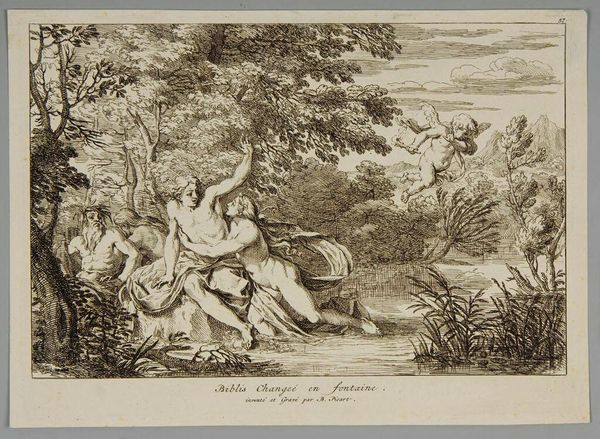
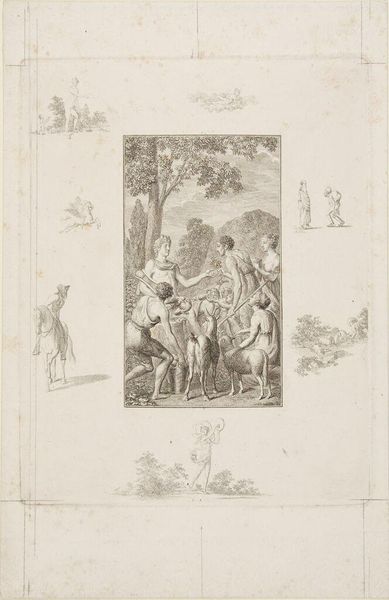
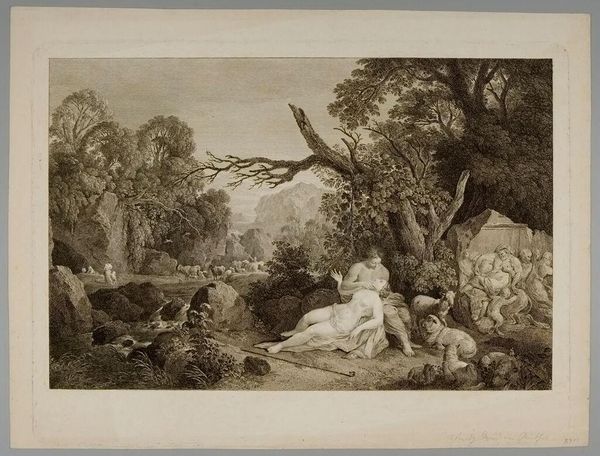
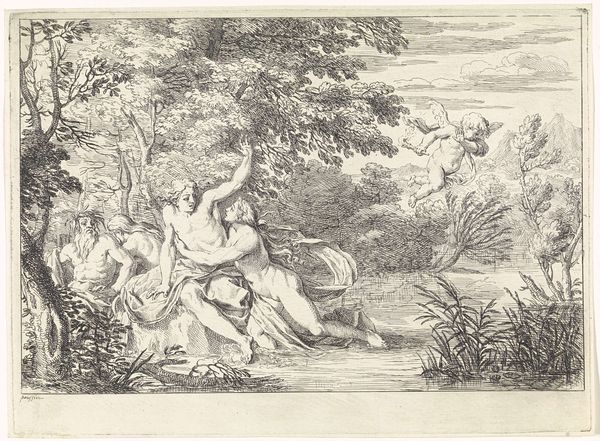
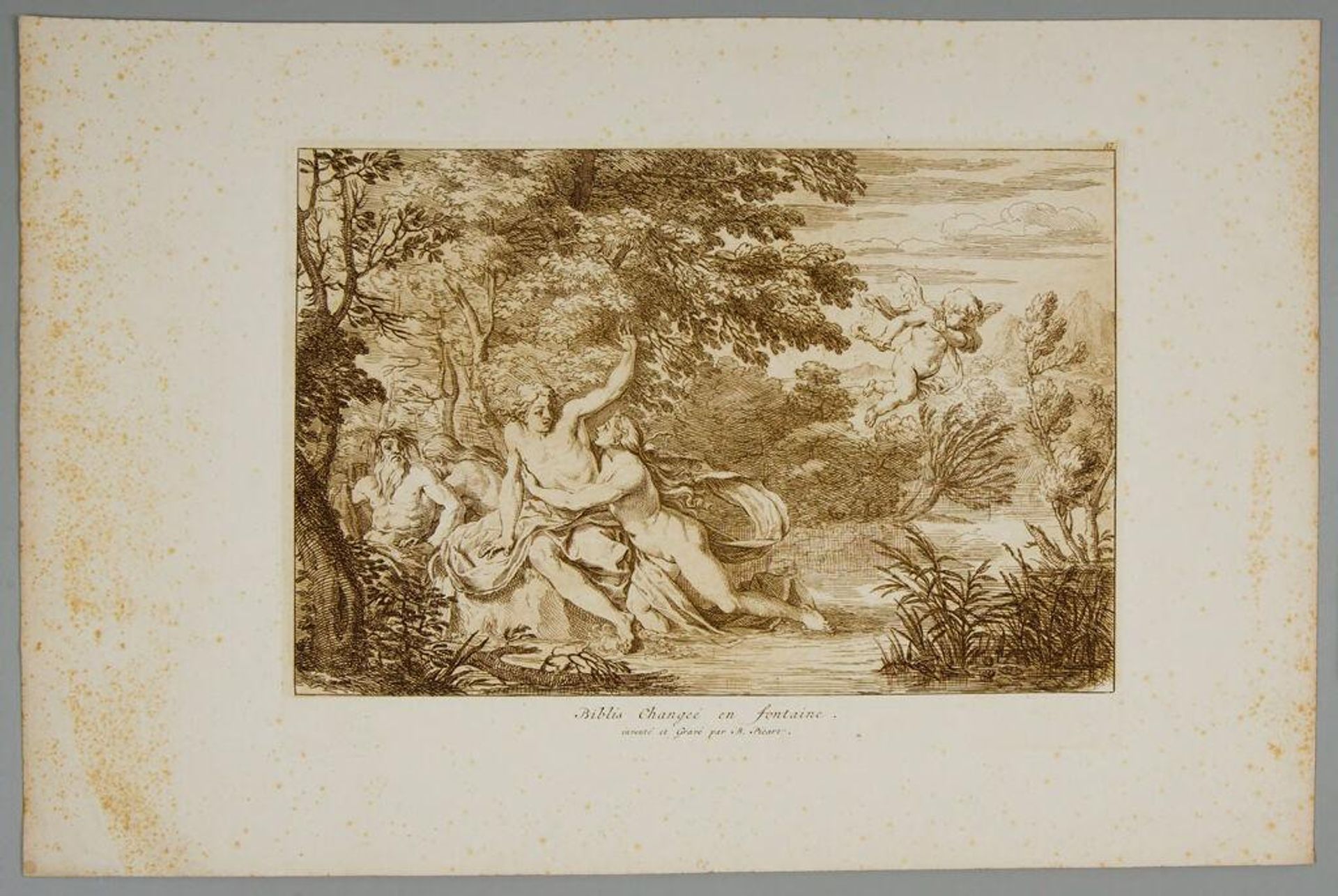
Biblis Changing into a Fountain, from Ovid's Metamorphosis


Listen to curator's interpretation
Curatorial notes
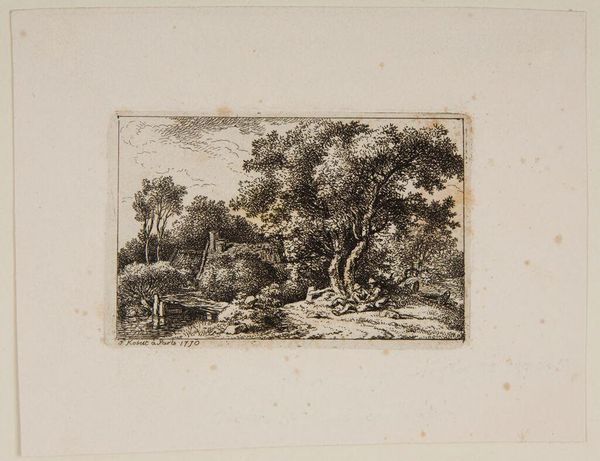
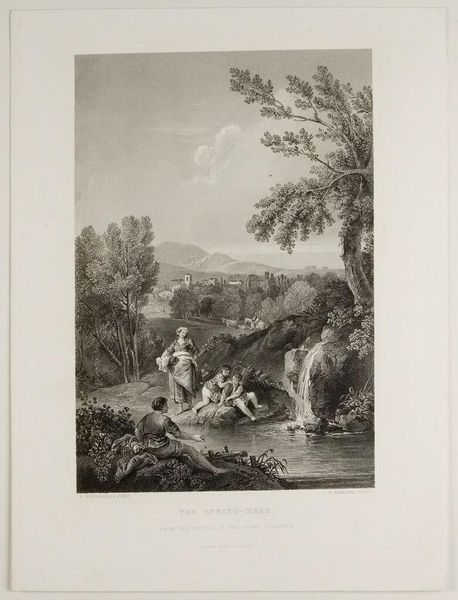
Curator: Looking at this print, I’m immediately struck by its dreamlike quality. The figures seem to be dissolving into the landscape itself. Editor: That's an astute observation. This is "Biblis Changing into a Fountain, from Ovid's Metamorphoses," etched by Bernard Picart. It depicts a key moment from Ovid’s text, itself influential in shaping cultural attitudes. Curator: The choice of etching is interesting. It lends a certain delicacy to the scene, almost like tears welling up on the page, mirroring Biblis's own transformation and grief. I wonder how the printmaking process itself influenced Picart’s interpretation. Editor: Picart lived from 1673 to 1733; his workshop operated during a time when printed images played a vital role in disseminating classical stories and moral lessons to a wider public, shaping social attitudes. Curator: So, the materiality of the print—the paper, the ink, the lines etched into the copper plate—was integral to its function within that society. Editor: Precisely. It acted as a conduit for classical narratives, impacting social discourse. It's fascinating to consider how art serves its public role. Curator: I see it as the transformation of personal tragedy into a communal resource, shaping and shaped by its material existence. Editor: Indeed, a poignant narrative etched into our cultural understanding.