1753
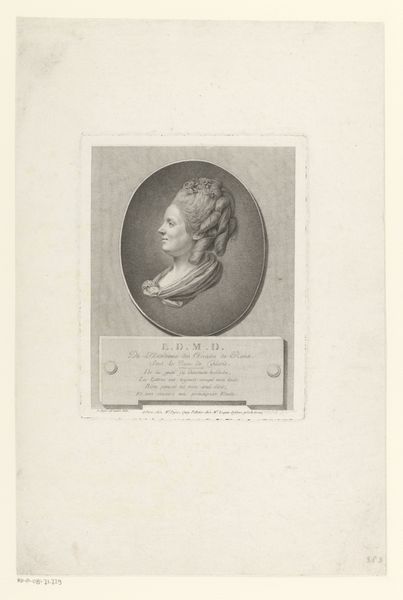
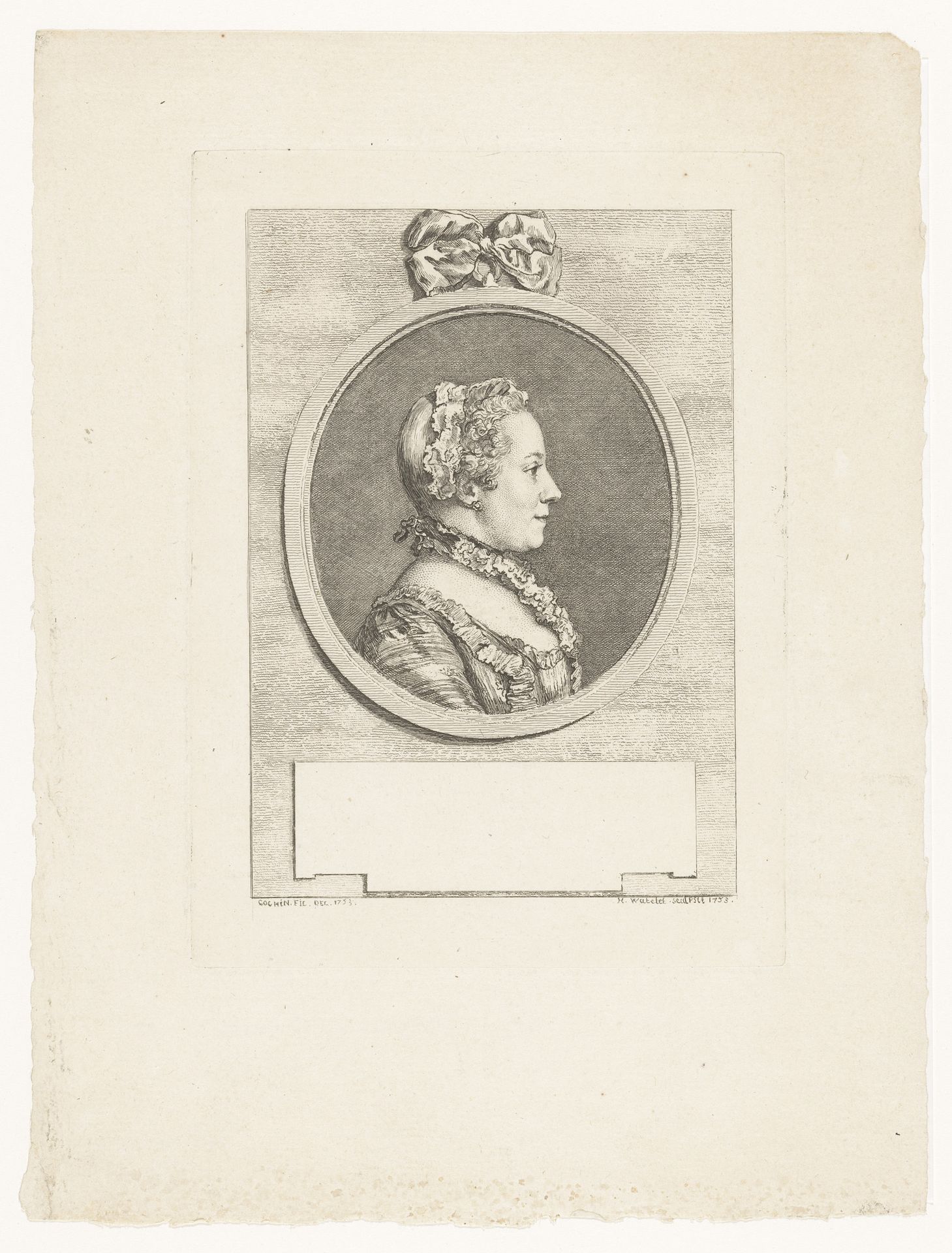
Portret van Marguerite LeComte

Claude Henri Watelet
1714 - 1789Location
RijksmuseumListen to curator's interpretation
Curatorial notes
Claude Henri Watelet created this print, a portrait of Marguerite LeComte, using etching. Let’s consider the social context of portraiture in eighteenth-century France. Portraiture played a crucial role in solidifying social status. Aristocrats used their portraits to project an image of themselves as sophisticated and powerful. Watelet, who was himself an amateur artist from a wealthy background, reflects the tastes of the upper class. This print aestheticizes its subject, idealizing her features and clothing. The print’s dependence on line emphasizes elegance and refinement, qualities that were highly prized at the time. To understand this artwork better, we can research the customs and values of the French aristocracy, using historical sources such as letters, diaries, and fashion plates. By situating this print within its original context, we can better understand how art reflects and reinforces social hierarchies.