About this artwork
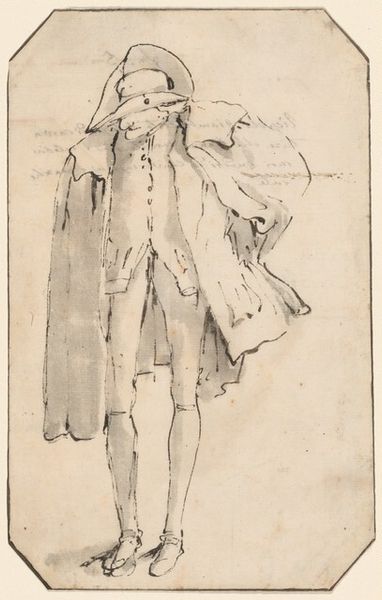
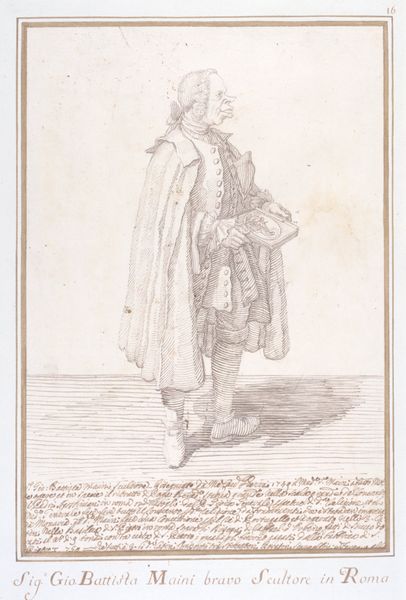
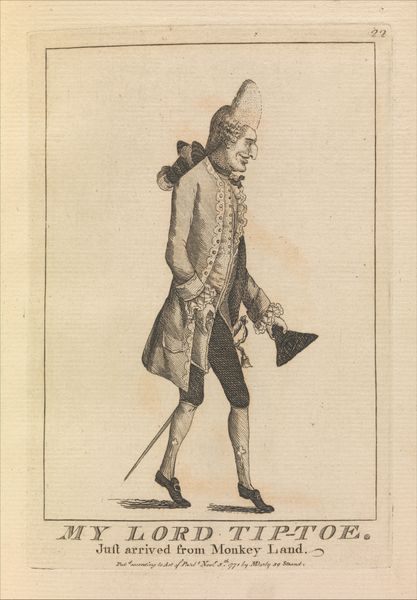
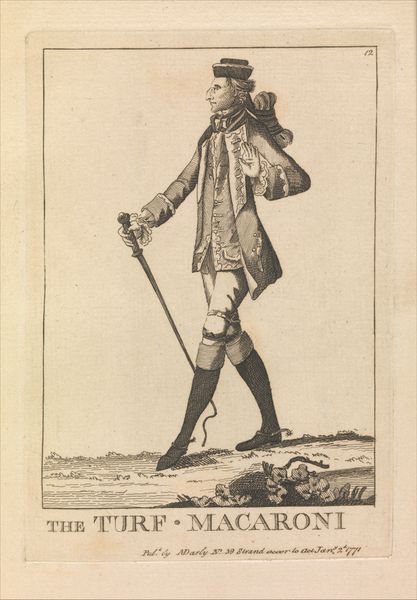
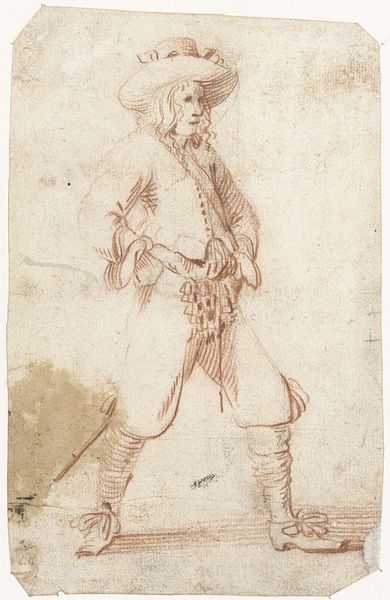
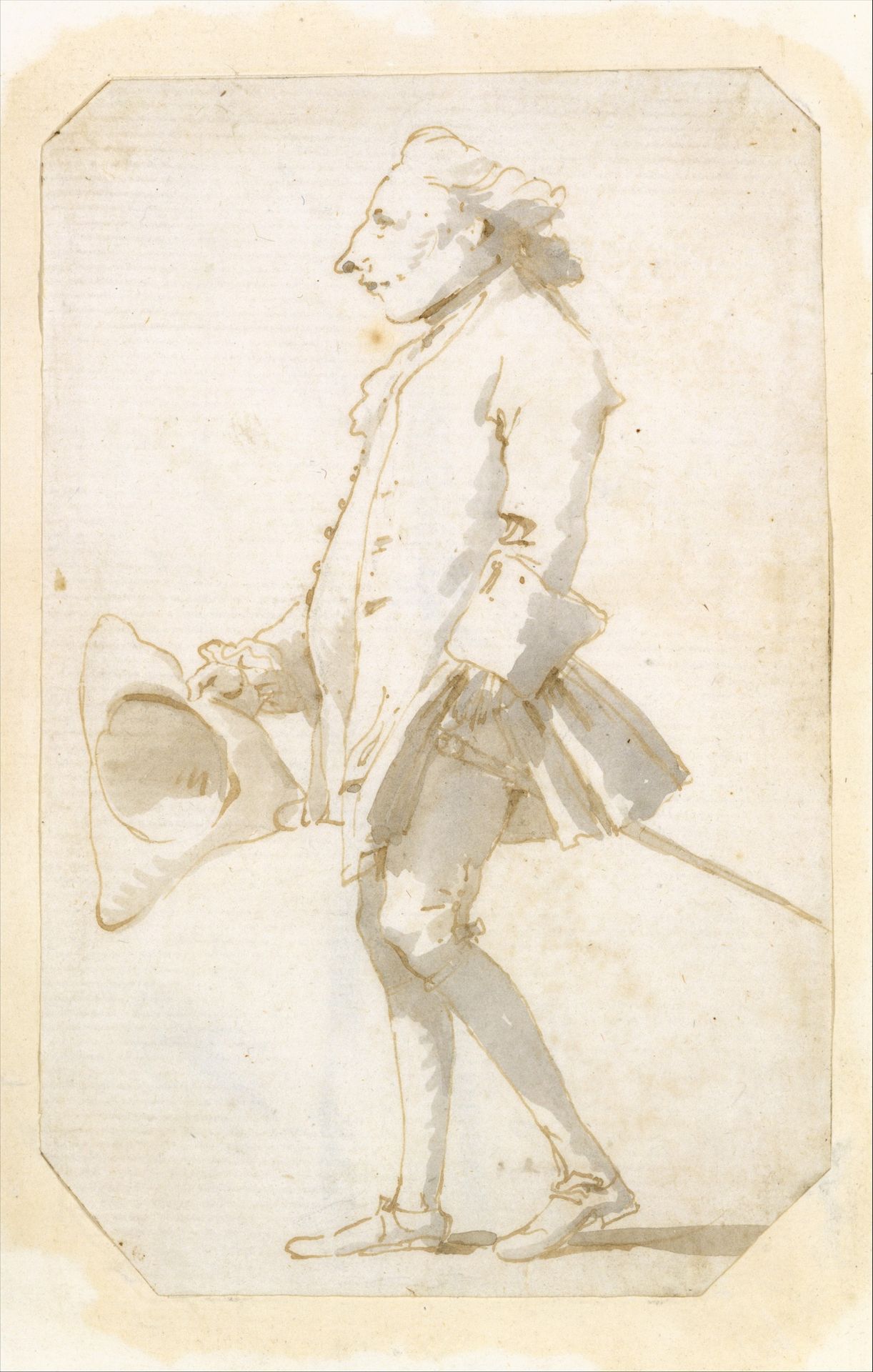
Giovanni Battista Tiepolo rendered this drawing of a caricature of a man with pen and brown wash on paper. At first glance, the figure appears to be in motion, walking with a sense of purpose. But it is the exaggeration of his features, captured with swift, confident lines, that commands our attention, suggesting an almost grotesque distortion. Tiepolo uses line and form to playfully destabilize the conventional portrait. Note how the aquiline nose and receding chin are rendered. This distortion isn't merely for comedic effect. Tiepolo seems interested in unsettling our expectations of representation itself. In semiotic terms, the tricorn hat, the sword, and the aristocratic dress, typically signs of status and authority, are here undermined. They become part of a visual game that questions fixed meanings, prompting us to reconsider how visual markers of identity and social position can be subverted through caricature. This is not just a portrait; it's a commentary on the very act of portraying.
Caricature of a Man Holding a Tricorne, Walking to the Left
1737 - 1748

Giovanni Battista Tiepolo
1696 - 1770
The Metropolitan Museum of Art
Metropolitan Museum of Art, New York, NYArtwork details
- Medium
- drawing, ink
- Dimensions
- 6 13/16 x 4 3/8 in. (17.3 x 11.1 cm)
- Location
- Metropolitan Museum of Art, New York, NY
- Copyright
- Public Domain
Tags
Comments
Share your thoughts
About this artwork
Giovanni Battista Tiepolo rendered this drawing of a caricature of a man with pen and brown wash on paper. At first glance, the figure appears to be in motion, walking with a sense of purpose. But it is the exaggeration of his features, captured with swift, confident lines, that commands our attention, suggesting an almost grotesque distortion. Tiepolo uses line and form to playfully destabilize the conventional portrait. Note how the aquiline nose and receding chin are rendered. This distortion isn't merely for comedic effect. Tiepolo seems interested in unsettling our expectations of representation itself. In semiotic terms, the tricorn hat, the sword, and the aristocratic dress, typically signs of status and authority, are here undermined. They become part of a visual game that questions fixed meanings, prompting us to reconsider how visual markers of identity and social position can be subverted through caricature. This is not just a portrait; it's a commentary on the very act of portraying.
Comments
Share your thoughts