About this artwork
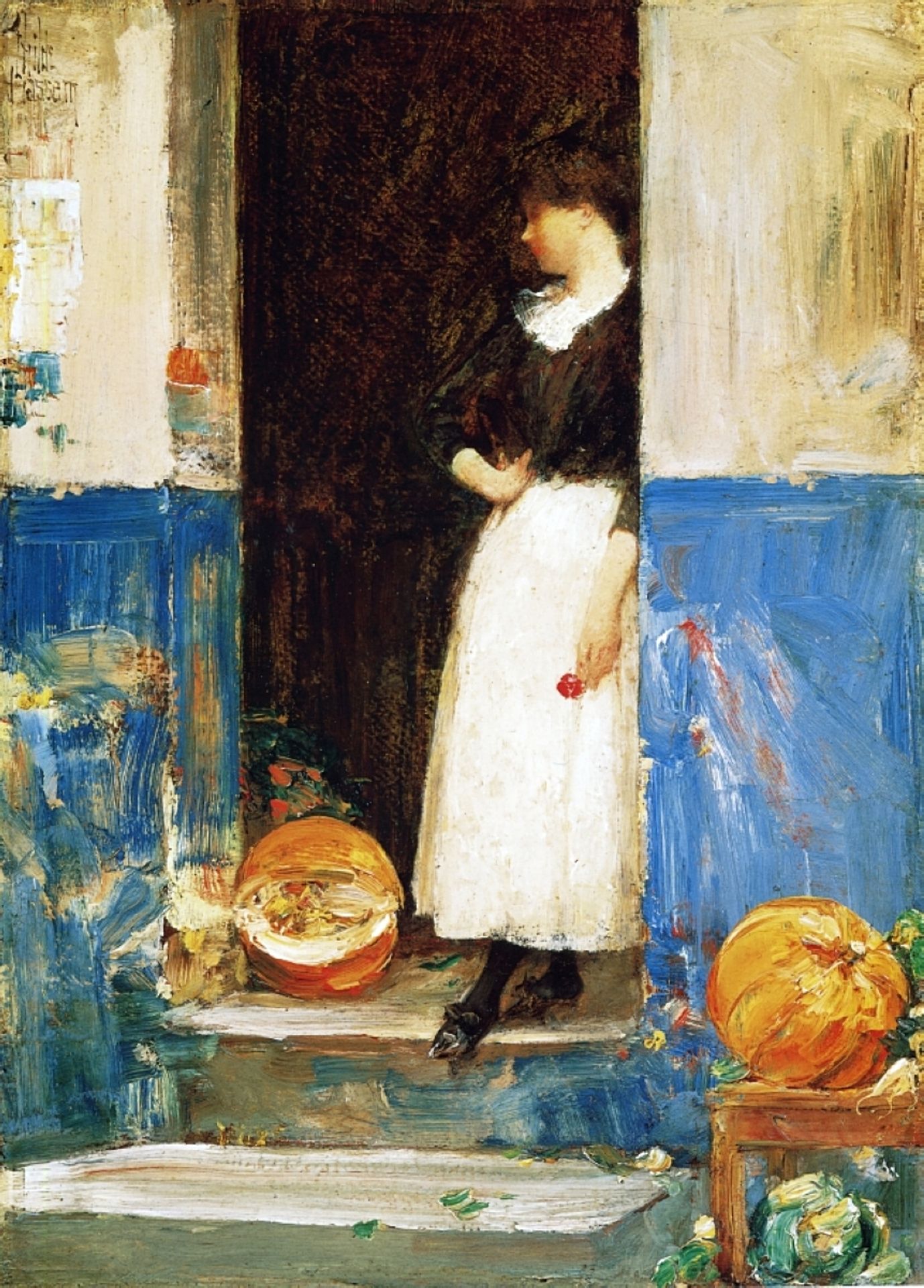
Childe Hassam painted "A Fruit Store" using oil on canvas sometime in the late 19th or early 20th century. Hassam, an American Impressionist, often depicted scenes of urban life and the upper class. Here, he focuses on a fruit store and a maid, a subject that speaks volumes about the social hierarchy of his time. The maid is caught in a moment of repose, standing in the doorway. The pumpkins displayed around her feet were a fashionable grocery item. The visual codes of impressionism, such as the loose brushwork and focus on light, also reflect the changing tastes of the art world at the time. To truly understand this painting, one must consider the economic and social conditions that shaped Hassam's world, researching not just the artist, but the cultural norms and power dynamics that his art both reflects and critiques. The meaning of art is contingent on its social and institutional context, and the historian's role is to unpack these layers of meaning.

Artwork details
- Medium
- painting, oil-paint, photography
- Copyright
- Public domain
Tags
portrait
painting
impressionism
oil-paint
photography
oil painting
genre-painting
street
building
Comments
No comments
About this artwork
Childe Hassam painted "A Fruit Store" using oil on canvas sometime in the late 19th or early 20th century. Hassam, an American Impressionist, often depicted scenes of urban life and the upper class. Here, he focuses on a fruit store and a maid, a subject that speaks volumes about the social hierarchy of his time. The maid is caught in a moment of repose, standing in the doorway. The pumpkins displayed around her feet were a fashionable grocery item. The visual codes of impressionism, such as the loose brushwork and focus on light, also reflect the changing tastes of the art world at the time. To truly understand this painting, one must consider the economic and social conditions that shaped Hassam's world, researching not just the artist, but the cultural norms and power dynamics that his art both reflects and critiques. The meaning of art is contingent on its social and institutional context, and the historian's role is to unpack these layers of meaning.
Comments
No comments