About this artwork
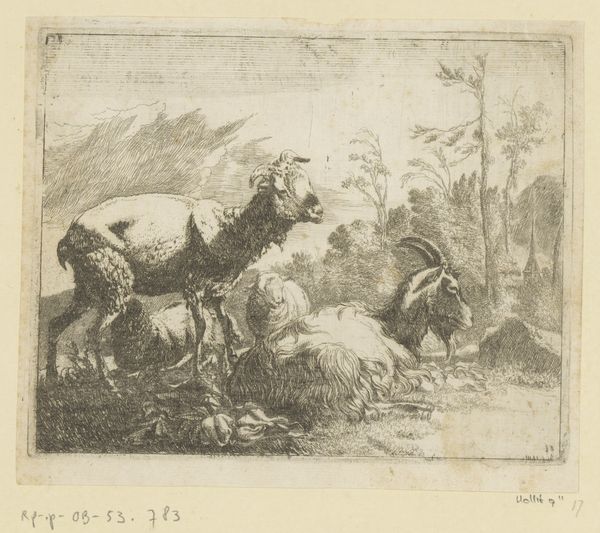
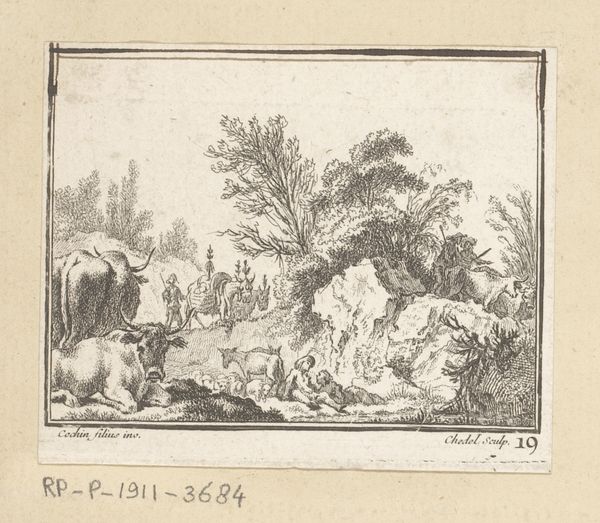
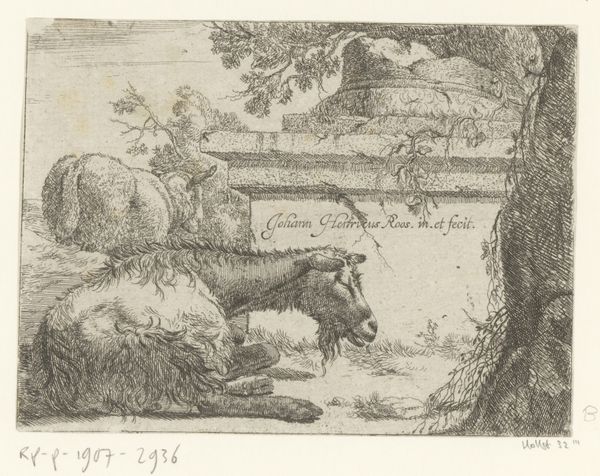
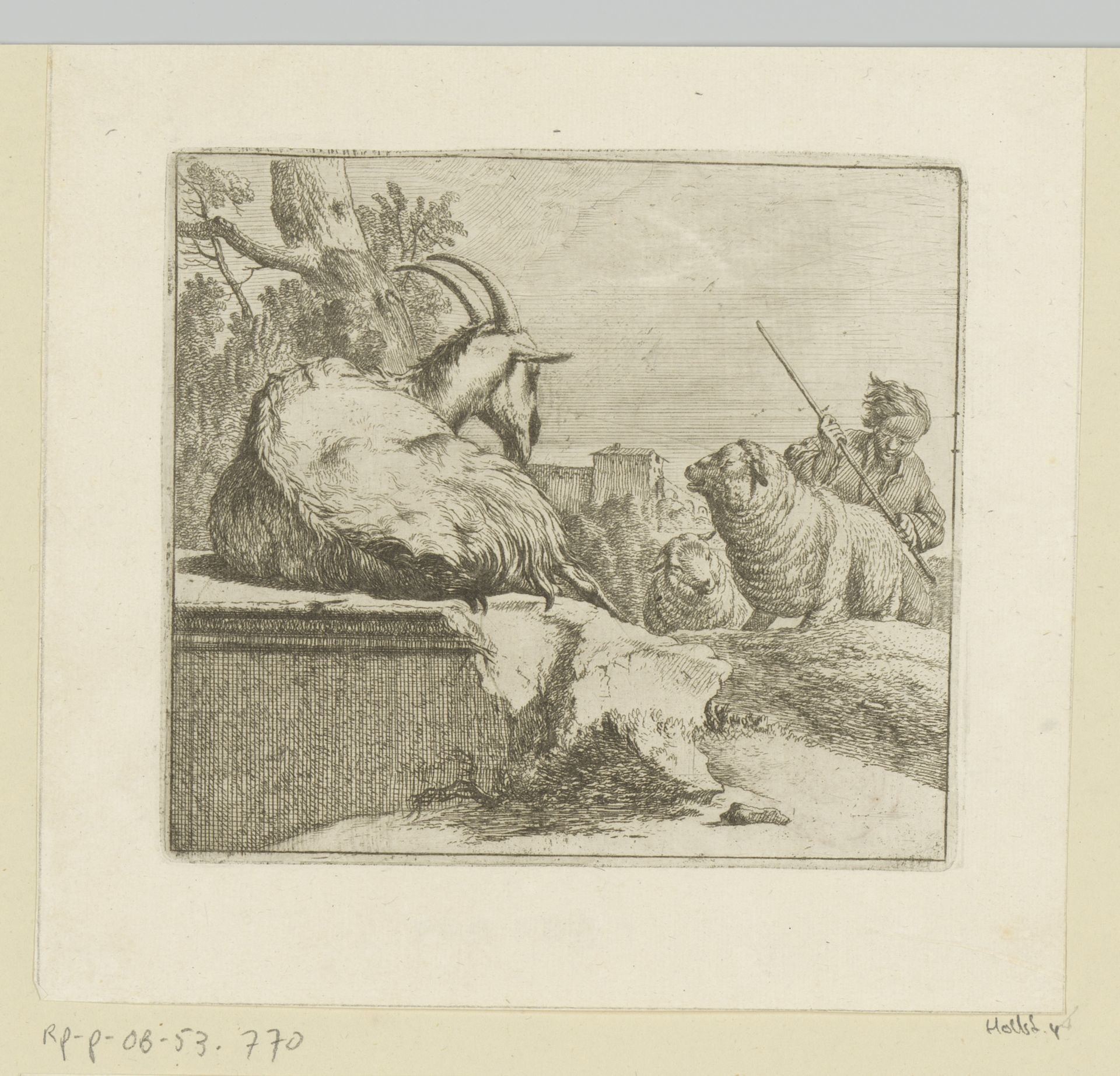
This etching of a goat, sheep and shepherd was made by Johann Heinrich Roos in the 17th century. Roos was a German artist working in the Dutch Golden Age tradition, known for his paintings and prints of animals in idyllic settings. This image embodies the cultural fascination with pastoral life which was prevalent in Northern Europe at this time. The etching presents a scene of rural simplicity and harmony, yet it’s important to remember that this is an idealized vision. By the 17th century, the Netherlands was a major economic power, and the Dutch bourgeoisie had developed a taste for imagery of country life. The city was the centre of power. The image creates meaning through its visual codes. A shepherd is watching over his animals, but the shepherd’s presence also domesticates the scene. He is the master of this country world. To gain a fuller understanding of the historical meaning we must examine other images and texts.
Liggende geit en een herder met twee schapen
1671

Johann Heinrich Roos
1631 - 1685Location
RijksmuseumArtwork details
- Medium
- print, etching
- Dimensions
- height 128 mm, width 139 mm
- Location
- Rijksmuseum
- Copyright
- Rijks Museum: Open Domain
Tags
Comments
Share your thoughts
About this artwork
This etching of a goat, sheep and shepherd was made by Johann Heinrich Roos in the 17th century. Roos was a German artist working in the Dutch Golden Age tradition, known for his paintings and prints of animals in idyllic settings. This image embodies the cultural fascination with pastoral life which was prevalent in Northern Europe at this time. The etching presents a scene of rural simplicity and harmony, yet it’s important to remember that this is an idealized vision. By the 17th century, the Netherlands was a major economic power, and the Dutch bourgeoisie had developed a taste for imagery of country life. The city was the centre of power. The image creates meaning through its visual codes. A shepherd is watching over his animals, but the shepherd’s presence also domesticates the scene. He is the master of this country world. To gain a fuller understanding of the historical meaning we must examine other images and texts.
Comments
Share your thoughts