1814 - 1859
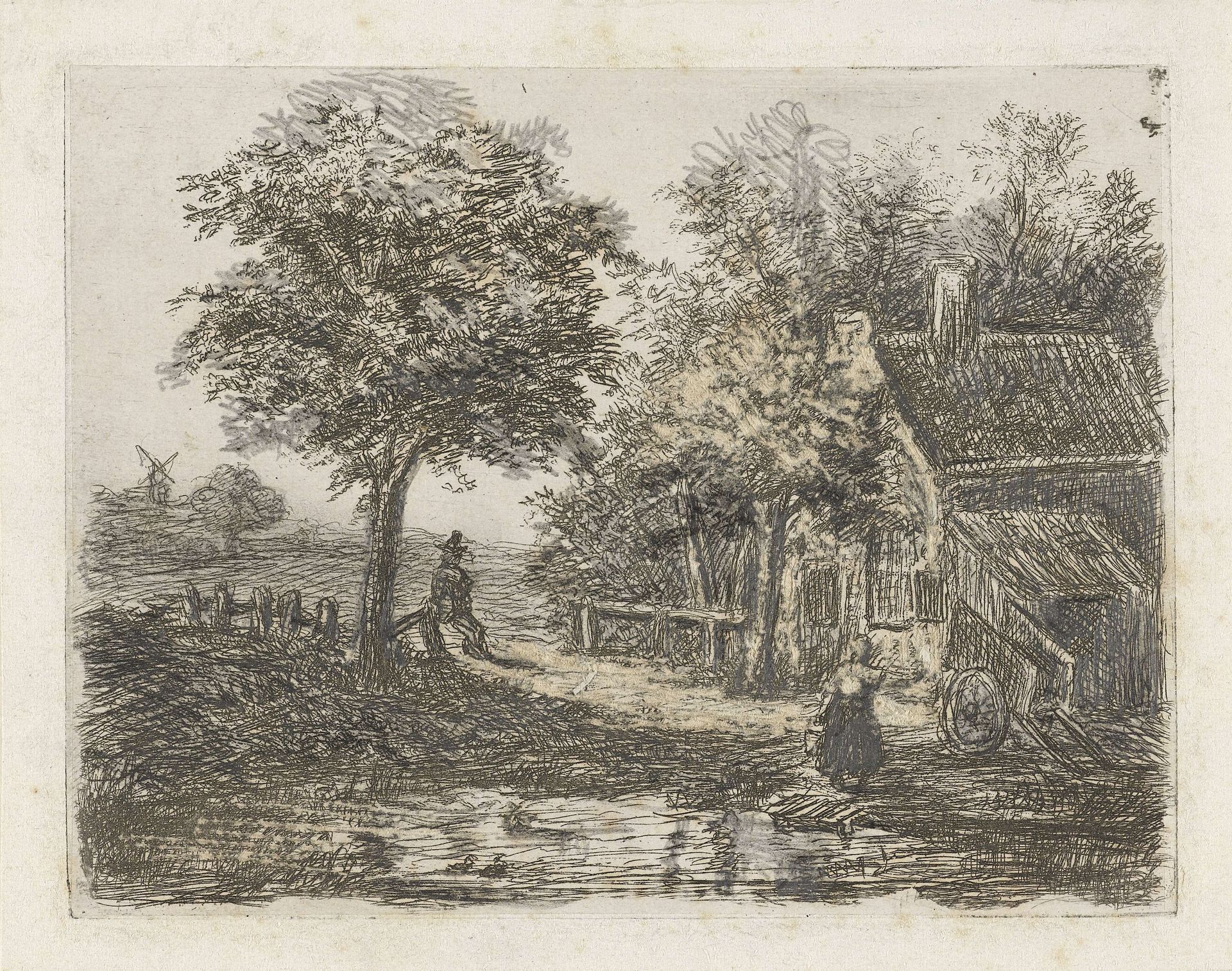
Boerderij aan het water

David van der (1804-1879) Kellen
1804 - 1879Location
RijksmuseumListen to curator's interpretation
Curatorial notes
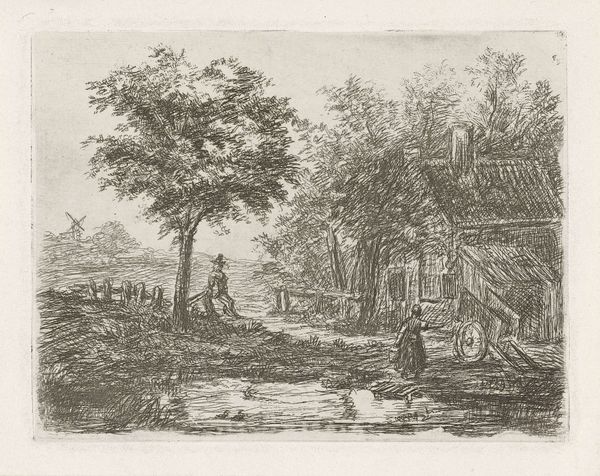
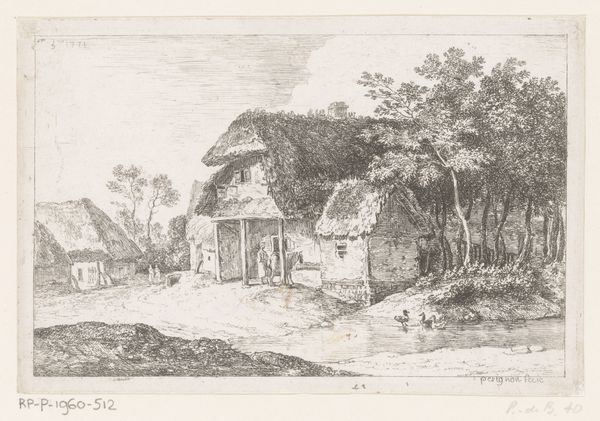
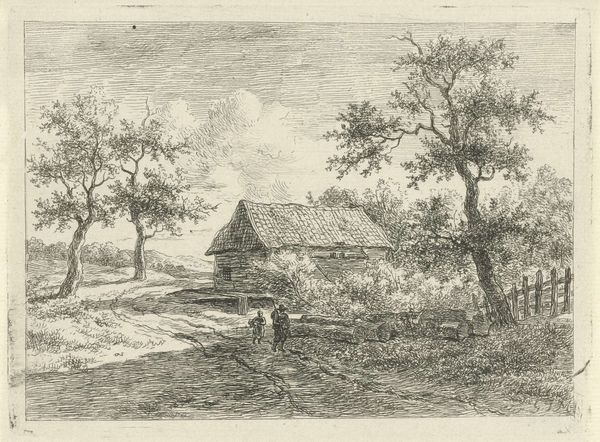
Curator: Looking at "Boerderij aan het water," or "Farm by the Water," created sometime between 1814 and 1859 and currently residing in the Rijksmuseum. It is believed to be by David van der Kellen, rendered with ink, pencil, and etching. A rather modest piece. What strikes you? Editor: A profound stillness. It feels like a quiet moment captured from a much busier, rustic life. The density of the linework seems almost to vibrate on the page; it's a beautiful paradox of tranquility and energy. Curator: I agree; van der Kellen manages to imbue this commonplace scene with a distinct atmospheric charge, reflecting the period’s romanticism. The inclusion of everyday life—the washing, the figure resting, even the distant windmill—root the symbolic aspirations to a humble scale. Editor: Speaking of symbolism, do you see something in the body language of the figures? The woman, weighed down literally perhaps by her basket and laundry; and the man, relaxing with an implied authority of his place within this tiny kingdom? Curator: Perhaps. Though such interpretations can be culturally bound. For audiences of the time, I suspect, this vignette spoke to core ideas about national identity; finding beauty and worth in the land and those who work it. There is definitely an effort to evoke an unadulterated vision of pastoral simplicity as idealized social and spiritual life. Editor: Yes, a subtle staging of labor and repose within a divinely touched space. Even in monochrome and with such simplicity, the cultural echoes feel quite rich. Curator: Absolutely. Van der Kellen's ability to express the idealized themes of genre painting through such spare means makes it worthy of note. Editor: It highlights, once again, how images both shape and reflect the values of their time. Curator: Indeed. It offers much to consider beyond a first glance. Editor: A fruitful reminder that stillness can also be powerfully articulate.