About this artwork
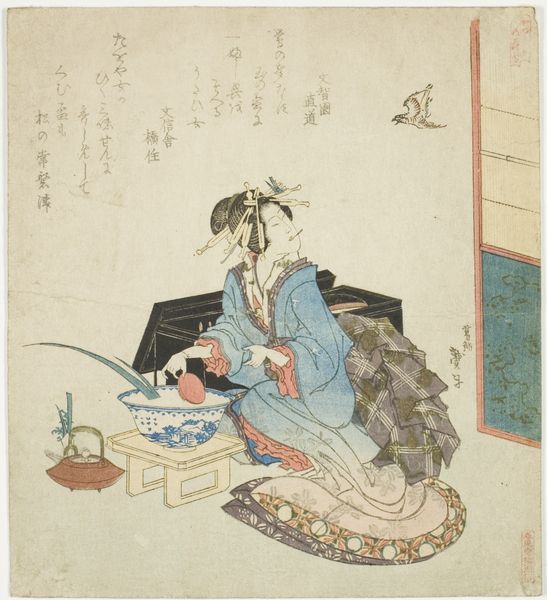
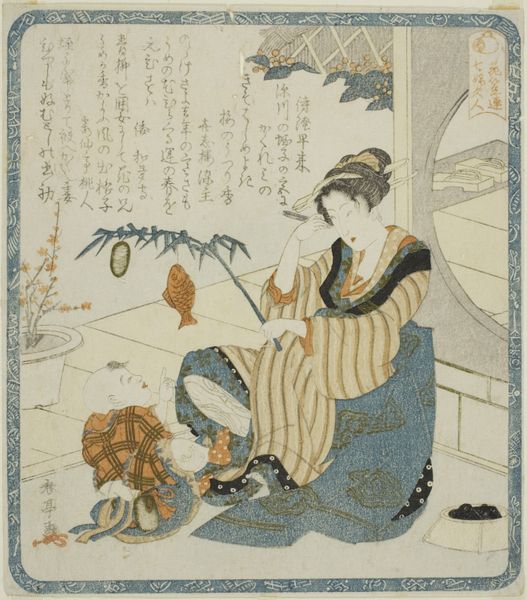
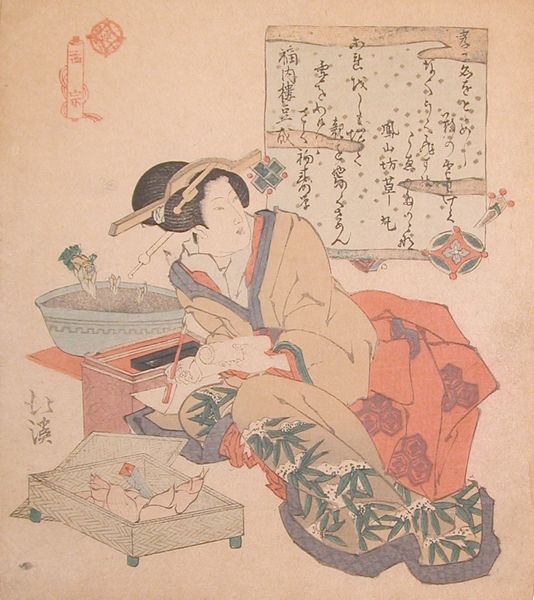
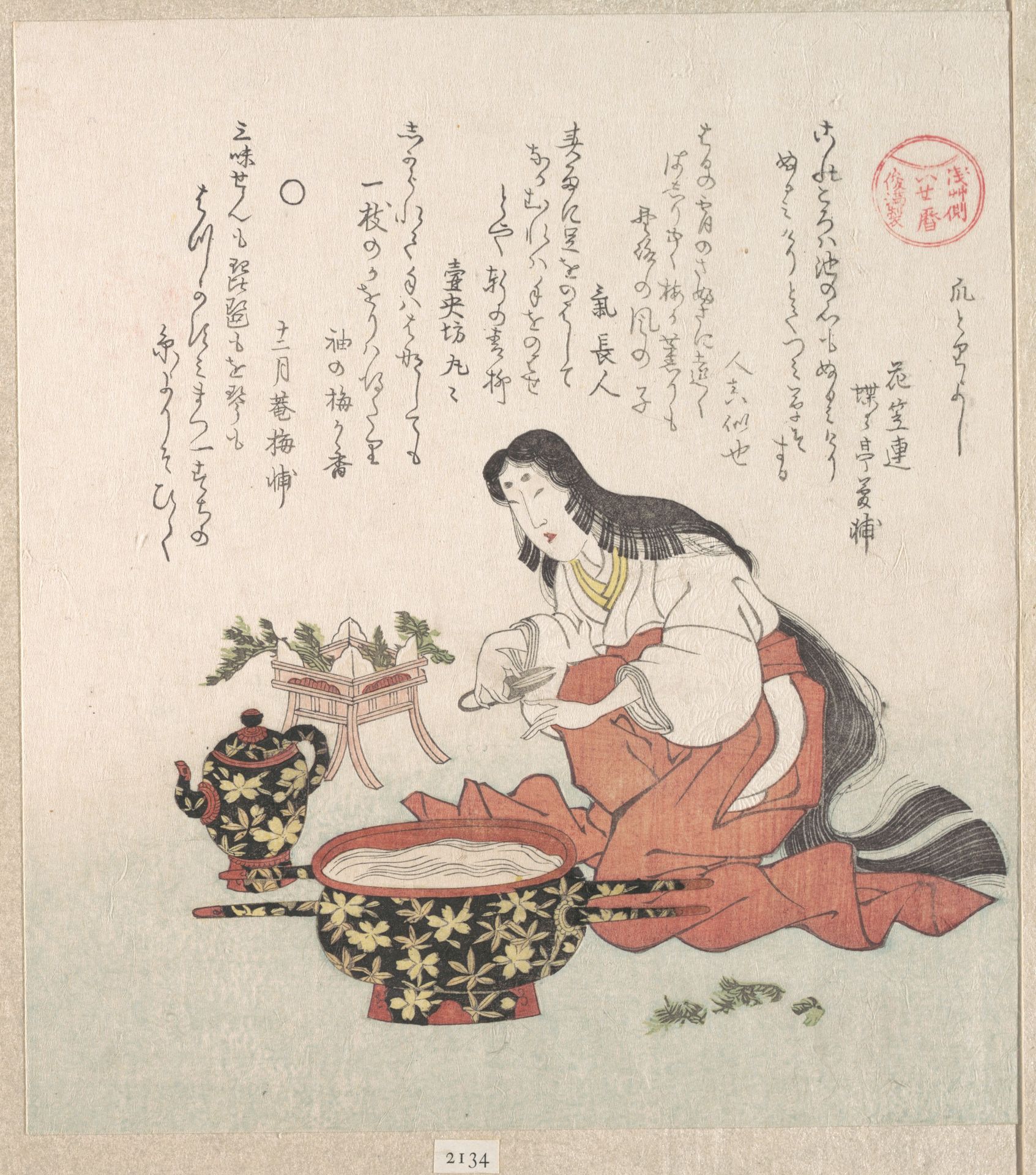
This woodblock print by Kubo Shunman depicts a woman, likely of the Edo period, carefully cutting her nails. This mundane task is rich with cultural significance. Nail clippings, imbued with the essence of the individual, have been seen across cultures as objects requiring careful disposal, lest they be used for sorcery or ill intent. Observe how the mundane act of grooming becomes a symbolic ritual, a dialogue between the individual and forces unseen. The blooms that adorn the pot echo the motif of transience, reminding us of the cyclical nature of life and beauty. Just as in ancient Greece, where discarded personal effects were offered to appease underworld deities, this scene evokes deep, subconscious anxieties about identity and vulnerability. These gestures appear and reappear across time, each iteration carrying echoes of past fears and hopes. The power of such images lies in their ability to tap into a collective memory, engaging viewers on a profound, often unspoken level.
Woman Cutting Her Nails after GatHering Herbs 19th century


Artwork details
- Medium
- print, watercolor
- Dimensions
- 8 3/16 x 7 5/16 in. (20.8 x 18.6 cm)
- Location
- Metropolitan Museum of Art, New York, NY
- Copyright
- Public Domain
Tags
portrait
asian-art
ukiyo-e
figuration
watercolor
Comments
No comments
About this artwork
This woodblock print by Kubo Shunman depicts a woman, likely of the Edo period, carefully cutting her nails. This mundane task is rich with cultural significance. Nail clippings, imbued with the essence of the individual, have been seen across cultures as objects requiring careful disposal, lest they be used for sorcery or ill intent. Observe how the mundane act of grooming becomes a symbolic ritual, a dialogue between the individual and forces unseen. The blooms that adorn the pot echo the motif of transience, reminding us of the cyclical nature of life and beauty. Just as in ancient Greece, where discarded personal effects were offered to appease underworld deities, this scene evokes deep, subconscious anxieties about identity and vulnerability. These gestures appear and reappear across time, each iteration carrying echoes of past fears and hopes. The power of such images lies in their ability to tap into a collective memory, engaging viewers on a profound, often unspoken level.
Comments
No comments