About this artwork
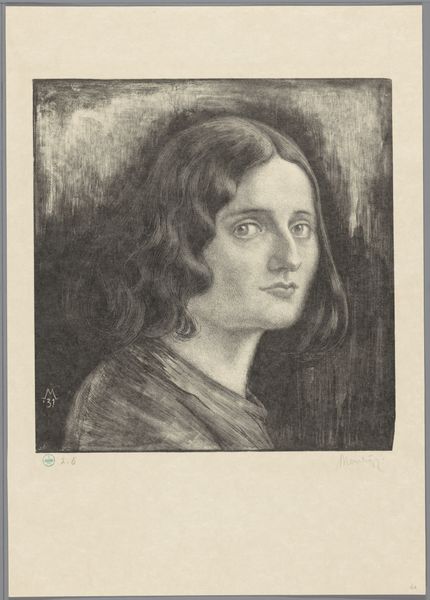
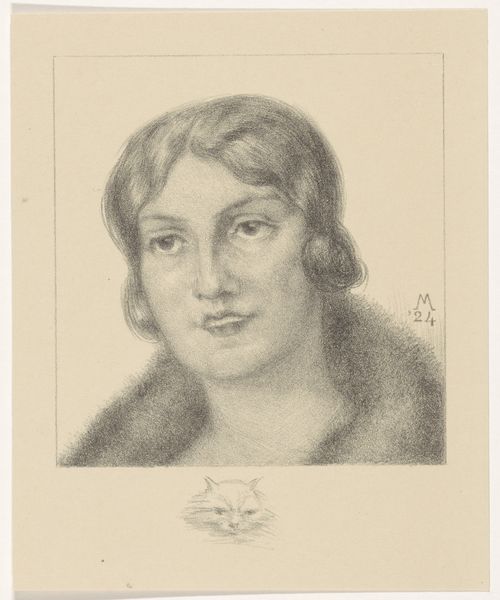
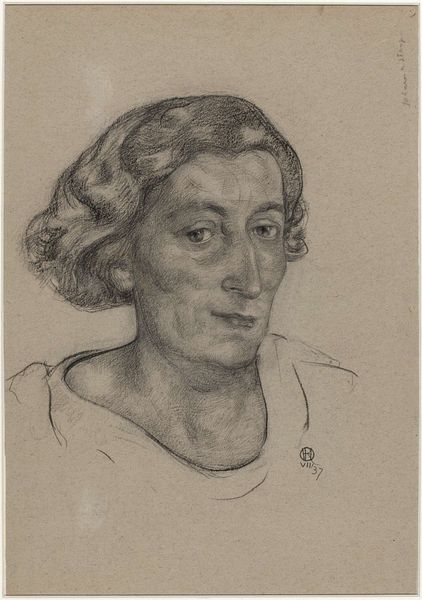
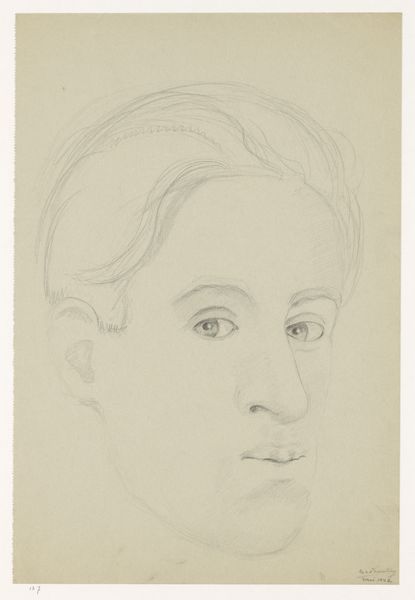
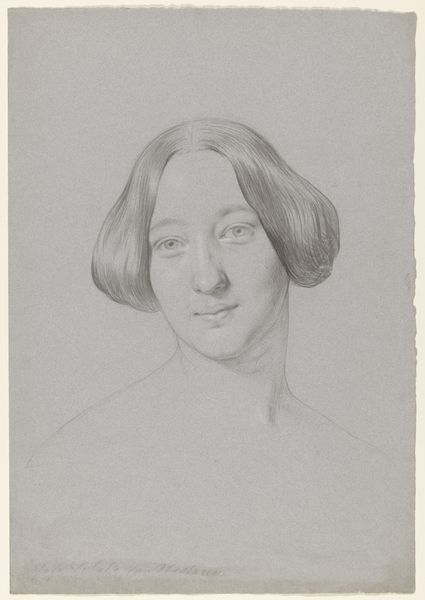
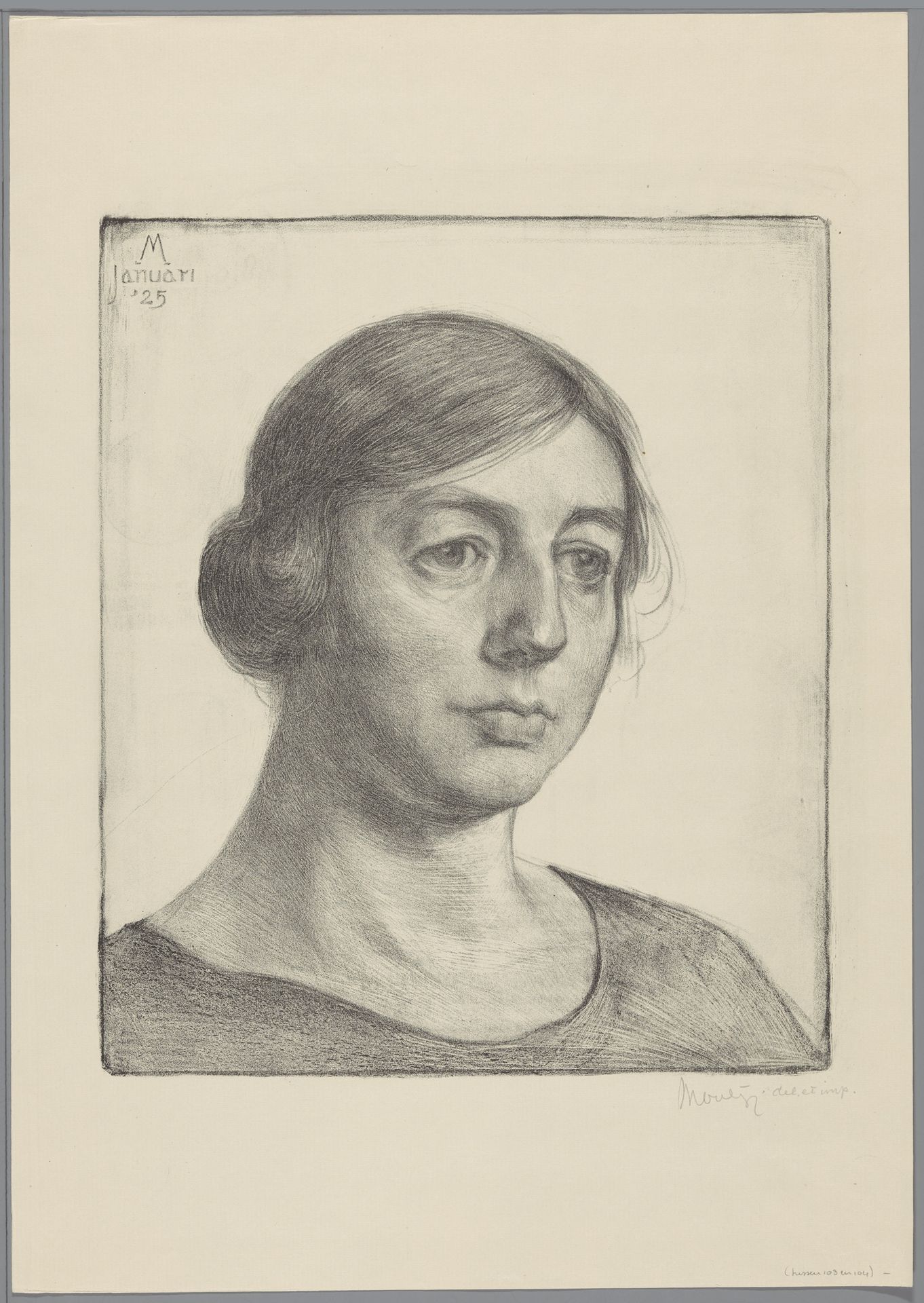
Editor: This is Simon Moulijn's 1925 pencil drawing, "Portret van Henriëtte Haitsma Mulier", currently held at the Rijksmuseum. There's a captivating serenity in the subject's expression. How does this portrait sit within the context of art and society at the time it was made? Curator: It’s fascinating how Moulijn captures this serenity, isn't it? Consider that this was created in 1925, a time of great social and political upheaval after the First World War. The rise of Modernism challenged traditional artistic conventions, yet portraits, like this one, offered a connection to established social structures. What do you think this says about the public role of art during this transitional period? Editor: I see how a portrait provides stability during such uncertain times! Did the sitter's social status play a role in the artistic choices that were made? Curator: Absolutely. Henriëtte Haitsma Mulier likely belonged to a specific social circle, perhaps an intellectual or artistic community, shaping how Moulijn represented her. A simple, realist rendering in pencil moves away from traditional aristocratic portraiture, and perhaps suggests a different vision for society, one less dependent on hierarchies of wealth and class. Who would view it, how would they perceive her? Editor: I hadn’t considered how the artistic medium itself reflected a shift in social values. It moves away from glorification. The drawing style feels more personal, more intimate. Curator: Precisely! So what has shifted in your perception of this work? Editor: I came in thinking only of its aesthetic qualities, and I realize I needed to see how its form is deeply interwoven with broader social movements. I appreciate how your expertise enriched my view of its place in art history. Curator: And I've found it very enlightening to reconsider how its simplicity speaks to complex social dynamics of its time. Thank you for your thoughtful perspective!

Artwork details
- Medium
- drawing, pencil
- Dimensions
- height 423 mm, width 300 mm
- Location
- Rijksmuseum
- Copyright
- Rijks Museum: Open Domain
Tags
portrait
drawing
pencil drawing
pencil
modernism
realism
Comments
No comments
About this artwork
Editor: This is Simon Moulijn's 1925 pencil drawing, "Portret van Henriëtte Haitsma Mulier", currently held at the Rijksmuseum. There's a captivating serenity in the subject's expression. How does this portrait sit within the context of art and society at the time it was made? Curator: It’s fascinating how Moulijn captures this serenity, isn't it? Consider that this was created in 1925, a time of great social and political upheaval after the First World War. The rise of Modernism challenged traditional artistic conventions, yet portraits, like this one, offered a connection to established social structures. What do you think this says about the public role of art during this transitional period? Editor: I see how a portrait provides stability during such uncertain times! Did the sitter's social status play a role in the artistic choices that were made? Curator: Absolutely. Henriëtte Haitsma Mulier likely belonged to a specific social circle, perhaps an intellectual or artistic community, shaping how Moulijn represented her. A simple, realist rendering in pencil moves away from traditional aristocratic portraiture, and perhaps suggests a different vision for society, one less dependent on hierarchies of wealth and class. Who would view it, how would they perceive her? Editor: I hadn’t considered how the artistic medium itself reflected a shift in social values. It moves away from glorification. The drawing style feels more personal, more intimate. Curator: Precisely! So what has shifted in your perception of this work? Editor: I came in thinking only of its aesthetic qualities, and I realize I needed to see how its form is deeply interwoven with broader social movements. I appreciate how your expertise enriched my view of its place in art history. Curator: And I've found it very enlightening to reconsider how its simplicity speaks to complex social dynamics of its time. Thank you for your thoughtful perspective!
Comments
No comments