About this artwork
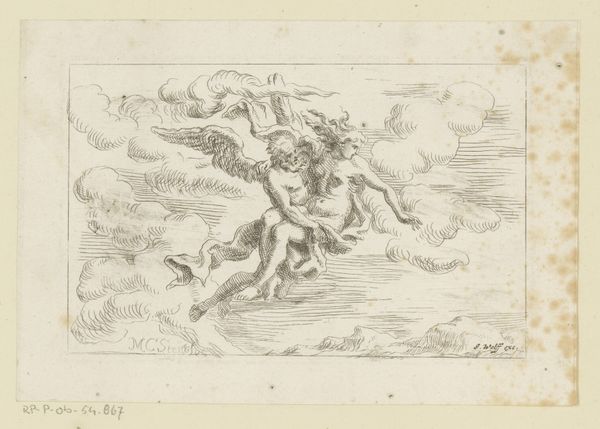
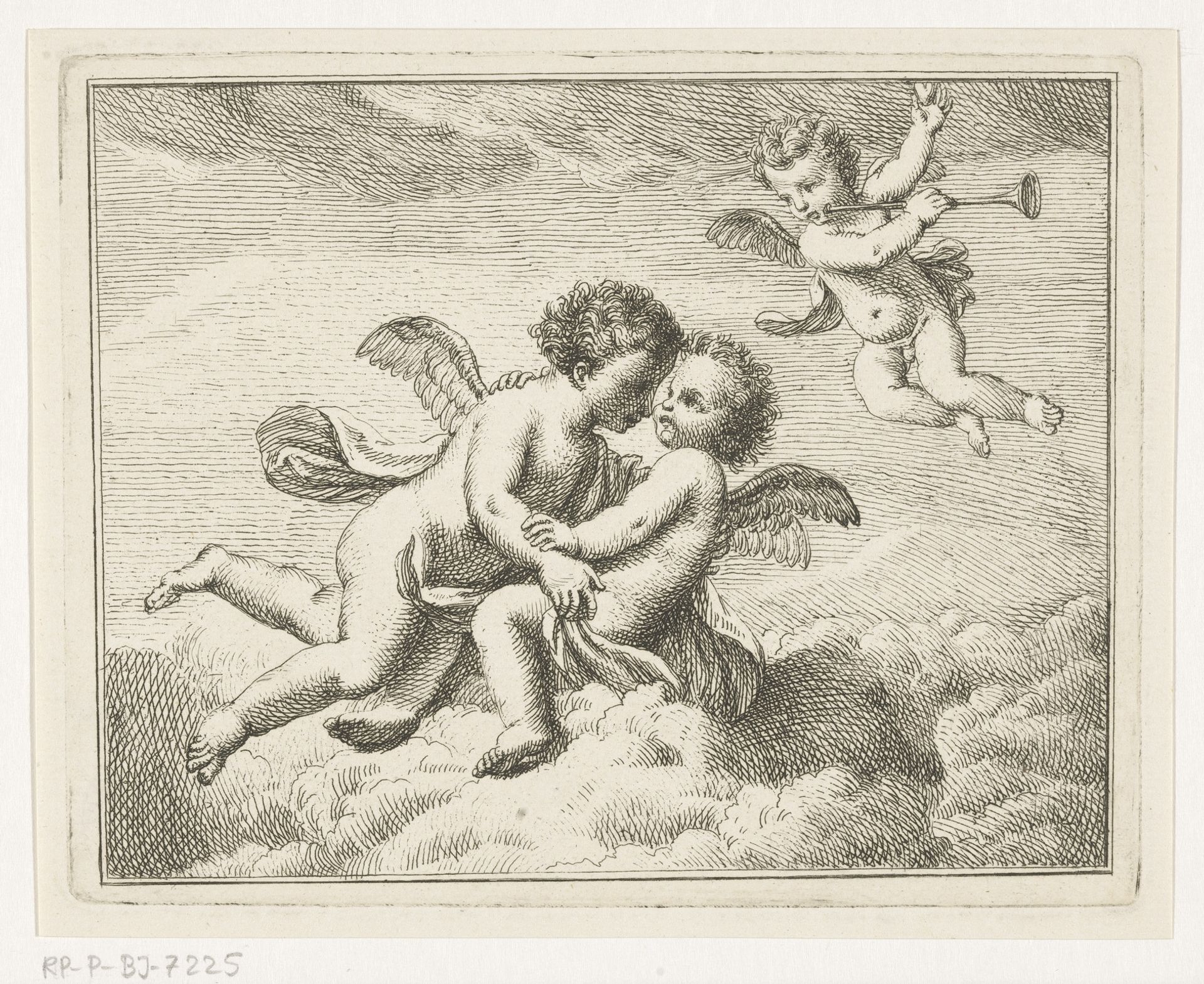
Louis Fabritius Dubourg created this delicate etching, "Three Putti in the Clouds, One with a Trumpet," sometime before his death in 1775. The composition is dominated by a play of forms, with the soft, rounded bodies of the putti contrasting against the more angular and dynamic lines of the clouds and the etching marks. Notice how the artist uses a limited tonal range to suggest depth and volume. The etching technique itself, with its fine lines and cross-hatching, creates a sense of ethereal lightness, perfectly suited to the subject matter. The arrangement of the figures creates a rhythmic movement across the composition, guiding the eye from the embracing putti to the playful figure with the trumpet. Within the symbolic language of art, putti often represent divine love and innocence, which when set against the lightness of the etching technique, invites contemplation on themes of purity and joy. This is not a fixed meaning but an invitation to continual exploration.
Drie putti in de wolken, een met een bazuin
1713 - 1775

Louis Fabritius Dubourg
1693 - 1775Location
RijksmuseumArtwork details
- Medium
- print, engraving
- Dimensions
- height 140 mm, width 178 mm
- Location
- Rijksmuseum
- Copyright
- Rijks Museum: Open Domain
Tags
Comments
Share your thoughts
About this artwork
Louis Fabritius Dubourg created this delicate etching, "Three Putti in the Clouds, One with a Trumpet," sometime before his death in 1775. The composition is dominated by a play of forms, with the soft, rounded bodies of the putti contrasting against the more angular and dynamic lines of the clouds and the etching marks. Notice how the artist uses a limited tonal range to suggest depth and volume. The etching technique itself, with its fine lines and cross-hatching, creates a sense of ethereal lightness, perfectly suited to the subject matter. The arrangement of the figures creates a rhythmic movement across the composition, guiding the eye from the embracing putti to the playful figure with the trumpet. Within the symbolic language of art, putti often represent divine love and innocence, which when set against the lightness of the etching technique, invites contemplation on themes of purity and joy. This is not a fixed meaning but an invitation to continual exploration.
Comments
Share your thoughts