About this artwork
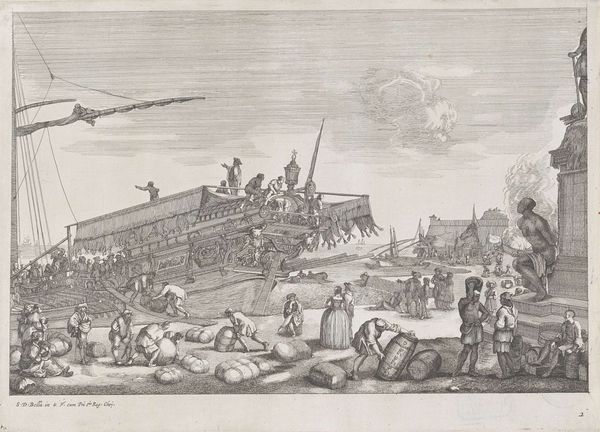
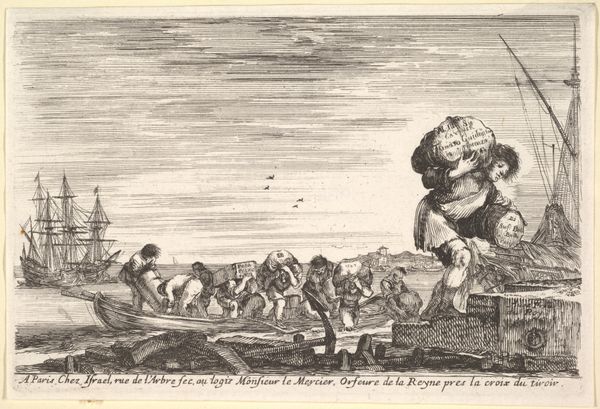
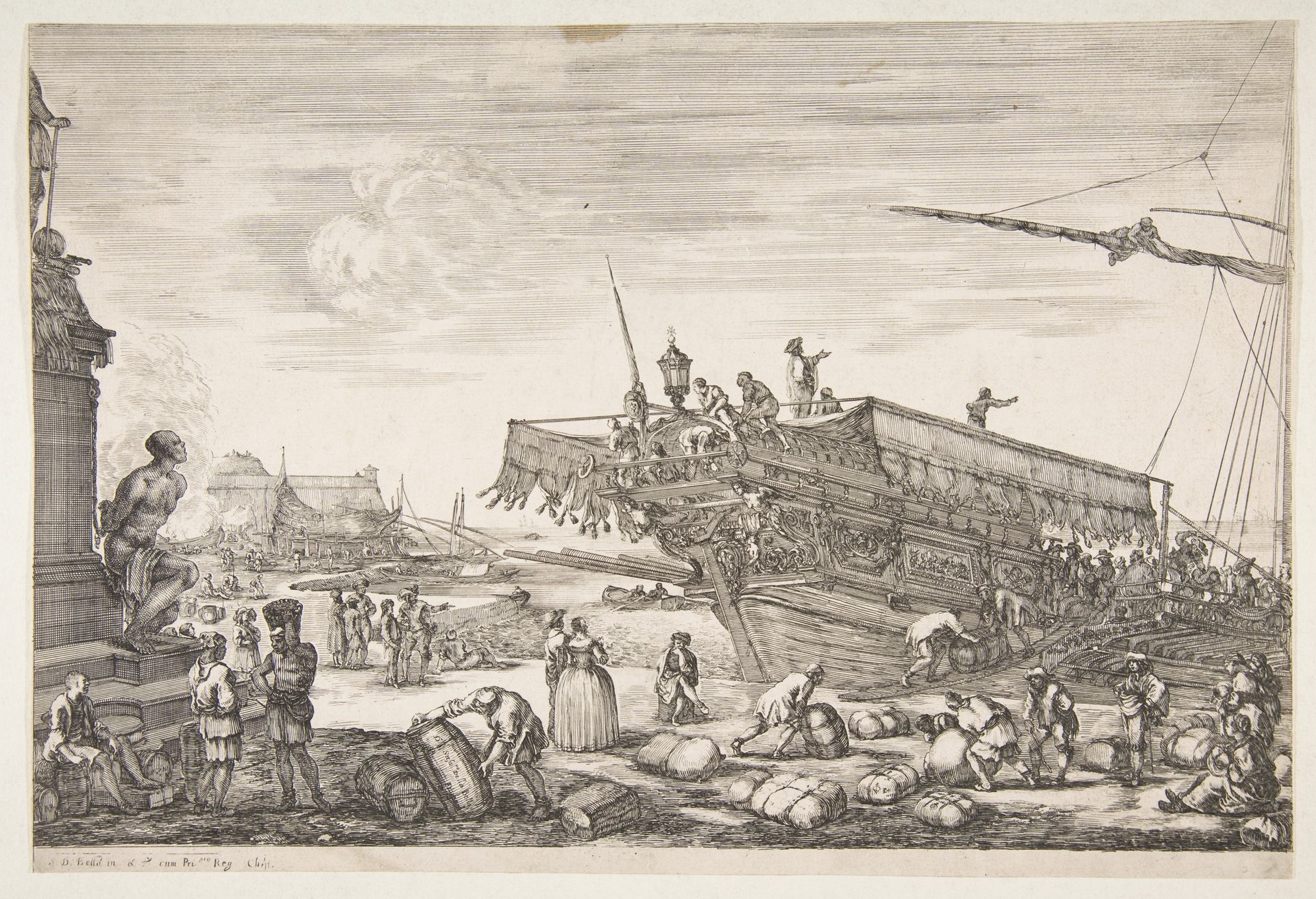
Curator: Look at the dizzying energy in Stefano della Bella’s etching, "Loading a galley, from 'Views of the port of Livorno'," made around 1654 or 55. The eye really dances! Editor: It’s incredible, yes, but mostly at the sheer volume of stuff, the labor… look at those figures rolling barrels, hauling sacks, it speaks to the intense effort required to operate a port like Livorno back then. You can almost feel the weight of the world in those overloaded ships. Curator: Exactly! I mean, doesn’t it also feel like a theatrical stage set? All these meticulously drawn figures – the smartly dressed observers almost look like an audience to this performance of maritime trade, observing a very grand spectacle, something truly, well, baroque. Editor: The drama comes from the process, from how all those barrels and sacks contribute to a larger global economic machine. Consider how della Bella chose etching. Etching meant multiples— these images traveled; this wasn't a precious painting for one wealthy patron, but a record of work and exchange available to many. Curator: And such elegant records. Though, of course, there’s an unavoidable darkness. The figure of the bound slave at the left of the print is deeply unsettling; Della Bella isn't blind to the dark underbelly of trade, or maybe he simply includes it in the way he would have recorded all he could see. Editor: The artist certainly depicts what's there—the economic realities of that place, at that time. Materials are always embedded in a set of exploitative relations, which shape not only who is making it and who is shown doing the work, but how art reaches its consumers. Curator: Looking closely like this… it strikes me that even mundane scenes hold within them a whole history – both visible and brutally invisible, so human, or perhaps not. Editor: Right, it is a constant reminder that nothing exists outside a chain of events or outside labor. And every piece tells a multifaceted tale when we think critically about how materials were made and traded.
Loading a galley, from "Views of the port of Livorno" (Vues du port de Livourne) 1654 - 1655

Stefano della Bella
1610 - 1664
The Metropolitan Museum of Art
Metropolitan Museum of Art, New York, NYArtwork details
- Medium
- drawing, print, etching, engraving
- Dimensions
- Sheet: 9 1/4 × 13 11/16 in. (23.5 × 34.8 cm)
- Location
- Metropolitan Museum of Art, New York, NY
- Copyright
- Public Domain
Tags
drawing
ink drawing
baroque
etching
cityscape
genre-painting
engraving
Comments
No comments
About this artwork
Curator: Look at the dizzying energy in Stefano della Bella’s etching, "Loading a galley, from 'Views of the port of Livorno'," made around 1654 or 55. The eye really dances! Editor: It’s incredible, yes, but mostly at the sheer volume of stuff, the labor… look at those figures rolling barrels, hauling sacks, it speaks to the intense effort required to operate a port like Livorno back then. You can almost feel the weight of the world in those overloaded ships. Curator: Exactly! I mean, doesn’t it also feel like a theatrical stage set? All these meticulously drawn figures – the smartly dressed observers almost look like an audience to this performance of maritime trade, observing a very grand spectacle, something truly, well, baroque. Editor: The drama comes from the process, from how all those barrels and sacks contribute to a larger global economic machine. Consider how della Bella chose etching. Etching meant multiples— these images traveled; this wasn't a precious painting for one wealthy patron, but a record of work and exchange available to many. Curator: And such elegant records. Though, of course, there’s an unavoidable darkness. The figure of the bound slave at the left of the print is deeply unsettling; Della Bella isn't blind to the dark underbelly of trade, or maybe he simply includes it in the way he would have recorded all he could see. Editor: The artist certainly depicts what's there—the economic realities of that place, at that time. Materials are always embedded in a set of exploitative relations, which shape not only who is making it and who is shown doing the work, but how art reaches its consumers. Curator: Looking closely like this… it strikes me that even mundane scenes hold within them a whole history – both visible and brutally invisible, so human, or perhaps not. Editor: Right, it is a constant reminder that nothing exists outside a chain of events or outside labor. And every piece tells a multifaceted tale when we think critically about how materials were made and traded.
Comments
No comments