1801
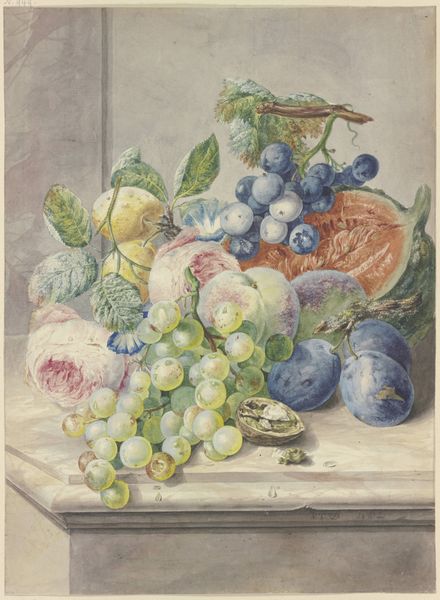
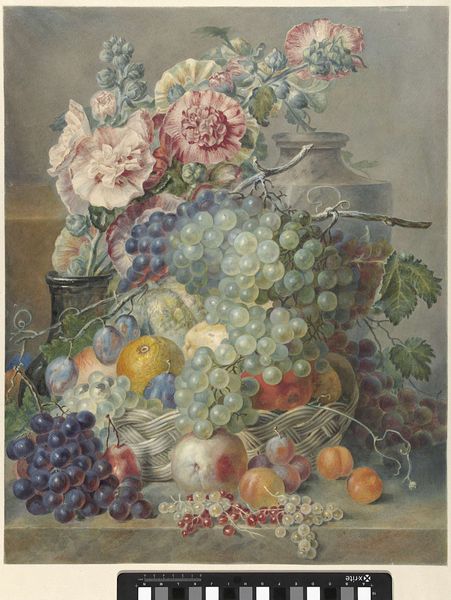
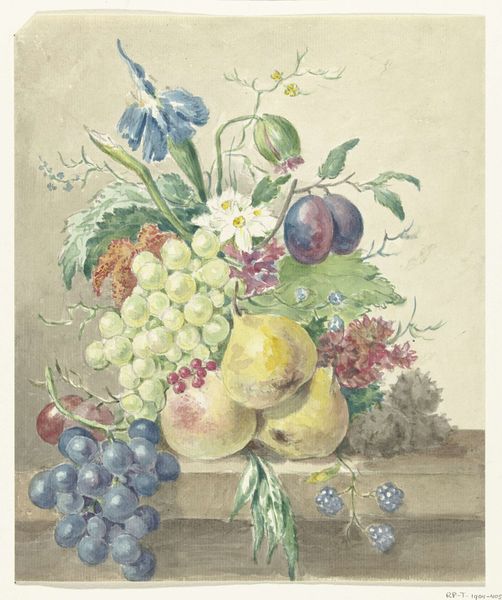
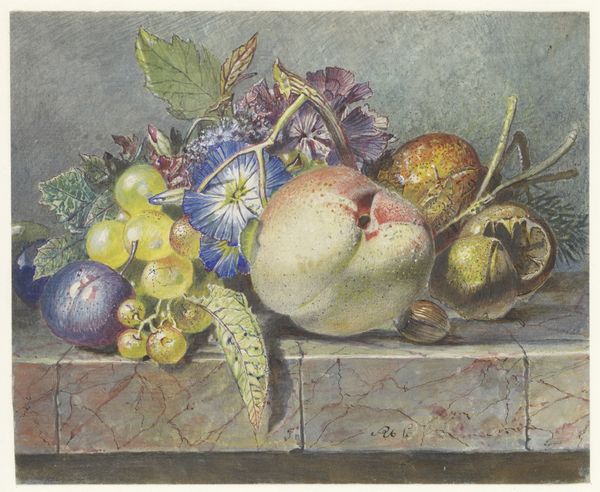
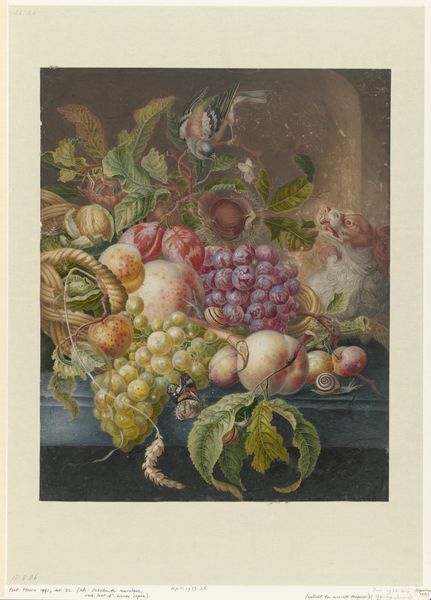
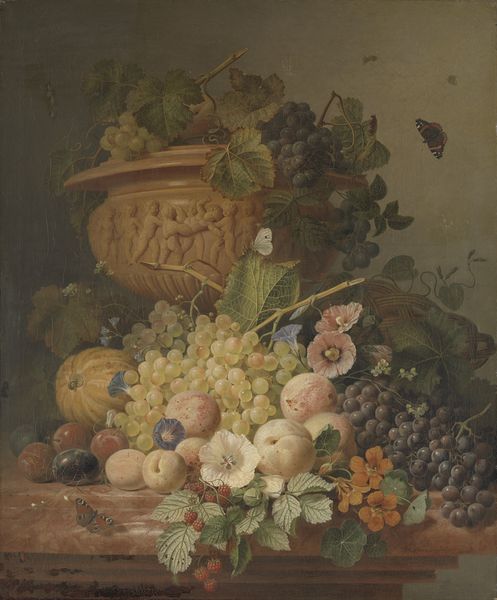
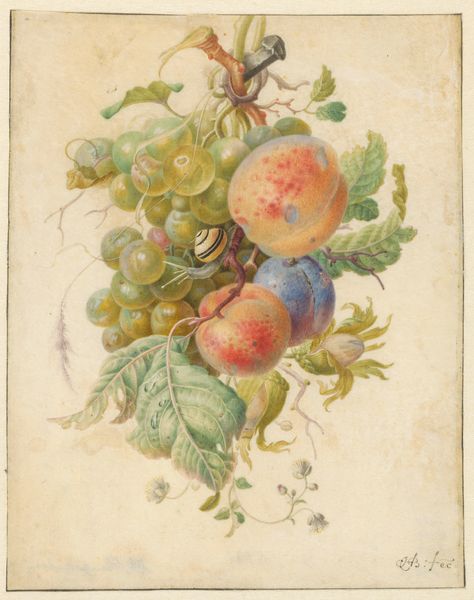
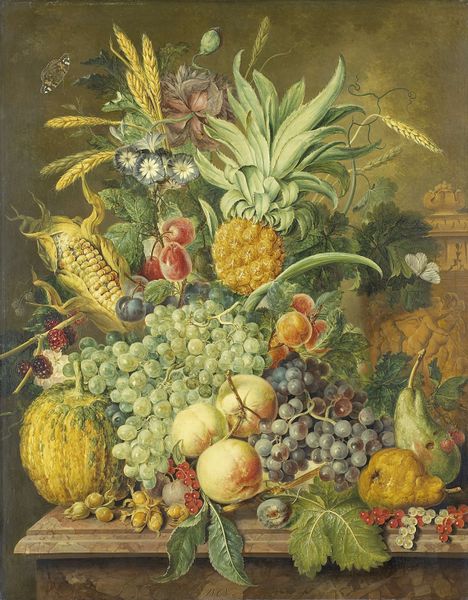
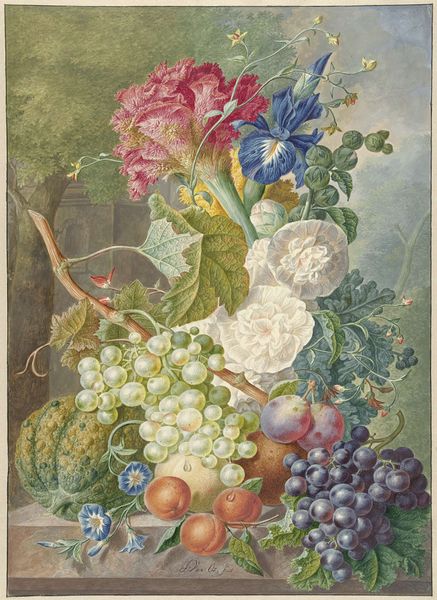
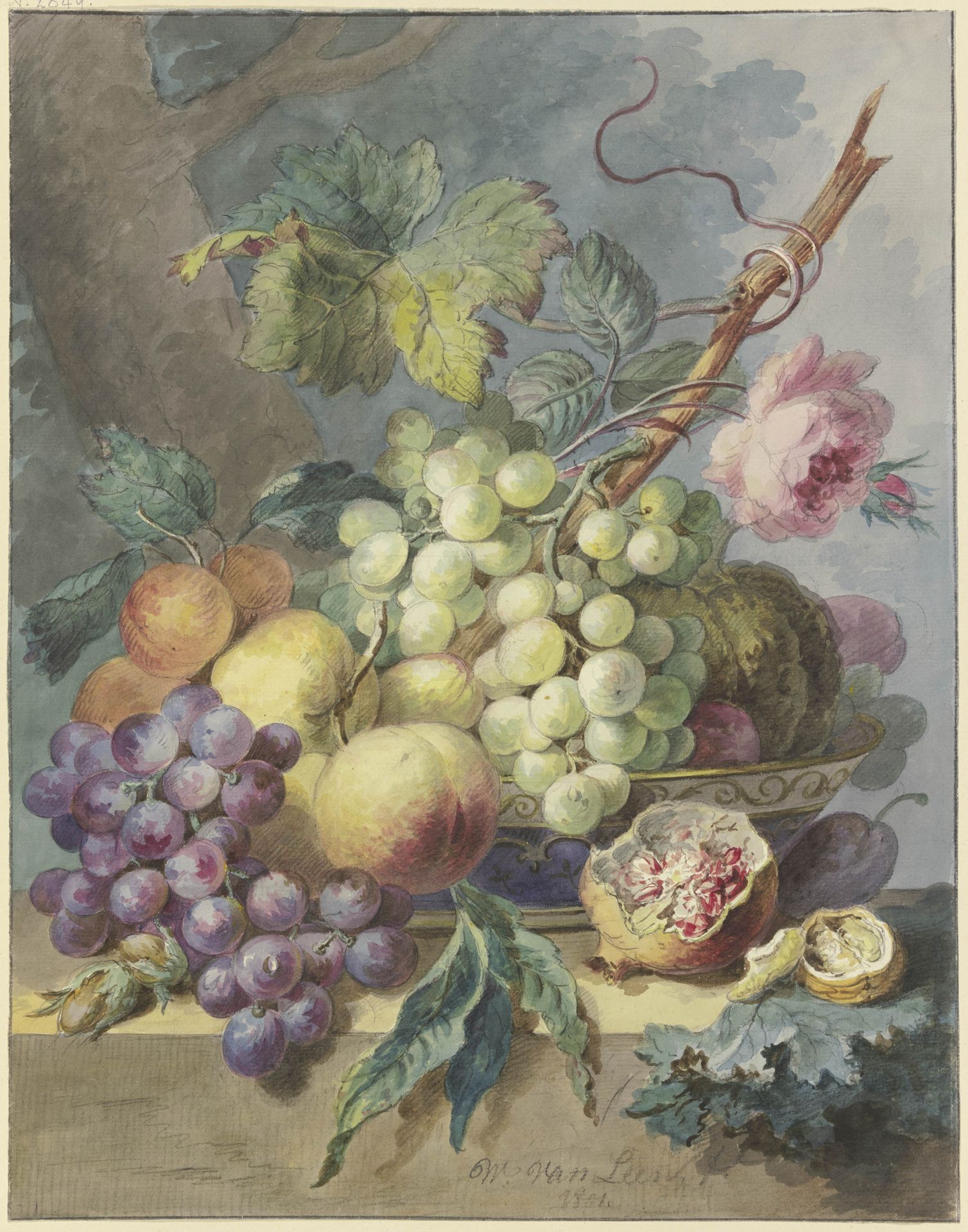
Fruchtstück mit Trauben, Pfirsichen usw., dabei eine Rose


Listen to curator's interpretation
Curatorial notes
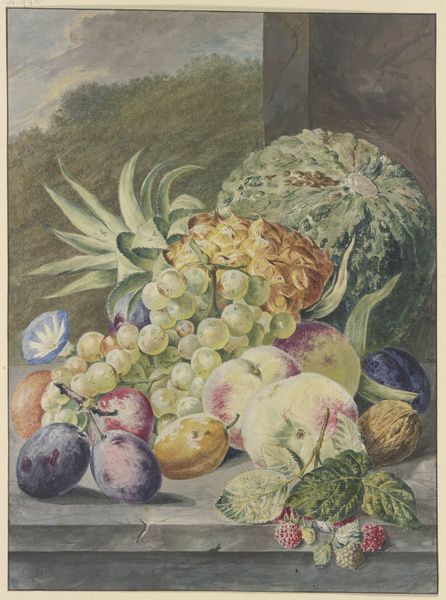
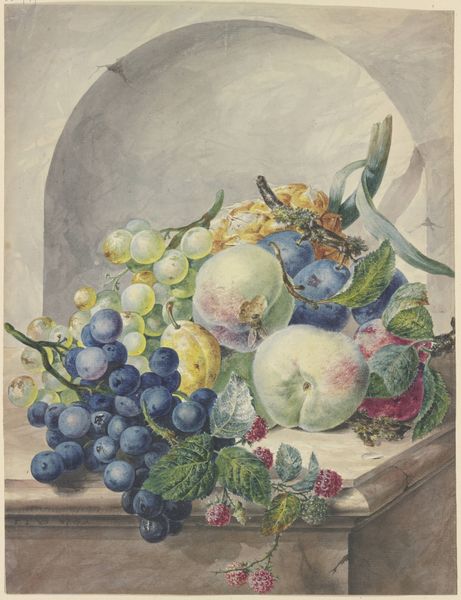
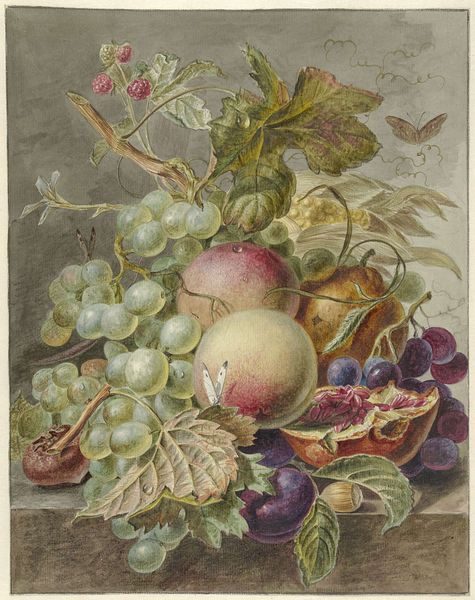
Willem van Leen created this still life with watercolor around 1804. Observe the luscious display of fruits and the delicate rose. In Western art, such arrangements are often laden with symbolic meaning. Grapes, for instance, have long been associated with abundance and, within a Christian context, with the blood of Christ. The pomegranate, split open to reveal its seeds, suggests fertility and regeneration, echoing themes found in ancient Greek myths, such as the story of Persephone. This motif has resurfaced countless times, from Renaissance paintings to modern-day symbols of health and vitality. Note how the rose, a symbol of love and beauty, adds another layer of complexity. Its ephemeral nature also hints at the transience of life, a memento mori subtly woven into the composition. The combination of these symbols evokes powerful, often subconscious, emotions tied to our understanding of life, death, and rebirth. Such imagery taps into a collective memory, engaging viewers on a deep, psychological level. The non-linear progression of these symbols—from ancient myths to contemporary interpretations—demonstrates how they resurface and evolve, gaining new meanings across different historical contexts.