About this artwork
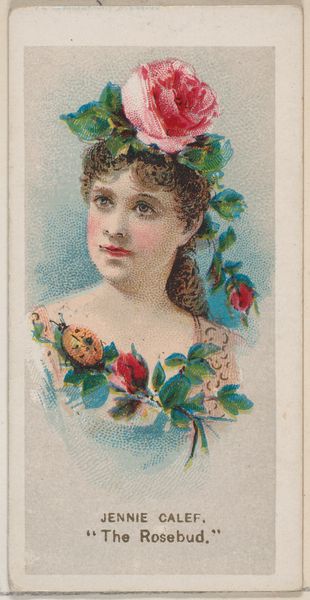
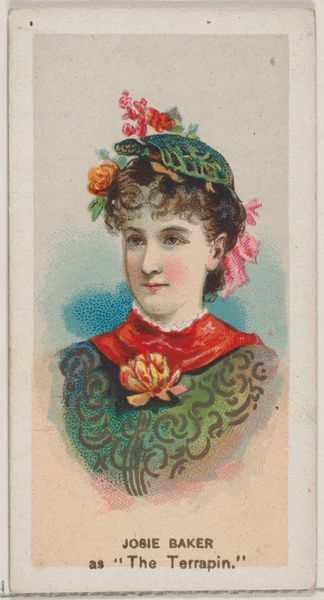
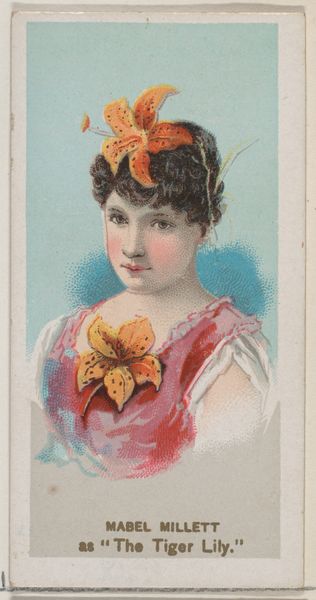
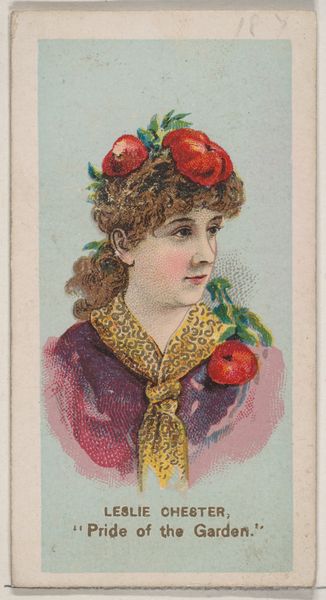
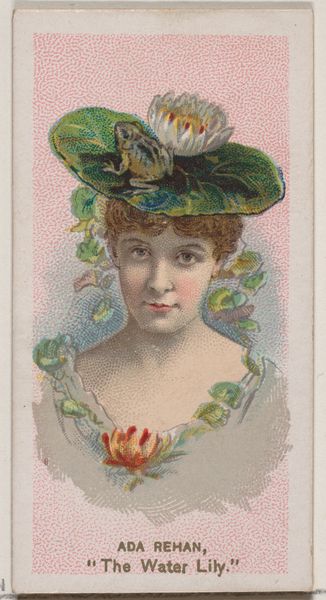
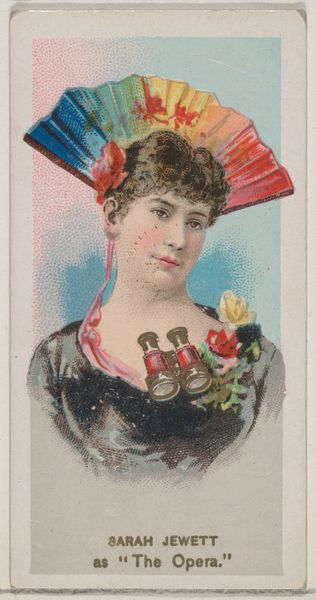
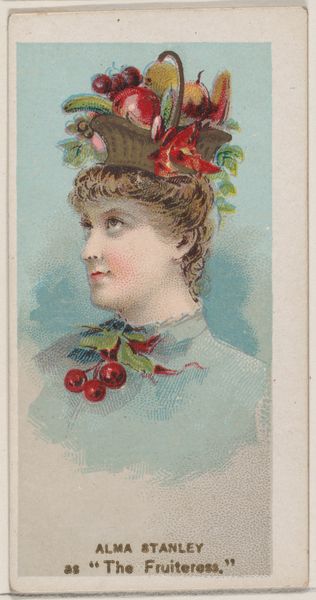
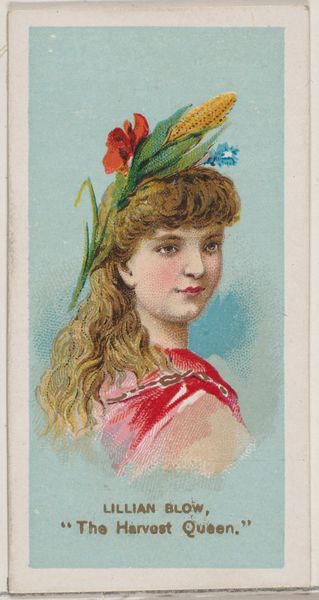
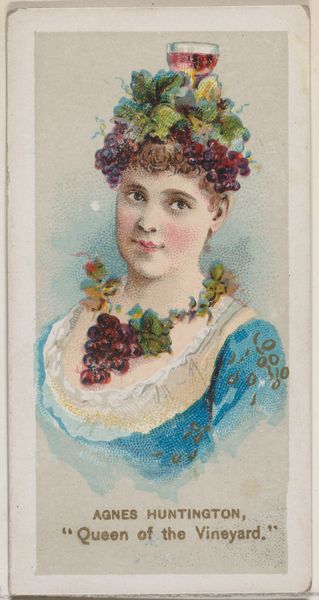
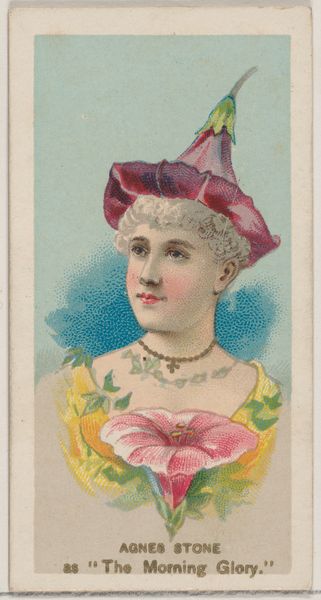
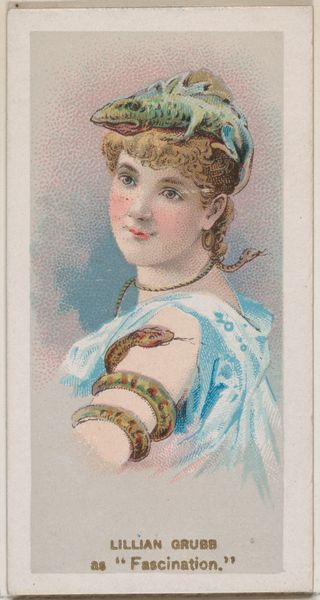
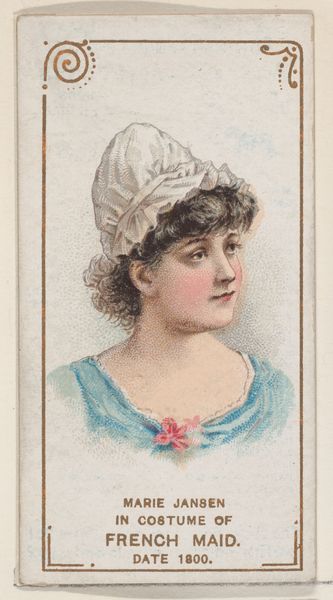
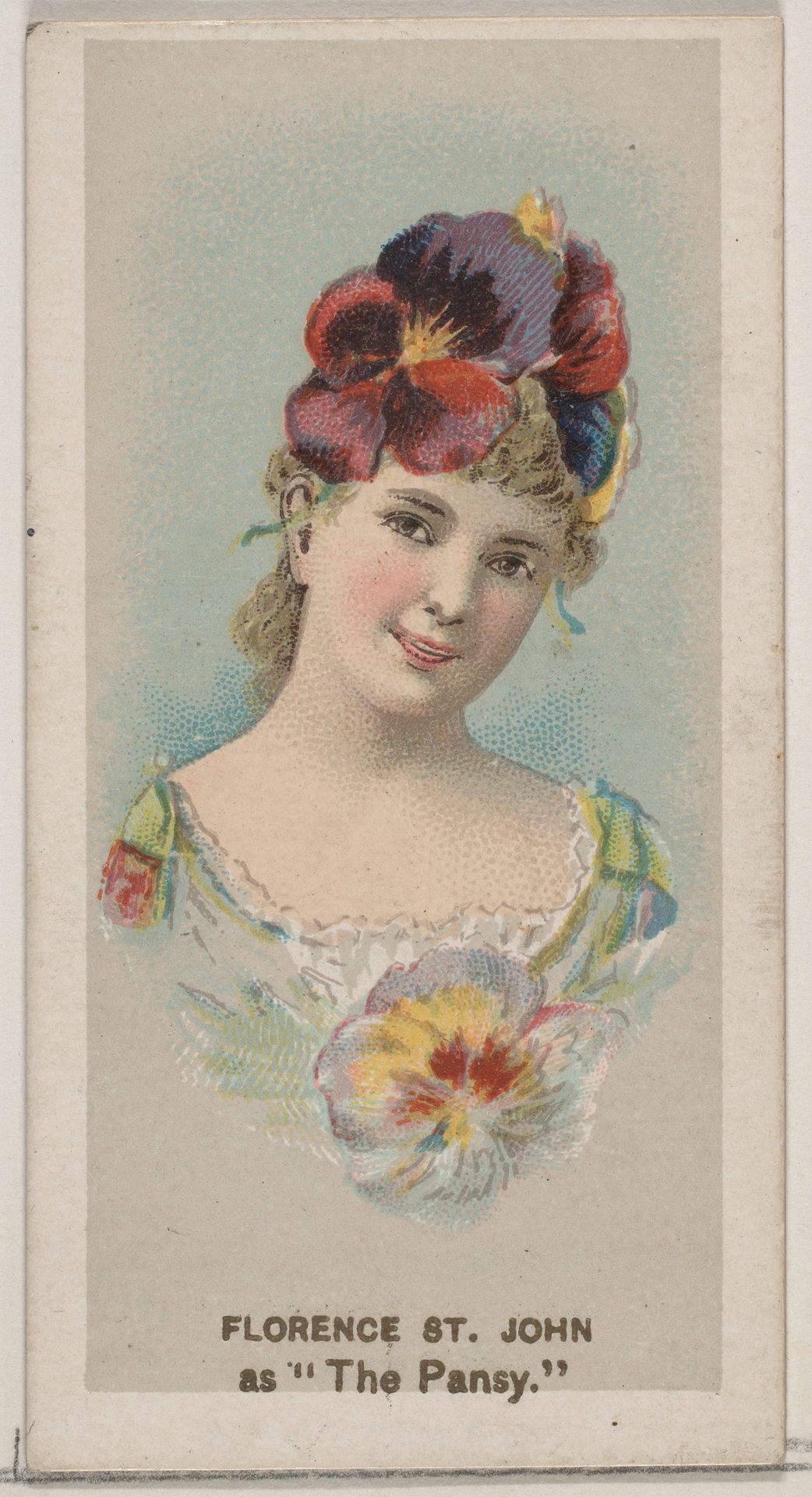
Curator: Before us, we have a rather charming piece titled "Florence St. John as 'The Pansy,'" part of the series "Fancy Dress Ball Costumes" produced in 1889 for Duke brand cigarettes. Editor: Immediately, I notice the composition relies heavily on soft colors and gentle curves, creating an almost dreamlike image. The use of coloured pencil gives the piece a unique texture, too. Curator: Indeed. Tobacco cards were a popular form of advertisement. But, look closer. The choice of Florence St. John dressed as a pansy carries symbolic weight. The pansy, derived from the French word "pensée," meaning "thought," was often associated with remembrance and affection, but could also be a sly nod to more unconventional affections. Editor: That tension between the overt, floral sweetness and a possible undercurrent is interesting. Notice how the flower practically engulfs her head; it’s almost surreal, and hints at a transformation of identity. There’s a performative element in both the “fancy dress” aspect and in being consumed by the floral persona. Curator: Absolutely. The "fancy dress" element invites a discussion about societal roles. Florence is not simply wearing a costume, she's embodying an ideal, a cultivated presentation of femininity but also suggesting possibilities outside expected norms. The color choices and drawing media would reinforce those ideas. Editor: The impressionistic touches and portrait-like framing contribute to the artifice. The lack of precise details, along with her coy smile, invite a subjective, emotional response rather than a rational assessment of her likeness. She seems deliberately constructed for our gaze. Curator: Right, it's as if we're peering into a curated fantasy, and the mass-produced format brings that fantasy to the masses, a dream peddled alongside a very earthly product. It speaks to the democratization of beauty ideals in that era. Editor: Reflecting on the design, the soft execution is wonderfully matched to its purpose as advertisement. But that does also raise questions of agency within portraiture; the artist and patron were more responsible for the subject’s visual meaning and narrative than Florence herself. Curator: It’s a rich layering of social cues, fashion, and symbolism packaged into a tiny, consumable format. It reflects how imagery becomes embedded with culture, prompting us to see beneath surface impressions.
Florence St. John as "The Pansy," from the series Fancy Dress Ball Costumes (N73) for Duke brand cigarettes 1889

W. Duke, Sons & Co.
1870 - 1920
The Metropolitan Museum of Art
Metropolitan Museum of Art, New York, NYArtwork details
- Medium
- drawing, coloured-pencil, print
- Dimensions
- Sheet: 2 3/4 x 1 1/2 in. (7 x 3.8 cm)
- Location
- Metropolitan Museum of Art, New York, NY
- Copyright
- Public Domain
Tags
portrait
drawing
coloured-pencil
impressionism
caricature
coloured pencil
portrait art
Comments
No comments
About this artwork
Curator: Before us, we have a rather charming piece titled "Florence St. John as 'The Pansy,'" part of the series "Fancy Dress Ball Costumes" produced in 1889 for Duke brand cigarettes. Editor: Immediately, I notice the composition relies heavily on soft colors and gentle curves, creating an almost dreamlike image. The use of coloured pencil gives the piece a unique texture, too. Curator: Indeed. Tobacco cards were a popular form of advertisement. But, look closer. The choice of Florence St. John dressed as a pansy carries symbolic weight. The pansy, derived from the French word "pensée," meaning "thought," was often associated with remembrance and affection, but could also be a sly nod to more unconventional affections. Editor: That tension between the overt, floral sweetness and a possible undercurrent is interesting. Notice how the flower practically engulfs her head; it’s almost surreal, and hints at a transformation of identity. There’s a performative element in both the “fancy dress” aspect and in being consumed by the floral persona. Curator: Absolutely. The "fancy dress" element invites a discussion about societal roles. Florence is not simply wearing a costume, she's embodying an ideal, a cultivated presentation of femininity but also suggesting possibilities outside expected norms. The color choices and drawing media would reinforce those ideas. Editor: The impressionistic touches and portrait-like framing contribute to the artifice. The lack of precise details, along with her coy smile, invite a subjective, emotional response rather than a rational assessment of her likeness. She seems deliberately constructed for our gaze. Curator: Right, it's as if we're peering into a curated fantasy, and the mass-produced format brings that fantasy to the masses, a dream peddled alongside a very earthly product. It speaks to the democratization of beauty ideals in that era. Editor: Reflecting on the design, the soft execution is wonderfully matched to its purpose as advertisement. But that does also raise questions of agency within portraiture; the artist and patron were more responsible for the subject’s visual meaning and narrative than Florence herself. Curator: It’s a rich layering of social cues, fashion, and symbolism packaged into a tiny, consumable format. It reflects how imagery becomes embedded with culture, prompting us to see beneath surface impressions.
Comments
No comments