
Curatorial notes
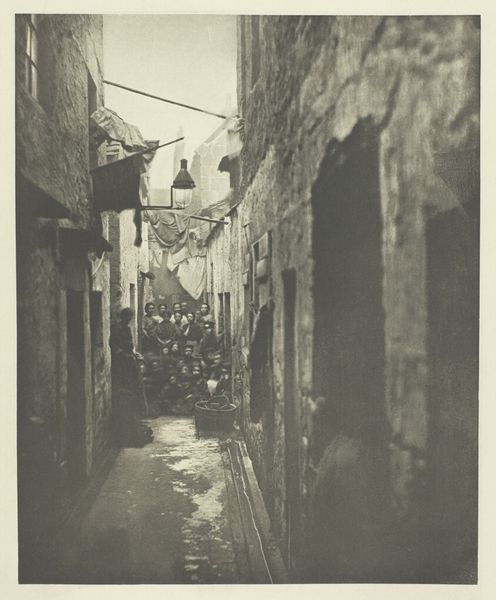
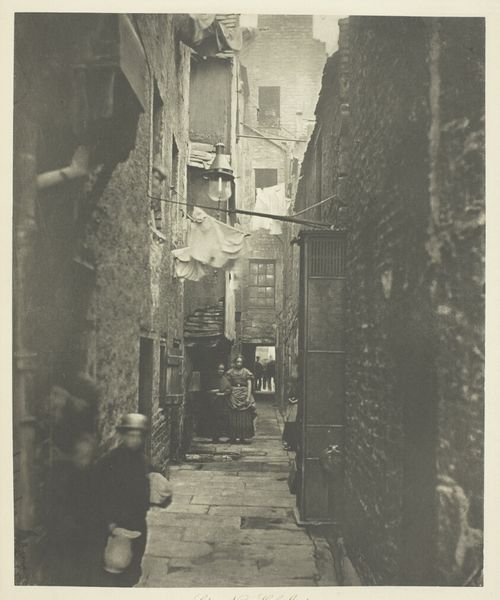
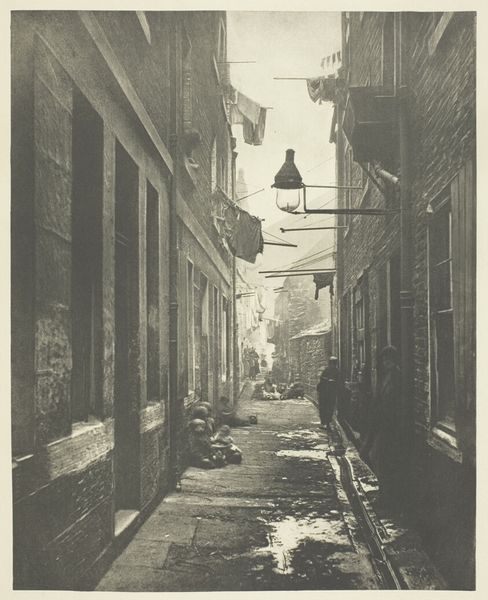
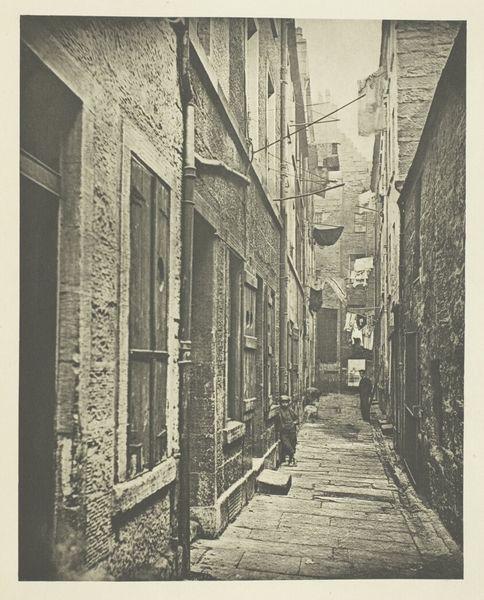
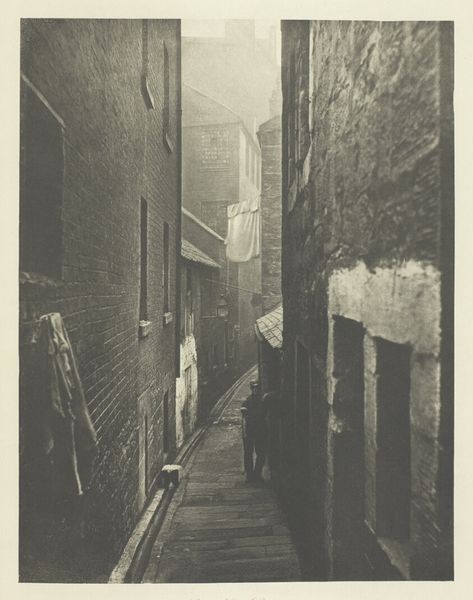
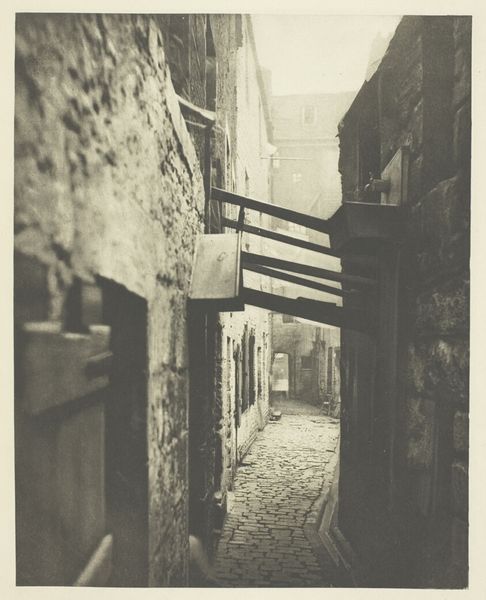
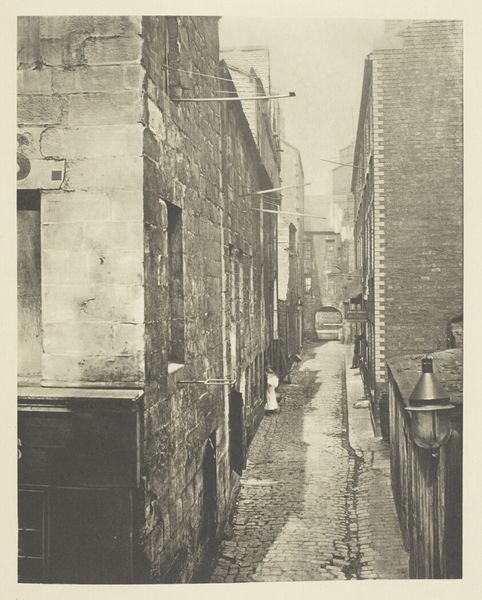
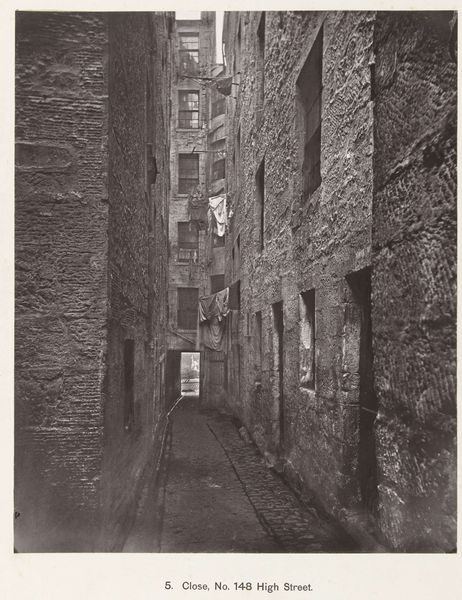
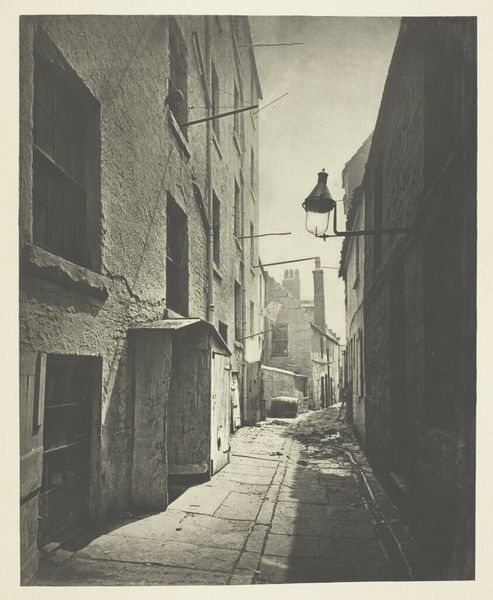
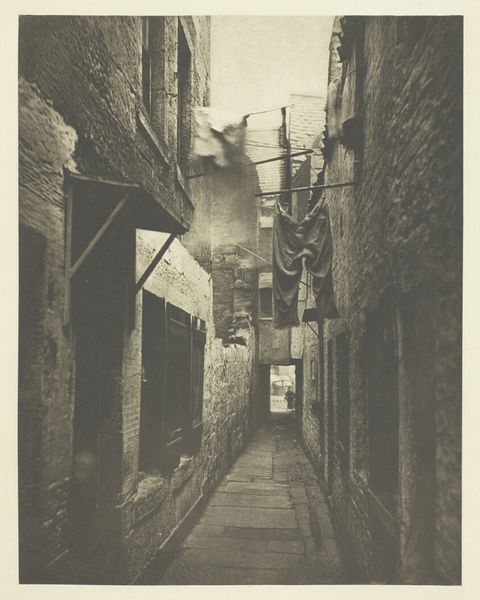
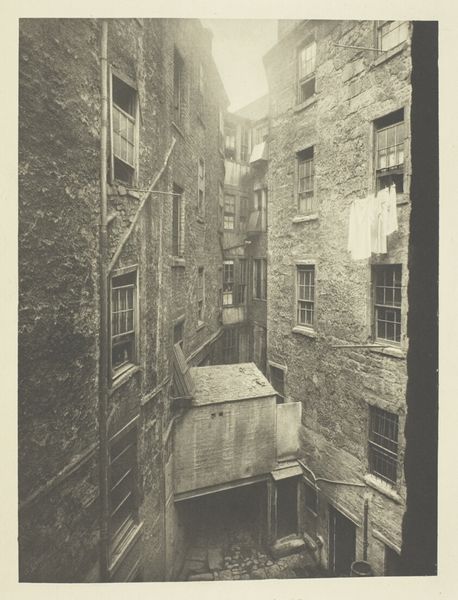
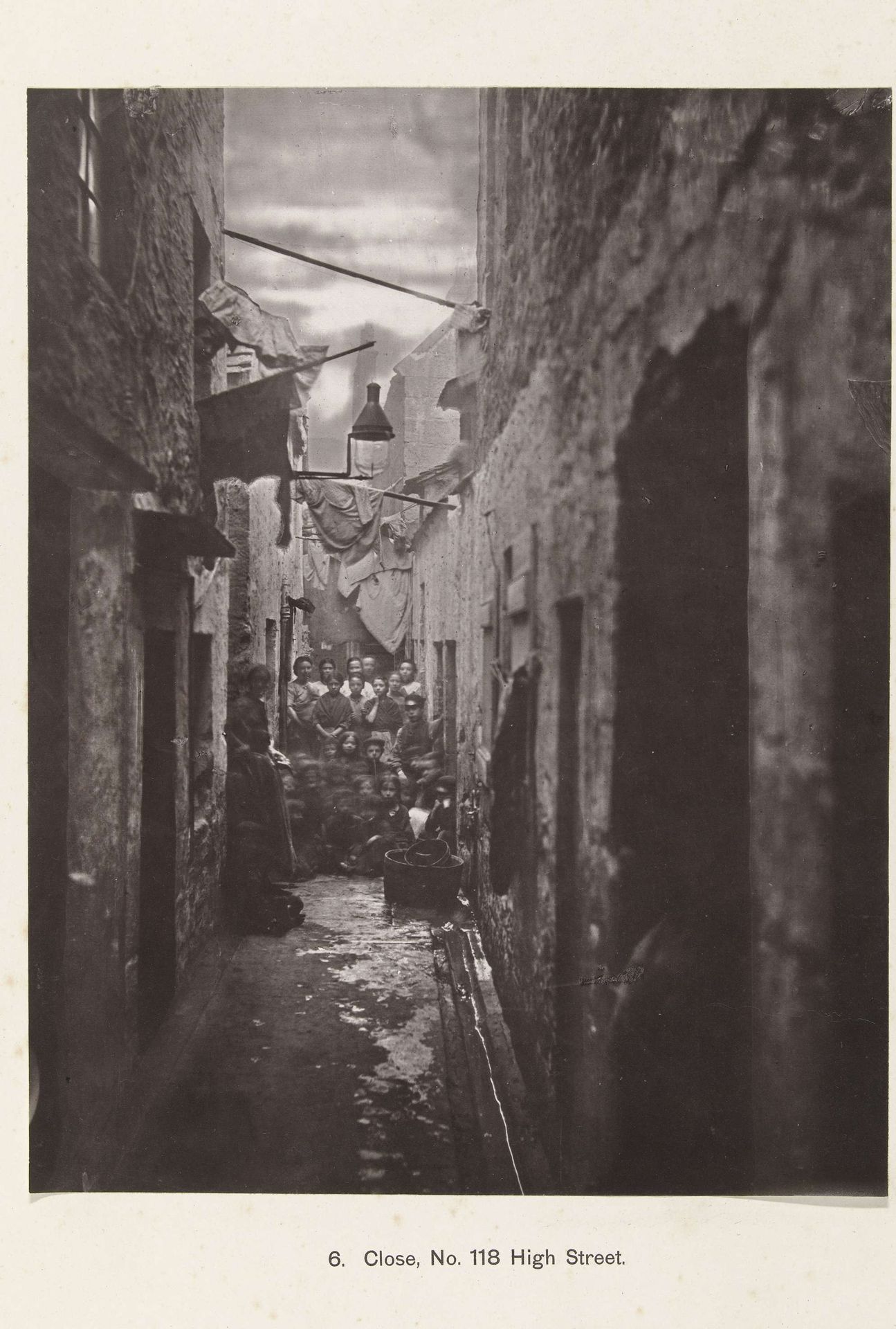
Editor: This is "The Slums of Glasgow" by Thomas Annan, created between 1868 and 1877, a gelatin silver print. It's stark and unsettling, creating this feeling of being trapped. All those faces staring out…what do you see in this image, and how does it resonate today? Curator: It speaks volumes, doesn't it? This image, at its heart, becomes a modern icon of urban existence. Look at the architecture - these imposing walls, almost suffocating. Walls often act as boundaries, and boundaries help to create identities, both personal and collective. Do you see the way the people are framed, almost pinned, by this setting? Editor: Yes, it’s like they’re a part of the architecture themselves. Does that communicate a certain social message? Curator: Absolutely. Annan captured more than just a place; he documented a reality that begs to be seen and understood. These symbols—the tight space, the gaze of the inhabitants, the grey-scale aesthetic of confinement—are potent conveyors of societal introspection. The enduring relevance resides in the perpetual examination of how environments affect communal wellbeing and what shapes urban cultural identities. Does this visual data shape your reading? Editor: I now see how it encapsulates the relationship between environment and the inhabitants' experience within it. The visual data enhances understanding and adds another layer of contemplation to a historic moment. I understand it better. Thank you. Curator: Precisely. Each element interlocks, constructing and informing perceptions, solidifying not only historical context, but continuing contemporary social narratives. The cultural echoes bounce even now.