About this artwork
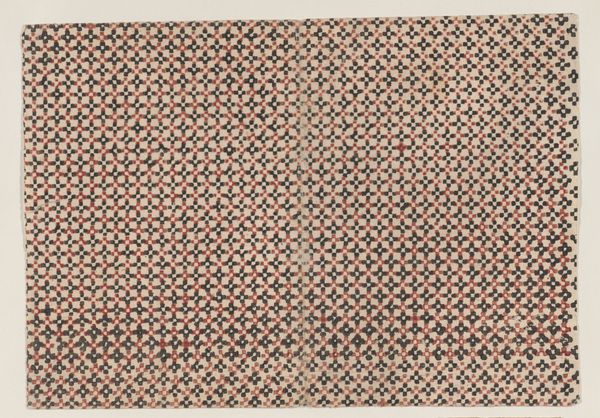
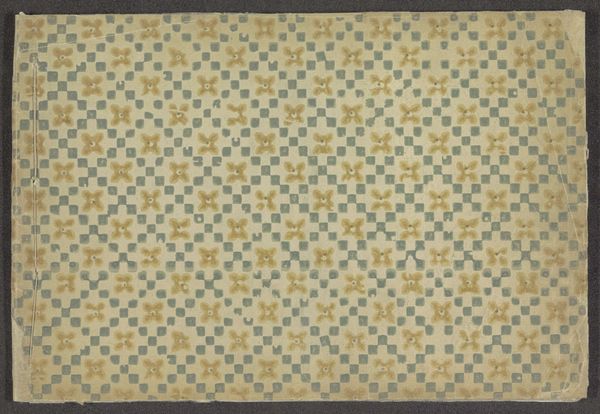
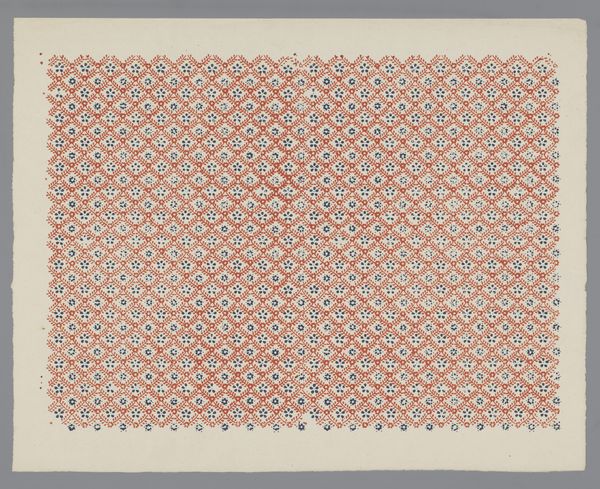
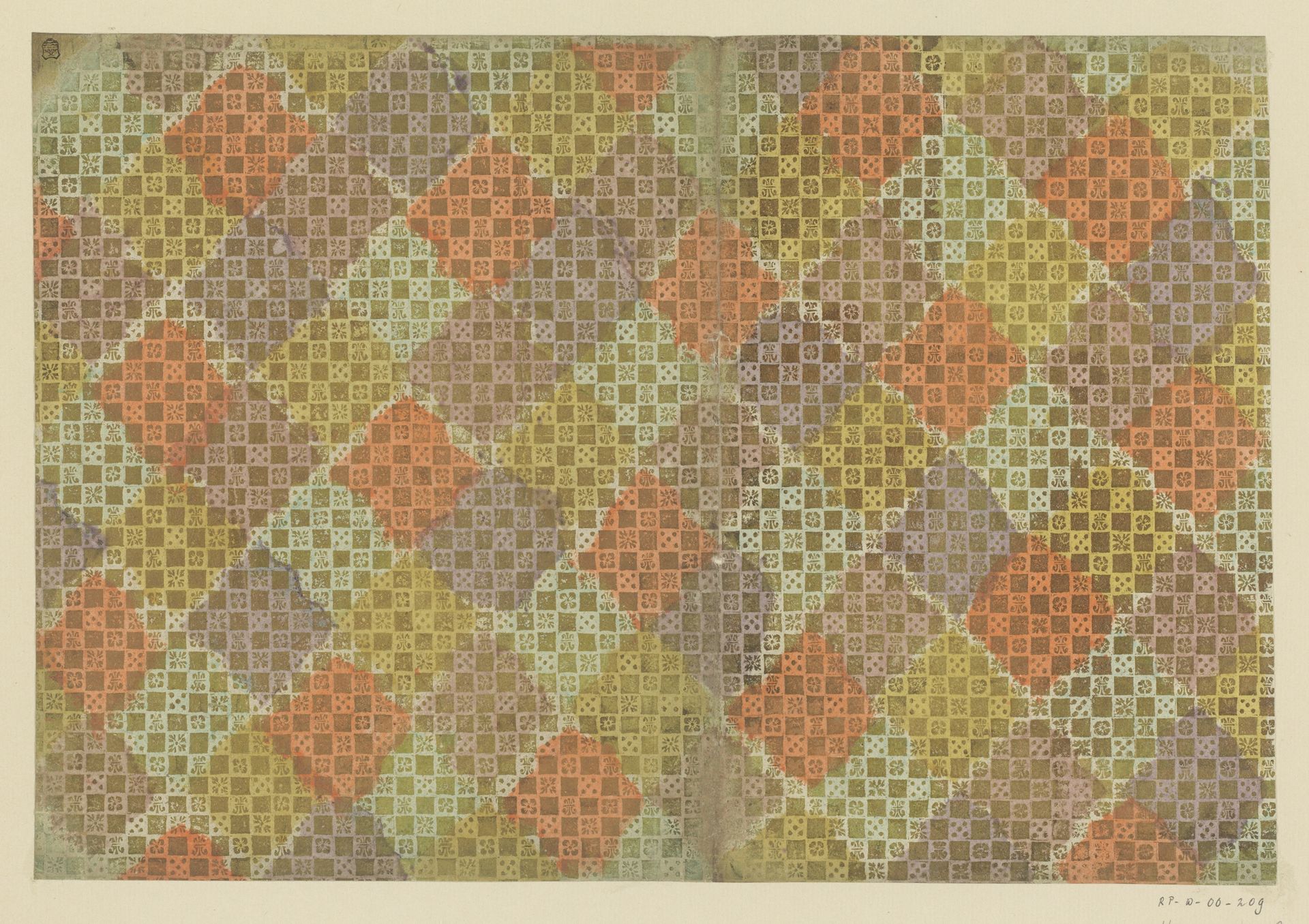
This sheet with a chessboard pattern was made by Johann Carl Munck, and it presents a grid dominated by squares. It is within these squares that we find curious, small circular motifs resembling a four-petal flower, nestled at the core of each little square. The chessboard itself—a stage for strategic warfare—evokes ancient games like chess, reflective of human intellect and the dance of intellect and chance. In ancient times, this pattern was used to symbolize duality, balance, and order. It may appear in ancient Greek mosaics and Roman floor tiles. The flower, however small, is a life force motif that symbolizes the cyclical nature of existence. The motif has evolved, and the arrangement takes new shapes in diverse cultural contexts. One may recall its appearances in Byzantine art, and then much later, its resurgence in the decorative arts of the Renaissance. Viewers may feel a sense of nostalgic familiarity looking at this pattern. It may trigger a contemplative experience that is both serene and unsettling, as our memories mix with the echoes of distant eras.

Artwork details
- Medium
- drawing, paper, pencil
- Dimensions
- height 257 mm, width 377 mm
- Copyright
- Rijks Museum: Open Domain
Tags
Comments
Share your thoughts
About this artwork
This sheet with a chessboard pattern was made by Johann Carl Munck, and it presents a grid dominated by squares. It is within these squares that we find curious, small circular motifs resembling a four-petal flower, nestled at the core of each little square. The chessboard itself—a stage for strategic warfare—evokes ancient games like chess, reflective of human intellect and the dance of intellect and chance. In ancient times, this pattern was used to symbolize duality, balance, and order. It may appear in ancient Greek mosaics and Roman floor tiles. The flower, however small, is a life force motif that symbolizes the cyclical nature of existence. The motif has evolved, and the arrangement takes new shapes in diverse cultural contexts. One may recall its appearances in Byzantine art, and then much later, its resurgence in the decorative arts of the Renaissance. Viewers may feel a sense of nostalgic familiarity looking at this pattern. It may trigger a contemplative experience that is both serene and unsettling, as our memories mix with the echoes of distant eras.
Comments
Share your thoughts