drawing, print, engraving, architecture
#
drawing
#
baroque
# print
#
landscape
#
form
#
line
#
cityscape
#
engraving
#
architecture
Dimensions: height 138 mm, width 179 mm
Copyright: Rijks Museum: Open Domain
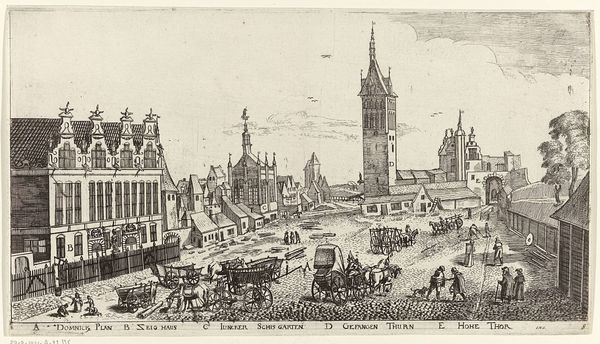
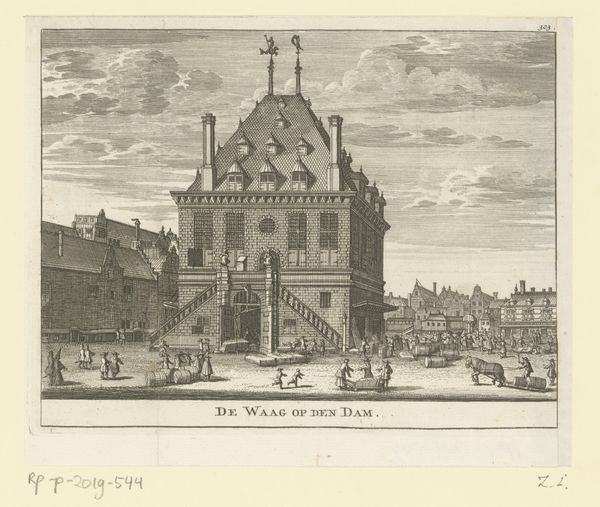
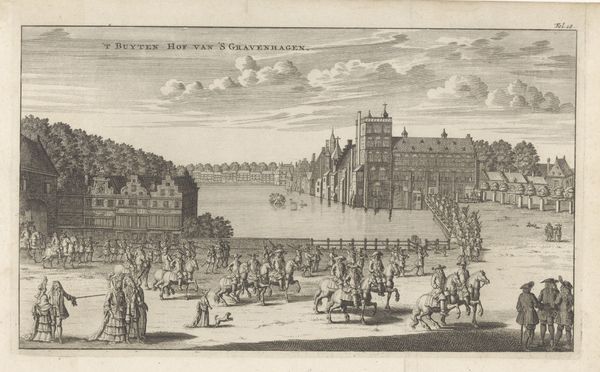
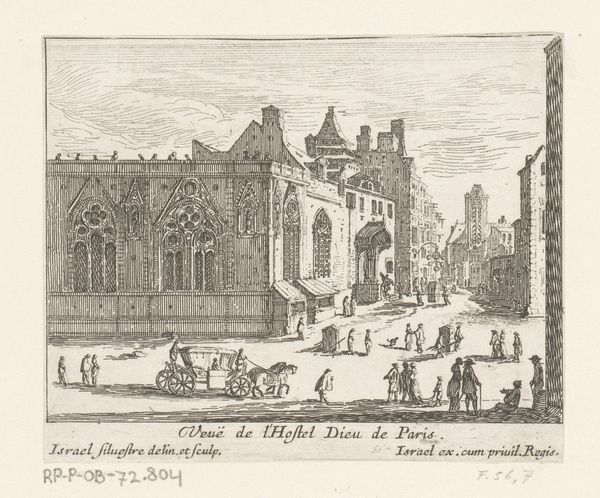
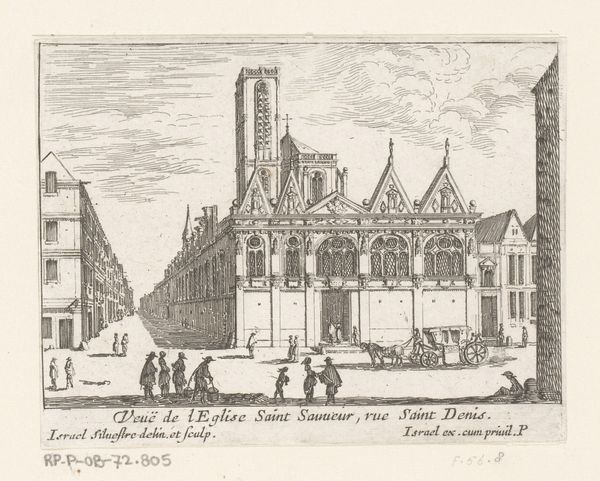
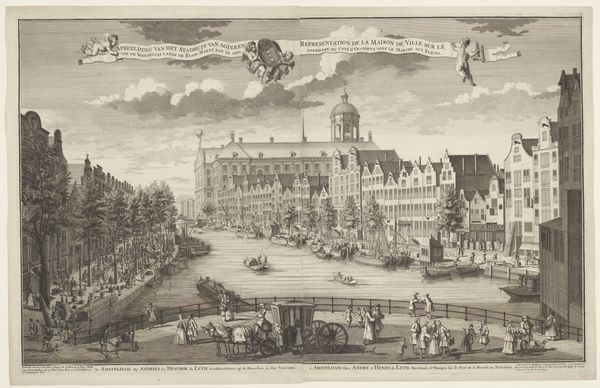
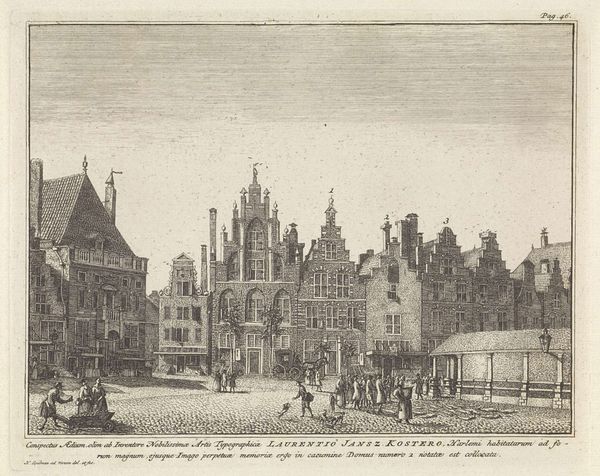
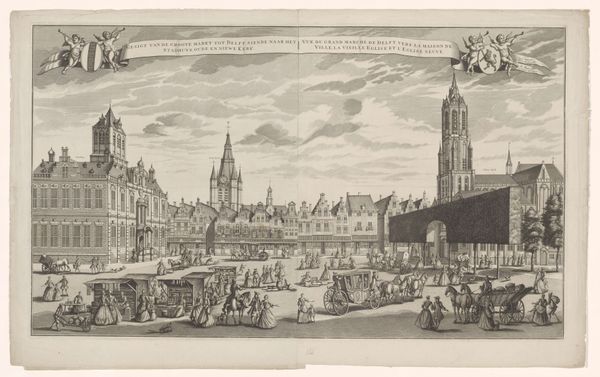
Curator: Look at this print by Kemnitz, called “Gezicht op het hof van Brussel, 1673." It’s rendered with such fine, precise engraving. There's an amazing feel to the architecture, wouldn't you agree? Editor: Initially, I see a whirlwind of activity; there are crowds, carriages, and a distinct hierarchy implied by the composition, and perhaps its function for the public. Everything feels slightly frenetic and performative, doesn't it? Curator: Performative is right! Considering the date, although marked '1673' on the image, the print was actually published around 1711, which lands us smack-dab in a time of courtly spectacle and urban development. This is the baroque era, all about grandeur, isn't it? Look at that imposing building! Editor: Right, and it screams social control through manufactured visibility, a very deliberate staging through labour to reinforce class divides. All that fine linework! So many hours spent translating architectural vision into a portable, reproducible form. What about its accessibility? Who had access to the print itself, do we know? Curator: Hmm, it would probably circulate among a bourgeois or aristocratic audience, eager to get their hands on representations of power. But I love the way the artist depicts all those little figures milling about, each with their own tiny narrative, caught for a fleeting moment. It's lovely isn't it? I can almost hear their gossip floating through the square. Editor: Yes, the figures animate the space. But the print’s value as a document of social reality depends so much on how this space was actually experienced, used and regulated, how labor moved around and constructed the visual space for elites. We see figures in the foreground accompanying others in high visibility transportation, an enclosed carriage; there are men and women together yet seemingly confined. Curator: Maybe. Or, is it possible that these renderings become like little time capsules of everyday experience as a sort of human record, wouldn't you say? This baroque stage seems to beckon forward. I think Kemnitz captured it quite brilliantly. Editor: Possibly, but my first thought when seeing this work and all its many aspects focuses not only on social hierarchies but also artistic process as a physical manifestation and negotiation of cultural authority through accessible medium. I’m always eager to pull back what can be accessed. Curator: Well, however one chooses to look at it, it is really interesting to reflect upon. Editor: Indeed. Something to ponder.
Comments
No comments
Be the first to comment and join the conversation on the ultimate creative platform.
 Collect
 React
React Comment
More like this