About this artwork
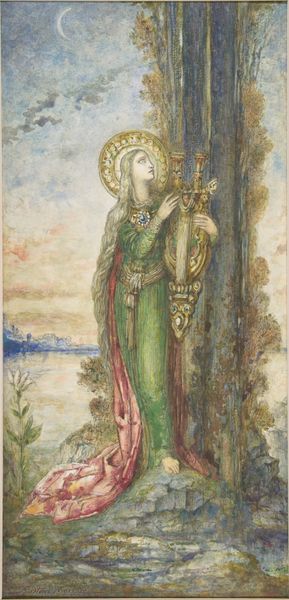
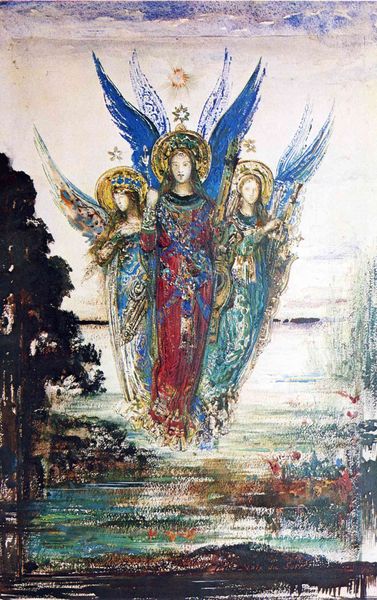
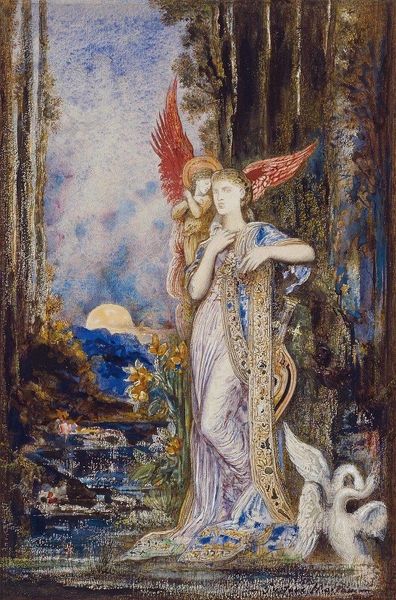
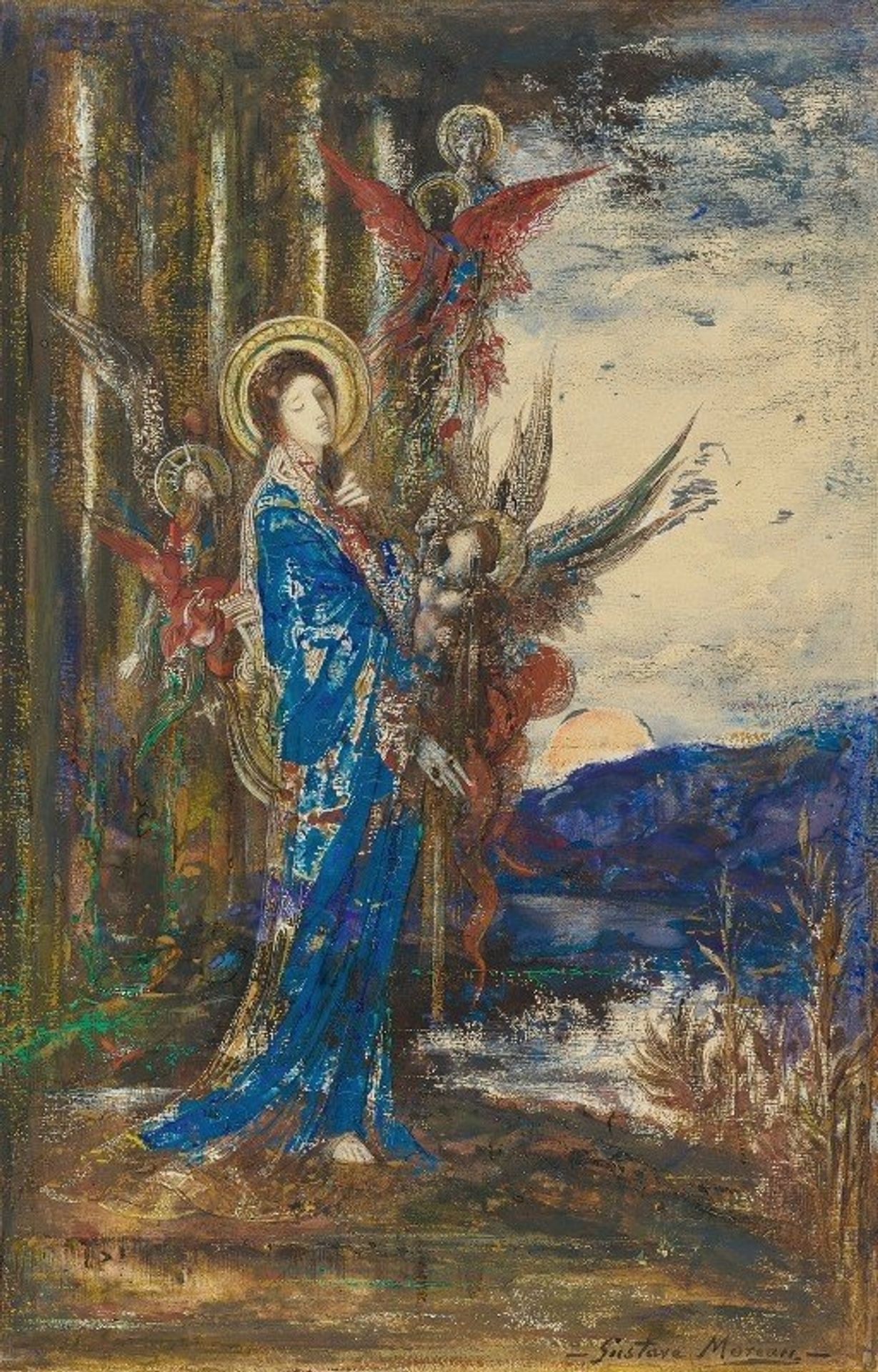
Gustave Moreau painted "Les Épreuves," filled with symbols of spiritual trial, in the late 19th century. We see a central female figure, haloed and draped in blue, surrounded by angels and set against a landscape that seems to echo her inner turmoil. The halo, an ancient symbol of divine light and spiritual illumination, appears in early Hellenistic art, representing the sun god Helios, or Apollo. Over centuries, this motif was adapted and reinterpreted across cultures and religions, signifying holiness, divinity, and enlightenment. Its presence here elevates the central figure, suggesting her spiritual trials are of profound significance. Consider also the motif of the angel, a messenger between realms, found in ancient Mesopotamian art. Their protective stance and red hue might indicate a moment of transition, suggesting both the danger and the support present in times of ordeal. The image invokes in us a deep, subconscious connection to historical archetypes, stirring a sense of wonder, fear, and perhaps, hope. The cyclical progression of symbols transcends time, constantly adapting and accumulating new layers of meaning.

Artwork details
- Medium
- tempera, painting, oil-paint
- Copyright
- Public Domain: Artvee
Tags
Comments
Share your thoughts
About this artwork
Gustave Moreau painted "Les Épreuves," filled with symbols of spiritual trial, in the late 19th century. We see a central female figure, haloed and draped in blue, surrounded by angels and set against a landscape that seems to echo her inner turmoil. The halo, an ancient symbol of divine light and spiritual illumination, appears in early Hellenistic art, representing the sun god Helios, or Apollo. Over centuries, this motif was adapted and reinterpreted across cultures and religions, signifying holiness, divinity, and enlightenment. Its presence here elevates the central figure, suggesting her spiritual trials are of profound significance. Consider also the motif of the angel, a messenger between realms, found in ancient Mesopotamian art. Their protective stance and red hue might indicate a moment of transition, suggesting both the danger and the support present in times of ordeal. The image invokes in us a deep, subconscious connection to historical archetypes, stirring a sense of wonder, fear, and perhaps, hope. The cyclical progression of symbols transcends time, constantly adapting and accumulating new layers of meaning.
Comments
Share your thoughts