About this artwork
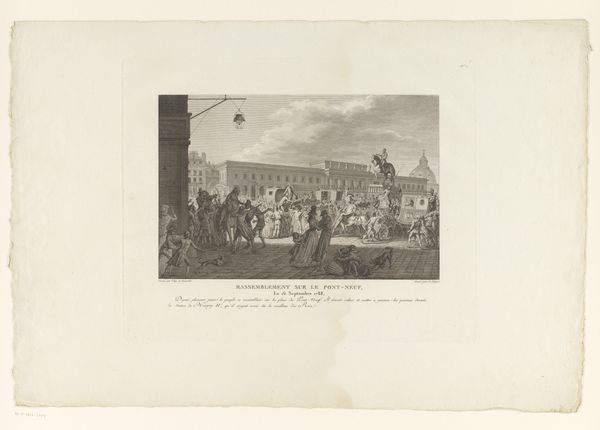
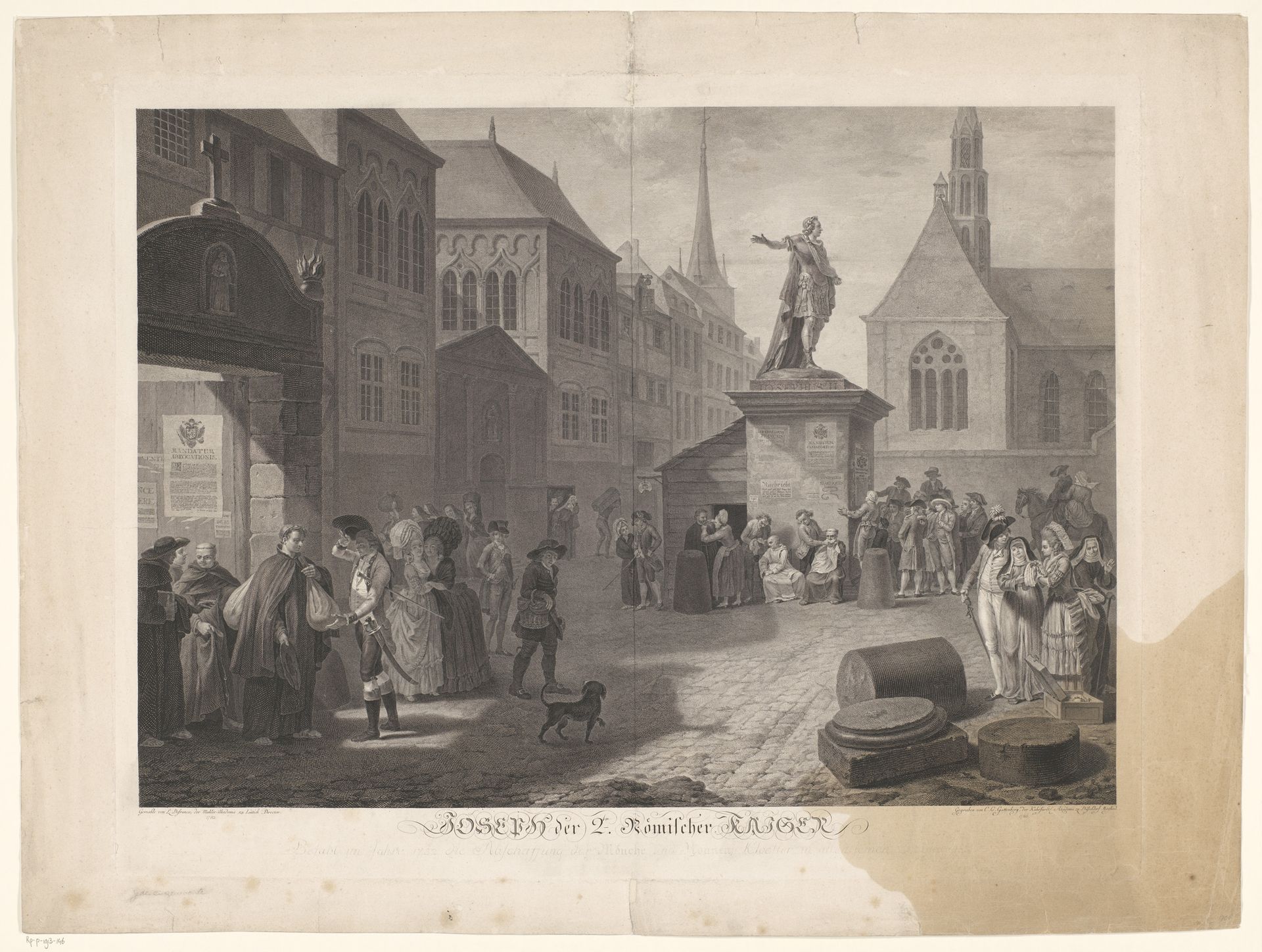
Carl Guttenberg created this print, "Abolition of the Monasteries by Emperor Joseph II," sometime before 1790. It captures the spirit of reform sweeping through the Austrian Empire at the time. The image isn't just a neutral record; it's a statement. See how the statue of Joseph II dominates the scene, literally elevated above the people. He's portrayed as a leader ushering in change, with monks and nuns leaving their cloisters, seemingly displaced. This print reflects the complex politics of the era. Joseph II's reforms aimed to modernize the state, challenging the power and wealth of religious institutions. The print suggests a progressive shift, but it also raises questions about the social impact of such dramatic changes. As historians, we can dig deeper, examining archival documents, religious publications, and popular opinions to understand how this event was perceived and debated. The print becomes a valuable lens for exploring the tensions between tradition and progress during the Enlightenment.
Afschaffing van de monniken- en nonnenkloosters door keizer Jozef II 1786

Carl Guttenberg
1743 - 1790Location
RijksmuseumArtwork details
- Dimensions
- height 487 mm, width 625 mm
- Location
- Rijksmuseum
- Copyright
- Rijks Museum: Open Domain
Comments
No comments
About this artwork
Carl Guttenberg created this print, "Abolition of the Monasteries by Emperor Joseph II," sometime before 1790. It captures the spirit of reform sweeping through the Austrian Empire at the time. The image isn't just a neutral record; it's a statement. See how the statue of Joseph II dominates the scene, literally elevated above the people. He's portrayed as a leader ushering in change, with monks and nuns leaving their cloisters, seemingly displaced. This print reflects the complex politics of the era. Joseph II's reforms aimed to modernize the state, challenging the power and wealth of religious institutions. The print suggests a progressive shift, but it also raises questions about the social impact of such dramatic changes. As historians, we can dig deeper, examining archival documents, religious publications, and popular opinions to understand how this event was perceived and debated. The print becomes a valuable lens for exploring the tensions between tradition and progress during the Enlightenment.
Comments
No comments