About this artwork
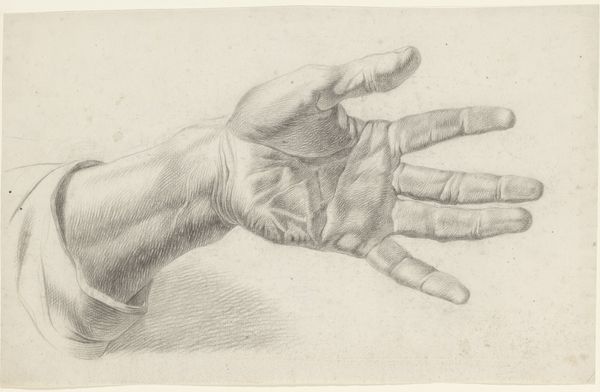
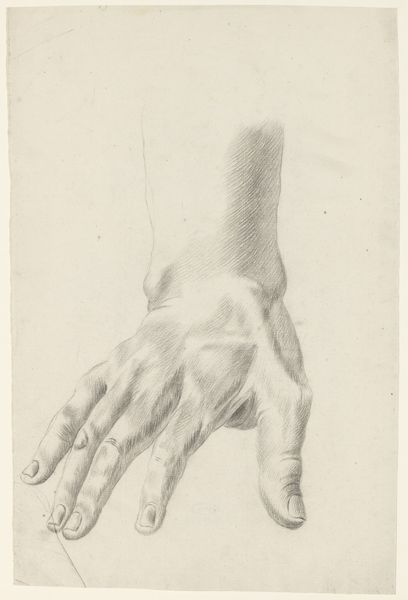
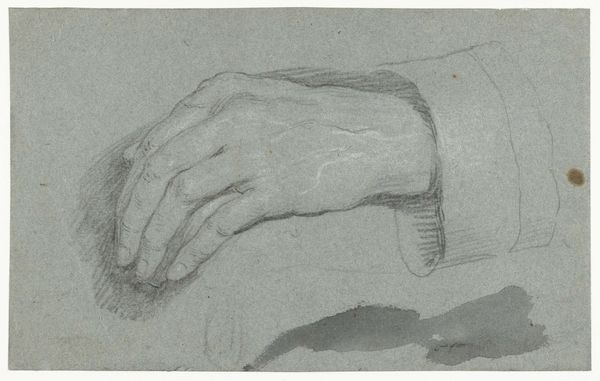
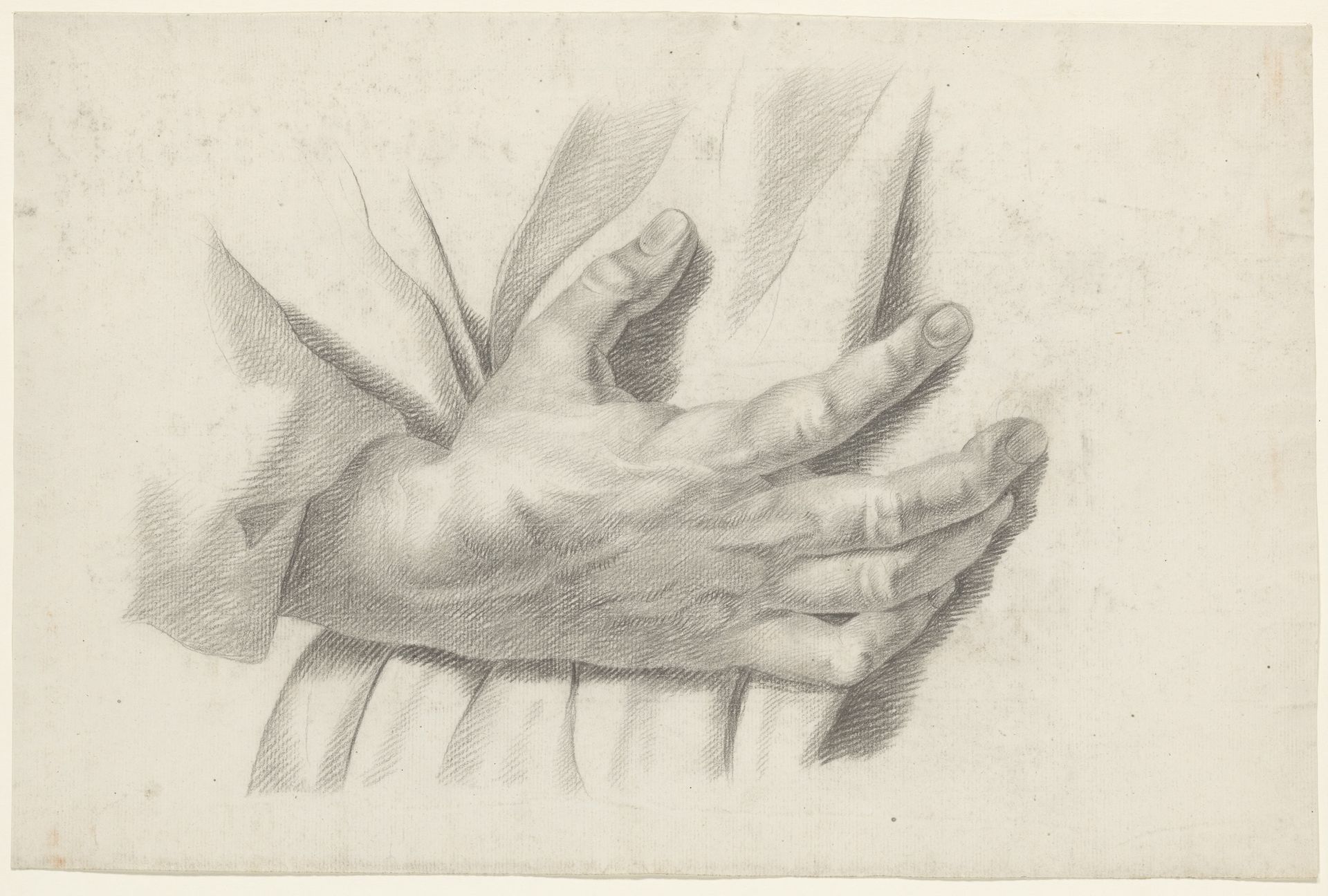
Johannes Tavenraat made this drawing of a plaster cast hand using graphite on paper. Look closely and you can see the material influence the drawing's appearance. Graphite, composed of crystalline carbon, allows for precise lines and subtle gradations of tone, essential for capturing the contours and textures of the hand. The process is all about close observation. Tavenraat meticulously renders the play of light and shadow on the plaster surface through hatching and shading, creating the illusion of three-dimensionality on the flat page. The repetitive, manual nature of drawing, building up layers of graphite to define form, imbues the artwork with a sense of skilled labor. This contrasts the classical sculpture itself, as this drawing is embedded in social context, and educational tradition, emphasizing the importance of mastering traditional artistic techniques. Appreciating the material and making underscores the value of craft within fine art, challenging assumptions about artistic skill.
Academiestudie naar een gips van een antiek beeld: detailstudie van een hand
1819 - 1881

Johannes Tavenraat
1809 - 1881Location
RijksmuseumArtwork details
- Medium
- drawing, pencil
- Dimensions
- height 273 mm, width 412 mm
- Location
- Rijksmuseum
- Copyright
- Rijks Museum: Open Domain
Tags
Comments
Share your thoughts
About this artwork
Johannes Tavenraat made this drawing of a plaster cast hand using graphite on paper. Look closely and you can see the material influence the drawing's appearance. Graphite, composed of crystalline carbon, allows for precise lines and subtle gradations of tone, essential for capturing the contours and textures of the hand. The process is all about close observation. Tavenraat meticulously renders the play of light and shadow on the plaster surface through hatching and shading, creating the illusion of three-dimensionality on the flat page. The repetitive, manual nature of drawing, building up layers of graphite to define form, imbues the artwork with a sense of skilled labor. This contrasts the classical sculpture itself, as this drawing is embedded in social context, and educational tradition, emphasizing the importance of mastering traditional artistic techniques. Appreciating the material and making underscores the value of craft within fine art, challenging assumptions about artistic skill.
Comments
Share your thoughts