About this artwork
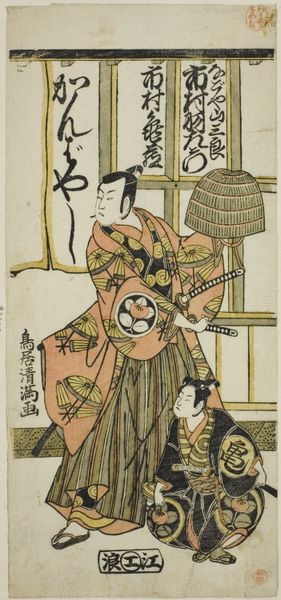
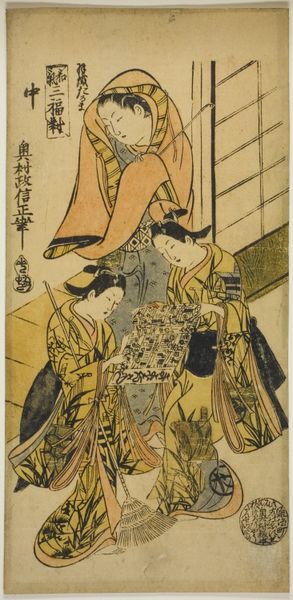
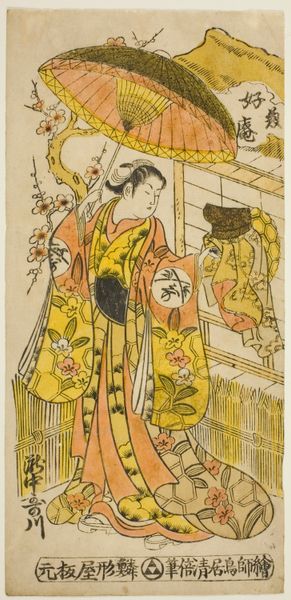
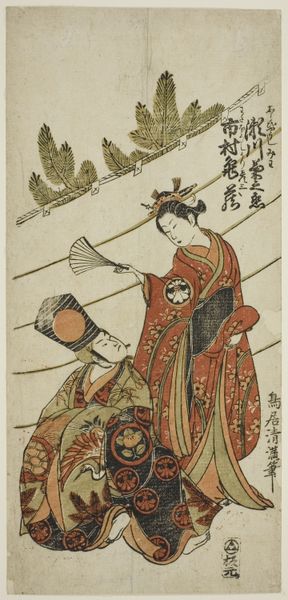
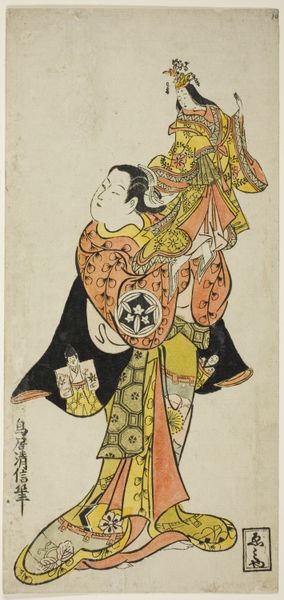
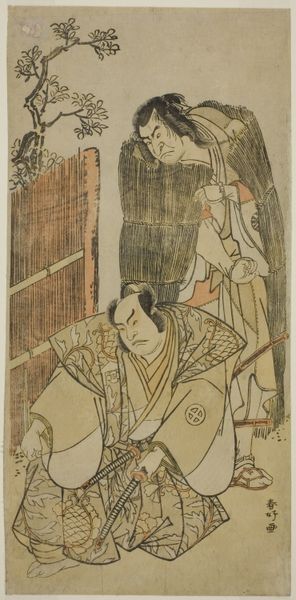
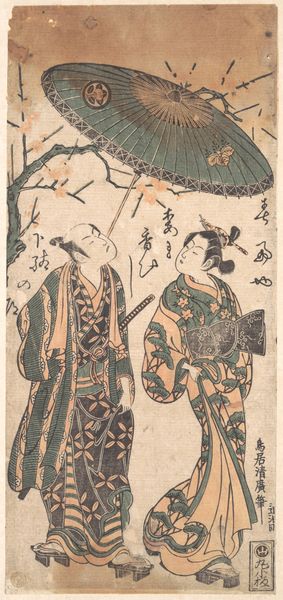
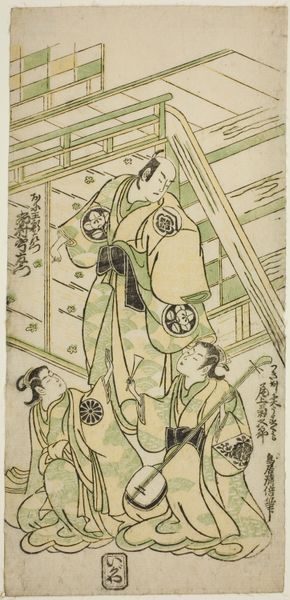
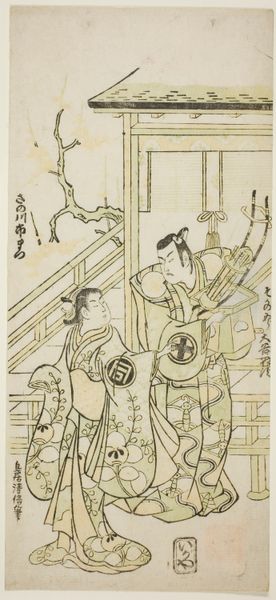
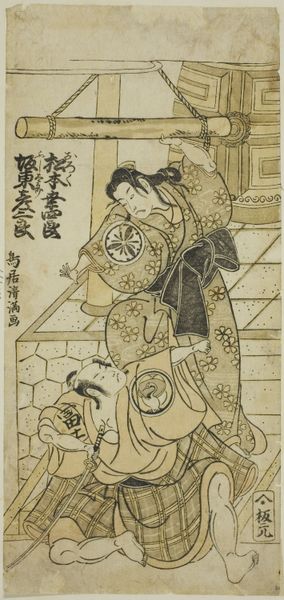
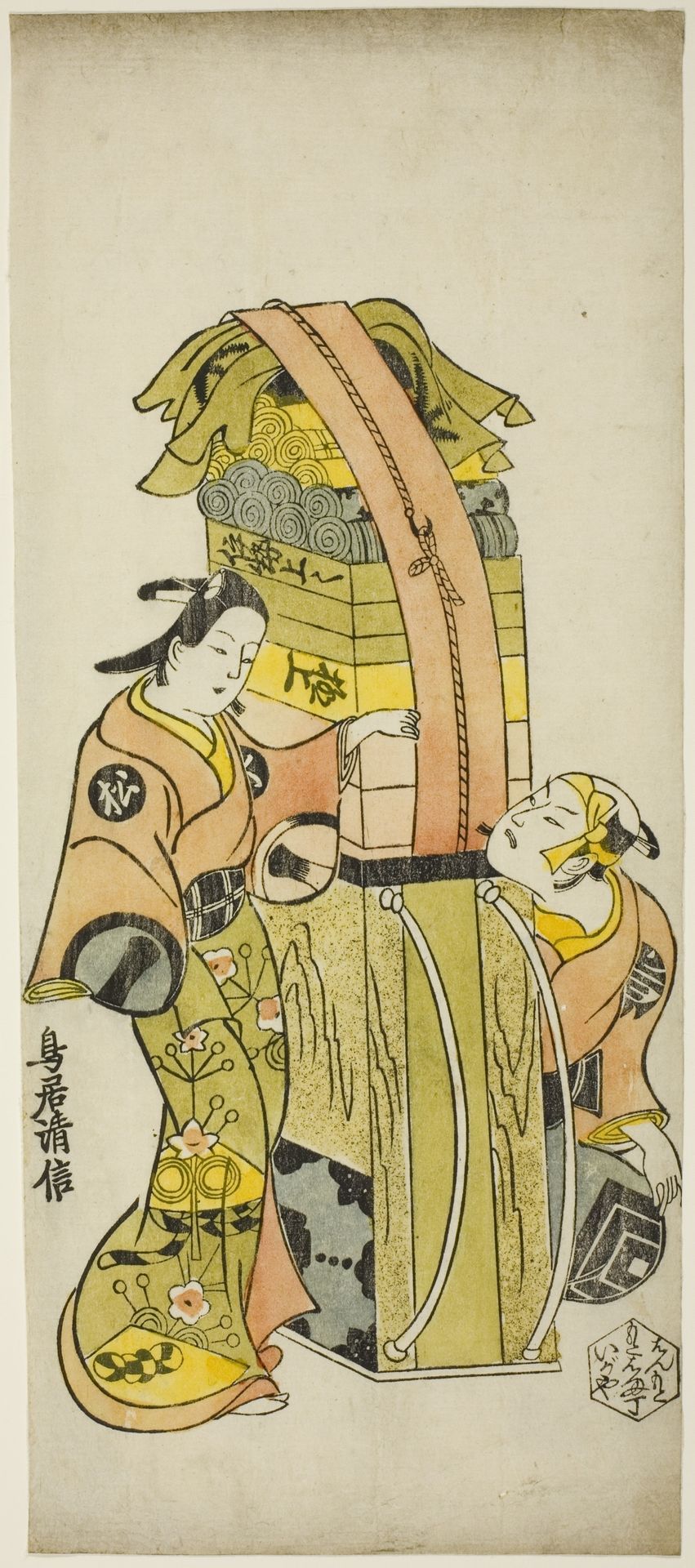
This woodblock print by Torii Kiyonobu I, made around 1720, presents actors in a play, rendered with dynamic lines and vibrant colors. The composition is dominated by the actors and a central pillar-like structure, possibly representing a prop or theatrical element. The print’s visual structure reveals much about the artistic conventions of its time. Notice how the lines, particularly in the actors’ robes and the pillar, are bold and decisive. The color palette, with its yellows, pinks, and greens, creates a lively yet harmonious effect. Kiyonobu’s technique reflects the Ukiyo-e tradition, a genre known for capturing the fleeting world, including theater. The actors’ stylized poses and expressions are not merely representational; they are constructed signs. Their gestures, costumes, and makeup communicate established meanings within the cultural codes of Japanese theater. The visual elements challenge fixed notions of representation. By emphasizing line and color, Kiyonobu invites us to interpret the scene through its aesthetic qualities, allowing for a deeper engagement with its cultural context. The print, therefore, is not just a depiction but a carefully crafted performance of meaning.
The Actors Ichikawa Danjuro II as Kamada Matahachi and Ichikawa Monnosuke I as Hisamatsu in the play "Osome Hisamatsu Shinju Tamoto no Shirashibori," performed at the Morita Theater, 1720
1720


Artwork details
- Medium
- print, woodblock-print
- Dimensions
- 35.4 × 15.4 cm (13 7/8 × 5 7/8 in.)
- Location
- The Art Institute of Chicago
- Copyright
- Public Domain
Tags
Comments
Share your thoughts
About this artwork
This woodblock print by Torii Kiyonobu I, made around 1720, presents actors in a play, rendered with dynamic lines and vibrant colors. The composition is dominated by the actors and a central pillar-like structure, possibly representing a prop or theatrical element. The print’s visual structure reveals much about the artistic conventions of its time. Notice how the lines, particularly in the actors’ robes and the pillar, are bold and decisive. The color palette, with its yellows, pinks, and greens, creates a lively yet harmonious effect. Kiyonobu’s technique reflects the Ukiyo-e tradition, a genre known for capturing the fleeting world, including theater. The actors’ stylized poses and expressions are not merely representational; they are constructed signs. Their gestures, costumes, and makeup communicate established meanings within the cultural codes of Japanese theater. The visual elements challenge fixed notions of representation. By emphasizing line and color, Kiyonobu invites us to interpret the scene through its aesthetic qualities, allowing for a deeper engagement with its cultural context. The print, therefore, is not just a depiction but a carefully crafted performance of meaning.
Comments
Share your thoughts