About this artwork
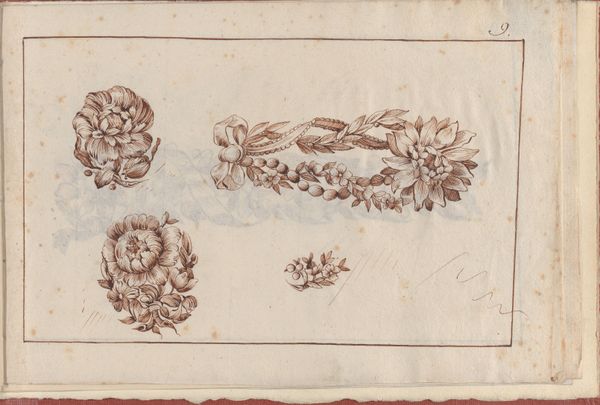
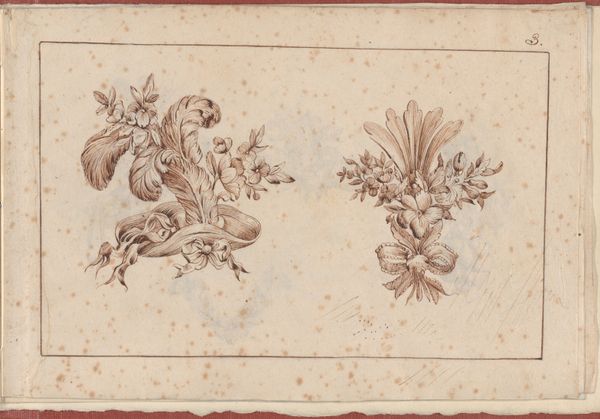
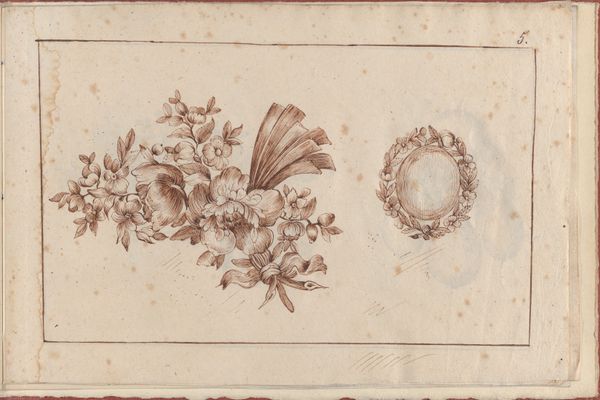
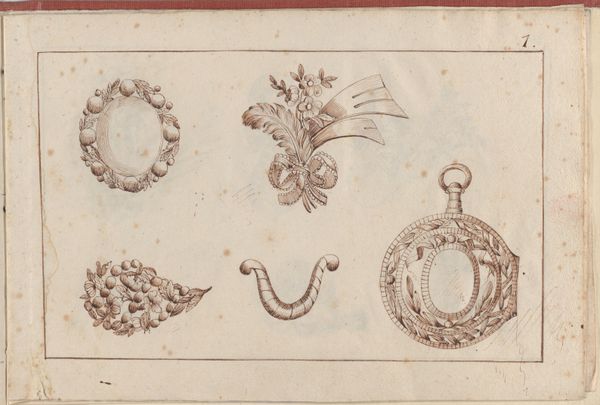
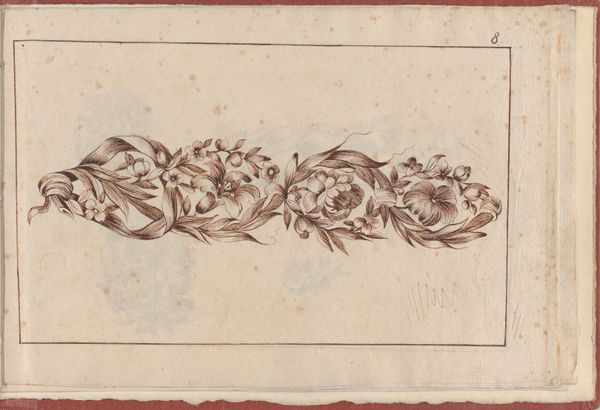
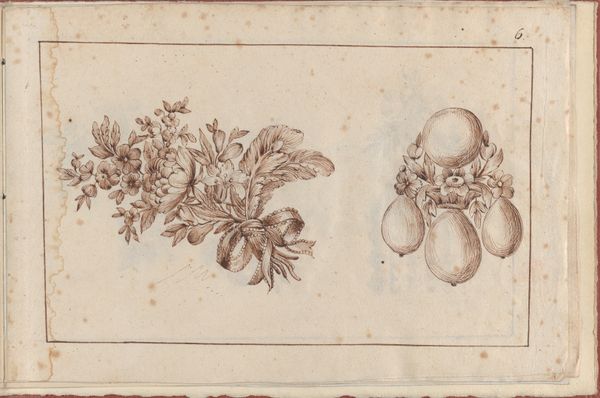
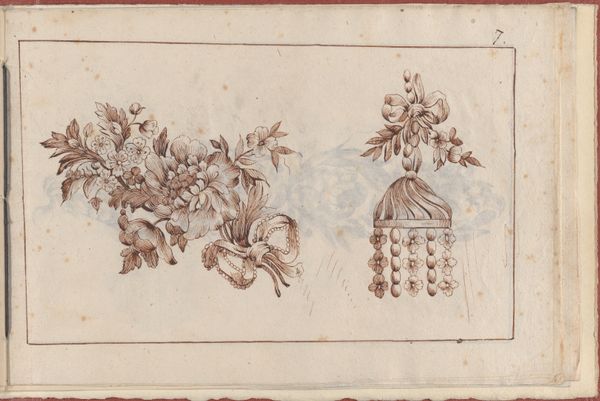
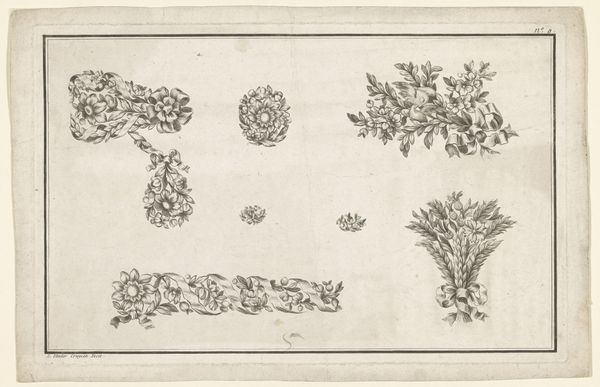
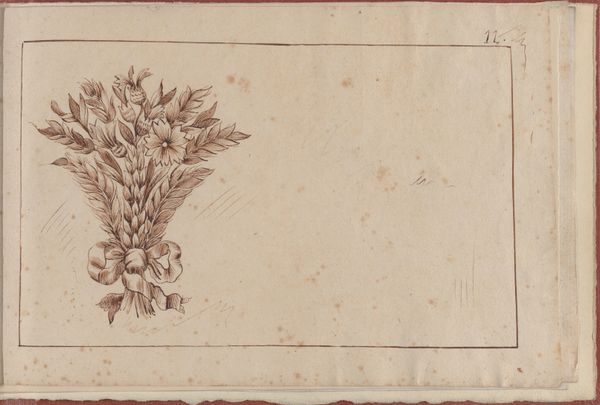
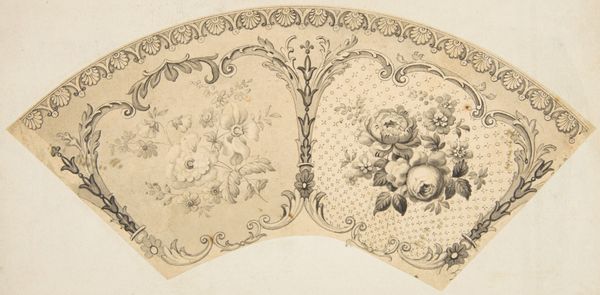
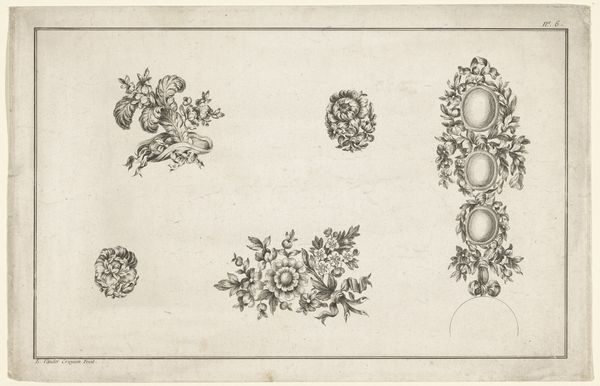
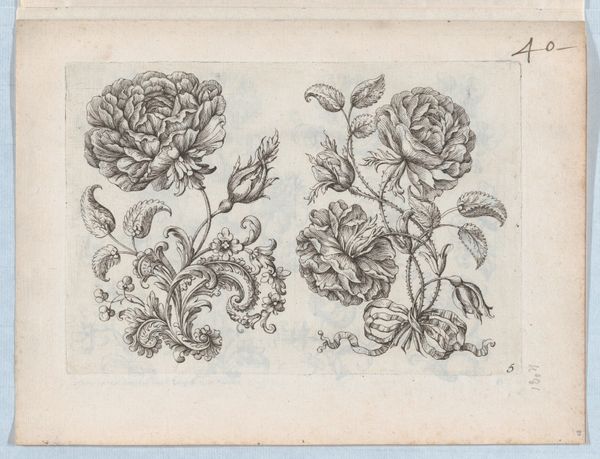
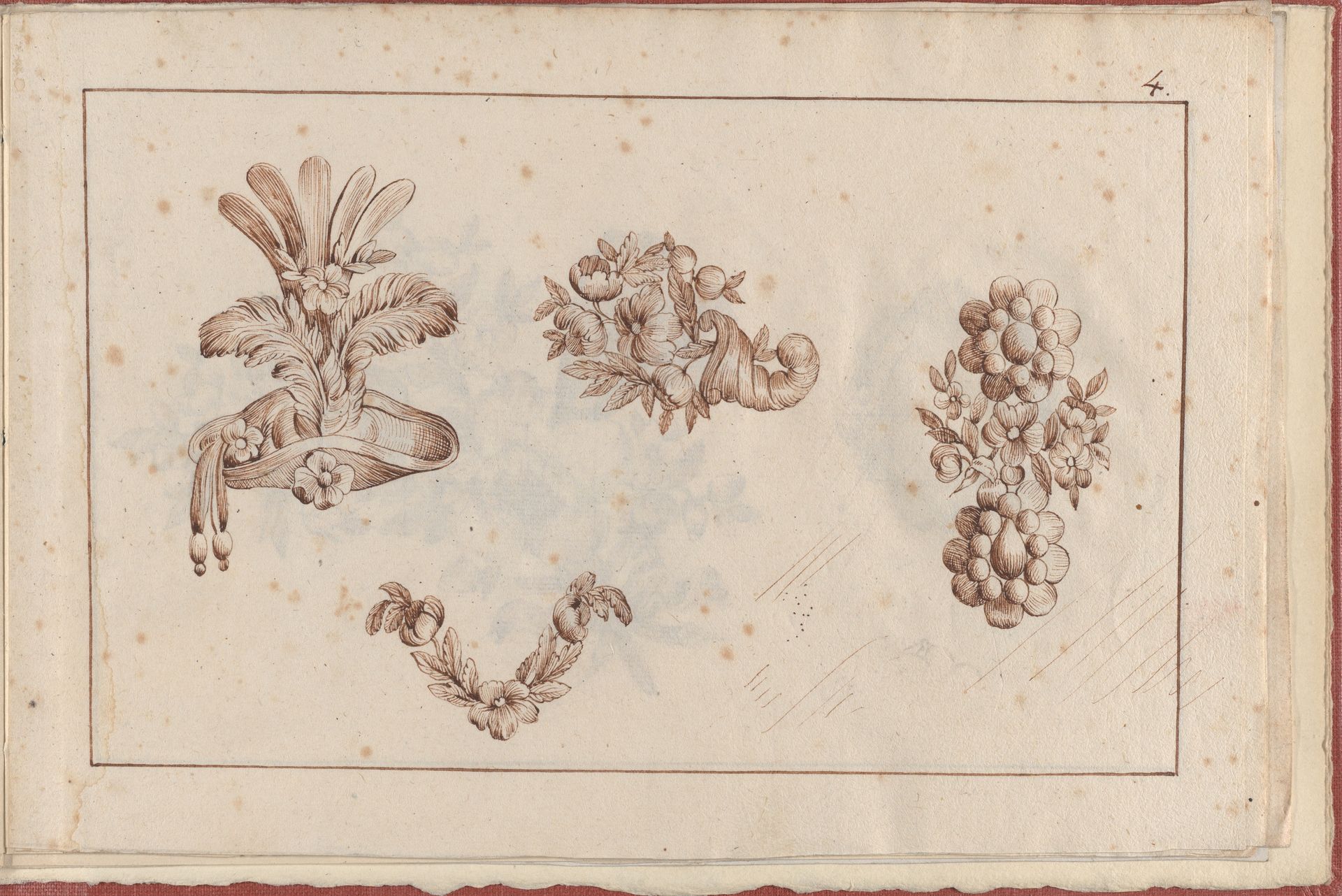
This page of jewelry designs was made by an anonymous artist, in pen and brown ink, over graphite. These preparatory drawings offer us a window into the world of jewelry design, and the cultural values attached to personal adornment. Looking closely, we see floral and organic motifs, arranged in symmetrical compositions. This was likely made in 18th-century France. The emphasis on detail and ornamentation reflects the Rococo style that was popular then, and favored by the aristocratic elite. Jewelry served not only as decoration but also as a marker of social status, wealth, and taste. These designs would have been commissioned and worn by members of the French court, reinforcing their elevated position in society. Understanding this design in its historical context requires research into the fashion trends, social hierarchies, and economic structures of the time. By exploring these avenues, we can appreciate the complex relationship between art, culture, and power.
Joaillerie: Album of Jewelry Designs, Page 4
1770


Artwork details
- Medium
- drawing, ornament, print, paper, ink, engraving
- Dimensions
- Sheet: 5 1/4 in. × 8 in. (13.3 × 20.3 cm)
- Location
- Metropolitan Museum of Art, New York, NY
- Copyright
- Public Domain
Tags
Comments
Share your thoughts
About this artwork
This page of jewelry designs was made by an anonymous artist, in pen and brown ink, over graphite. These preparatory drawings offer us a window into the world of jewelry design, and the cultural values attached to personal adornment. Looking closely, we see floral and organic motifs, arranged in symmetrical compositions. This was likely made in 18th-century France. The emphasis on detail and ornamentation reflects the Rococo style that was popular then, and favored by the aristocratic elite. Jewelry served not only as decoration but also as a marker of social status, wealth, and taste. These designs would have been commissioned and worn by members of the French court, reinforcing their elevated position in society. Understanding this design in its historical context requires research into the fashion trends, social hierarchies, and economic structures of the time. By exploring these avenues, we can appreciate the complex relationship between art, culture, and power.
Comments
Share your thoughts