About this artwork
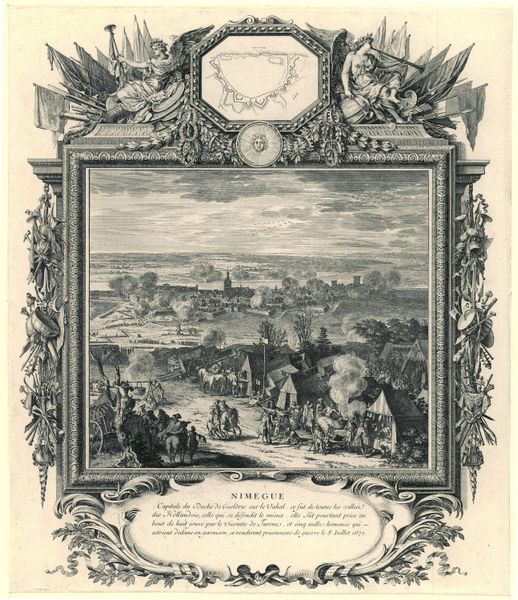
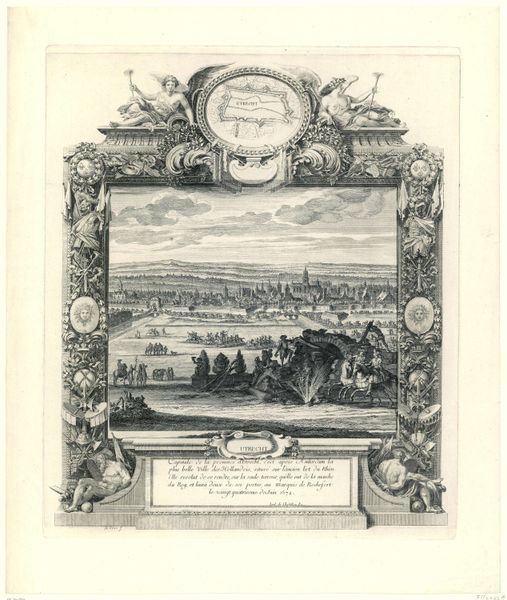
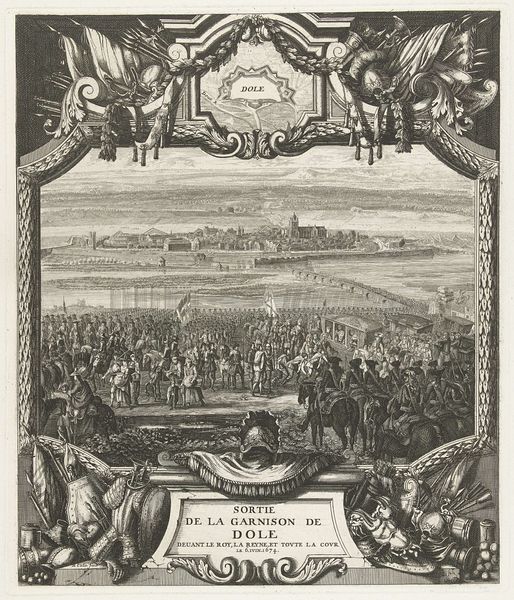
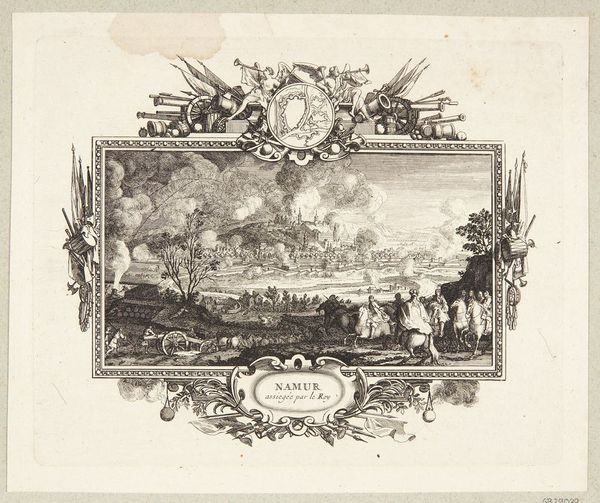
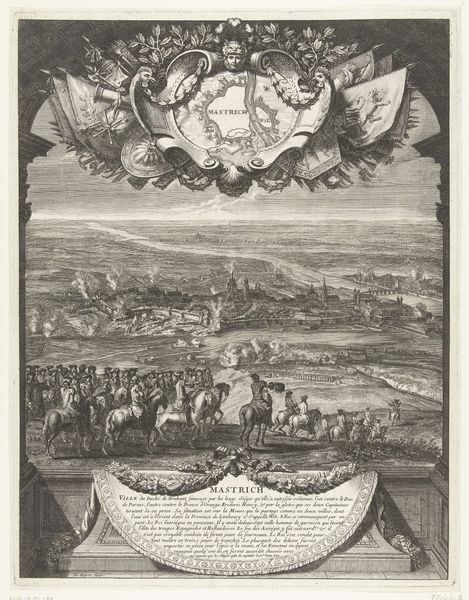
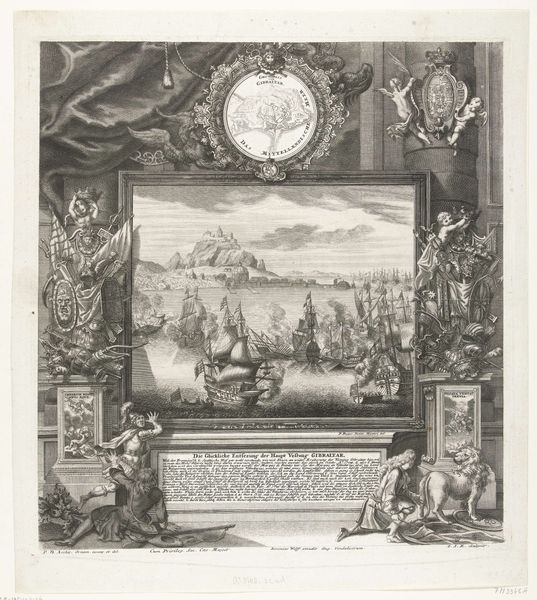
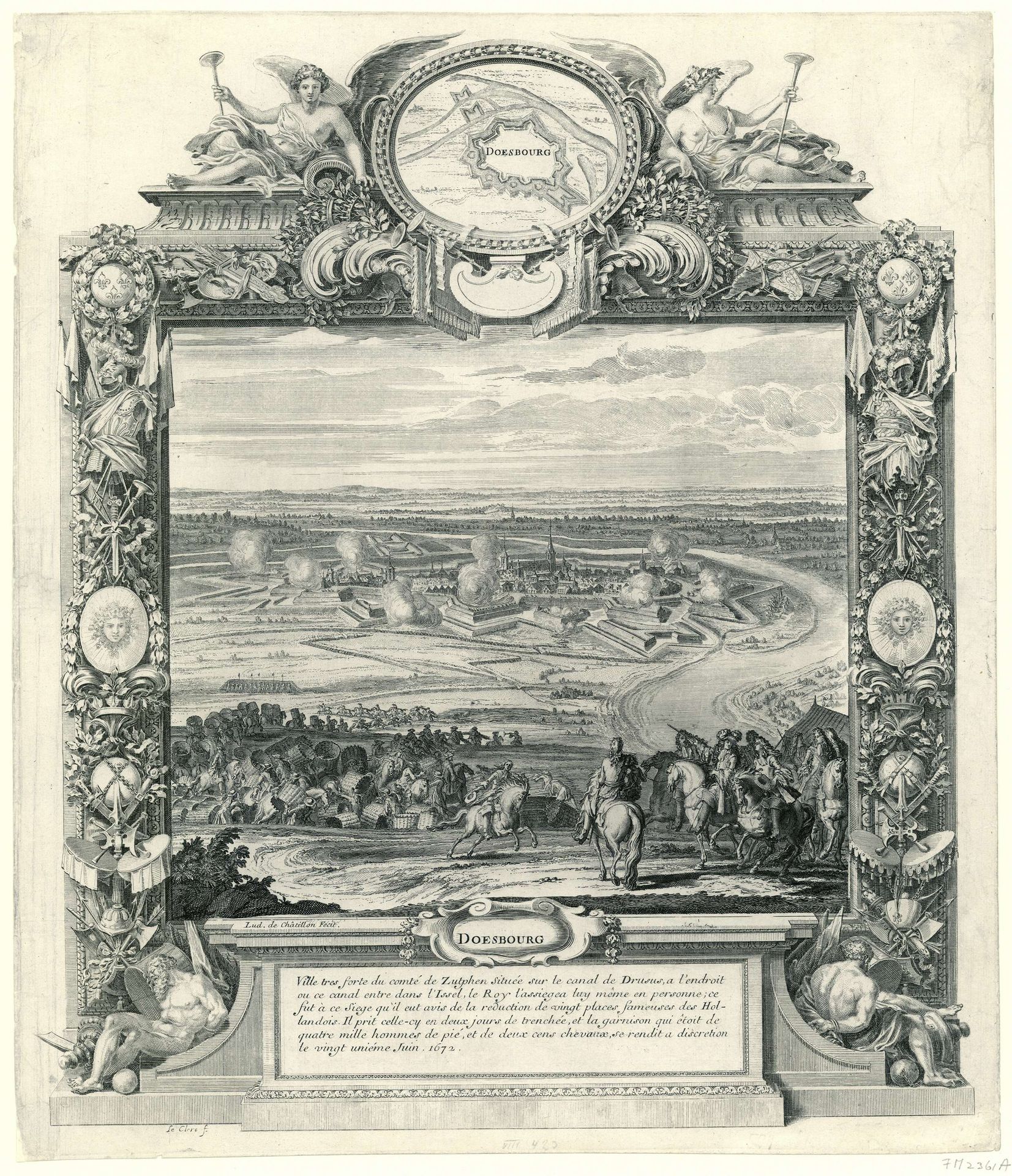
Louis de Châtillon’s engraving captures the French conquest of Doesburg in 1672. The black and white etching, bordered by ornate decorations, presents a panoramic view of the siege. The composition directs our gaze from the foreground, where soldiers and horses are meticulously detailed, to the besieged city in the background. Notice how Châtillon uses line and texture to differentiate between the chaotic energy of battle and the structured, almost geometric layout of the city's fortifications. This contrast highlights the tension between the dynamic force of the attack and the static defense of the city. The etching exists within a framework of symbolic elements. Angels and allegorical figures flank a map of Doesburg, a visual code emphasizing cartography and divine oversight. The decorative border serves not only as a frame but also as a commentary on the act of conquest, embedding it within a larger narrative of power, history and representation. Ultimately, the work destabilizes a singular understanding of war, presenting it instead as a complex interplay of space, strategy, and symbolic order.
Verovering van Doesburg door de Fransen op 21 juni 1672
1683 - 1694

Louis de Châtillon
1639 - 1734Location
RijksmuseumArtwork details
- Medium
- print, etching, engraving
- Dimensions
- height 434 mm, width 377 mm
- Location
- Rijksmuseum
- Copyright
- Rijks Museum: Open Domain
Tags
Comments
Share your thoughts
About this artwork
Louis de Châtillon’s engraving captures the French conquest of Doesburg in 1672. The black and white etching, bordered by ornate decorations, presents a panoramic view of the siege. The composition directs our gaze from the foreground, where soldiers and horses are meticulously detailed, to the besieged city in the background. Notice how Châtillon uses line and texture to differentiate between the chaotic energy of battle and the structured, almost geometric layout of the city's fortifications. This contrast highlights the tension between the dynamic force of the attack and the static defense of the city. The etching exists within a framework of symbolic elements. Angels and allegorical figures flank a map of Doesburg, a visual code emphasizing cartography and divine oversight. The decorative border serves not only as a frame but also as a commentary on the act of conquest, embedding it within a larger narrative of power, history and representation. Ultimately, the work destabilizes a singular understanding of war, presenting it instead as a complex interplay of space, strategy, and symbolic order.
Comments
Share your thoughts