About this artwork
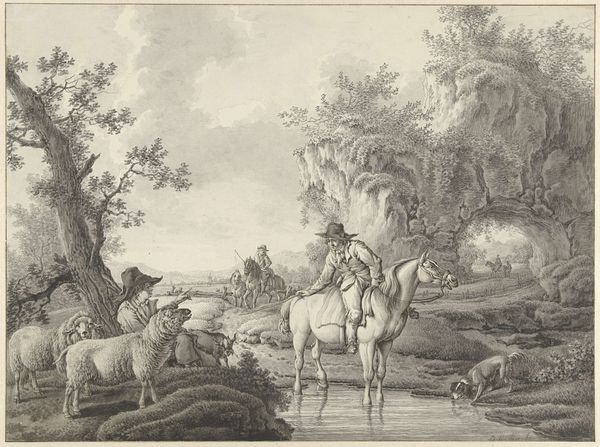
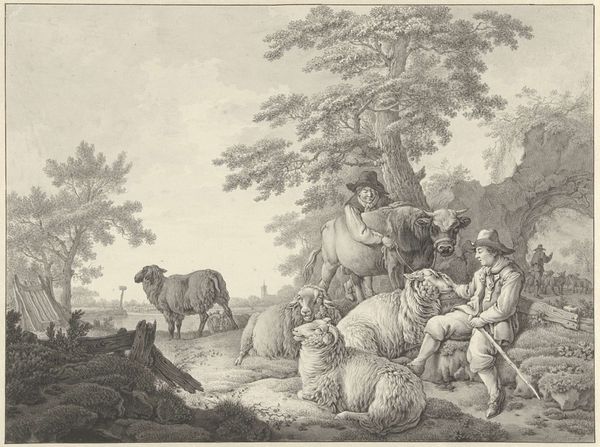
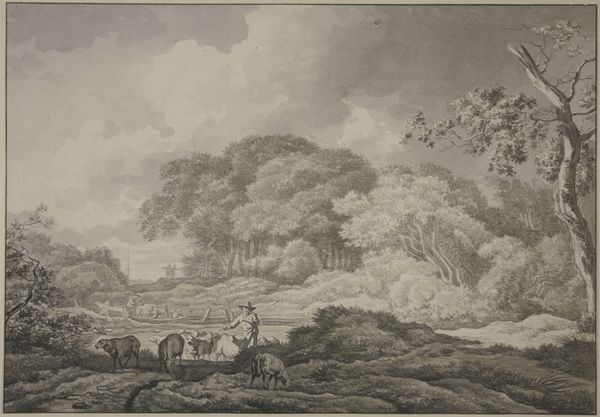
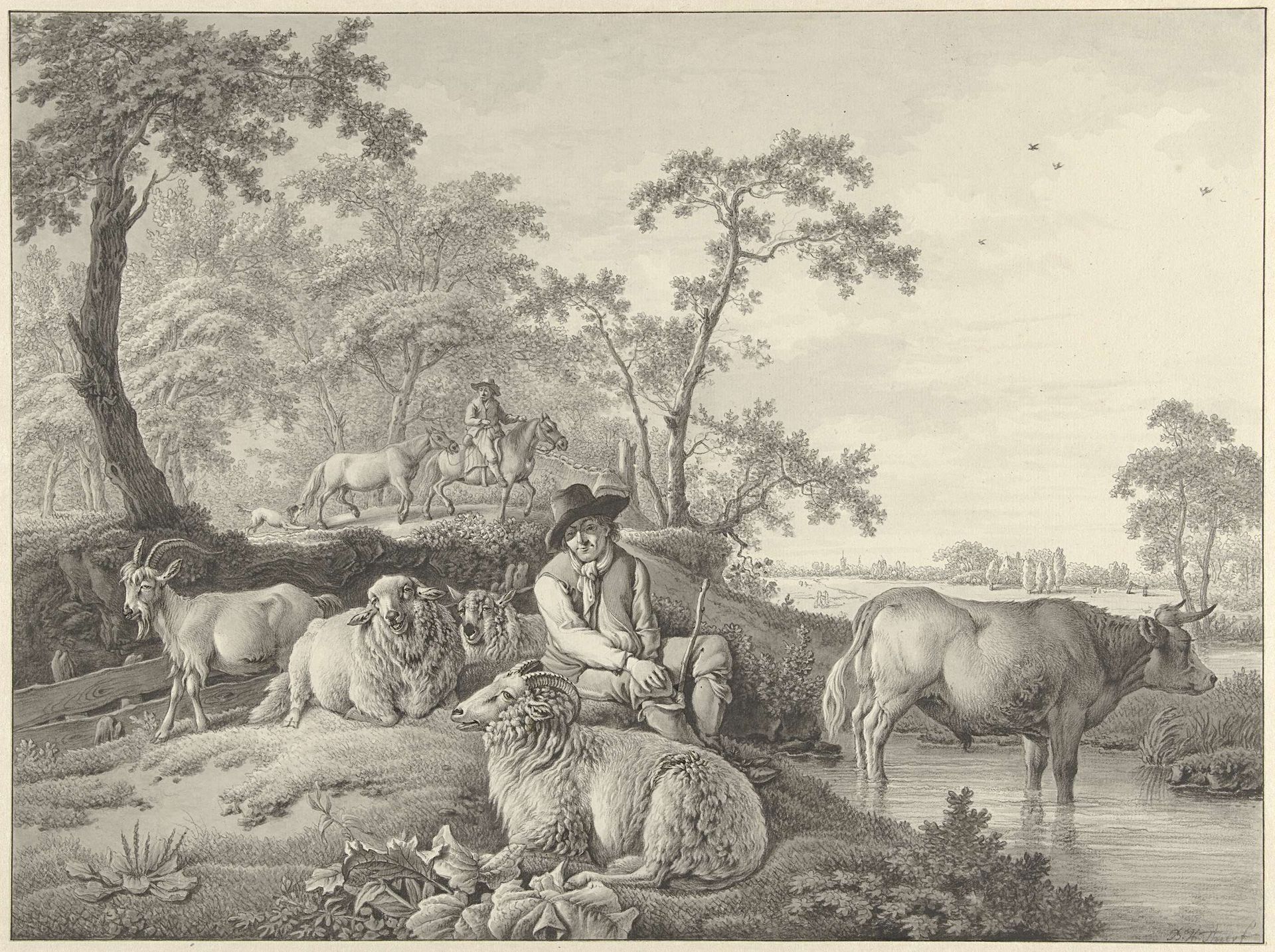
Barend Hendrik Thier created this drawing of a shepherd with sheep, a goat, and a young bull in a landscape. The composition is split into two distinct yet interconnected halves. The left side, dense with flora and fauna, creates a cluster of intricate textures and shapes, leading the eye through a carefully arranged pastoral scene. The shepherd, along with his flock, forms a complex knot of shapes that provides a sense of immediate visual interest and tactile presence. On the right, the landscape opens up to a distant horizon, where the young bull stands in water, reflecting a play of light and shadow, an invitation to contemplate the balance between foreground and background. The formal structure employs light and shadow to define the shapes of the animals and vegetation, creating depth. The etching technique gives a graphic quality that enhances the tactile impression of the scene. This is not merely a depiction of rural life; it's an arrangement of forms that asks us to consider the artistic and philosophical constructs underlying our perception of nature.
Schaapherder met schapen, een geit en een jonge stier in een landschap
1750 - 1811

Artwork details
- Medium
- drawing, paper, ink
- Dimensions
- height 322 mm, width 434 mm
- Copyright
- Rijks Museum: Open Domain
Tags
Comments
Share your thoughts
About this artwork
Barend Hendrik Thier created this drawing of a shepherd with sheep, a goat, and a young bull in a landscape. The composition is split into two distinct yet interconnected halves. The left side, dense with flora and fauna, creates a cluster of intricate textures and shapes, leading the eye through a carefully arranged pastoral scene. The shepherd, along with his flock, forms a complex knot of shapes that provides a sense of immediate visual interest and tactile presence. On the right, the landscape opens up to a distant horizon, where the young bull stands in water, reflecting a play of light and shadow, an invitation to contemplate the balance between foreground and background. The formal structure employs light and shadow to define the shapes of the animals and vegetation, creating depth. The etching technique gives a graphic quality that enhances the tactile impression of the scene. This is not merely a depiction of rural life; it's an arrangement of forms that asks us to consider the artistic and philosophical constructs underlying our perception of nature.
Comments
Share your thoughts