About this artwork
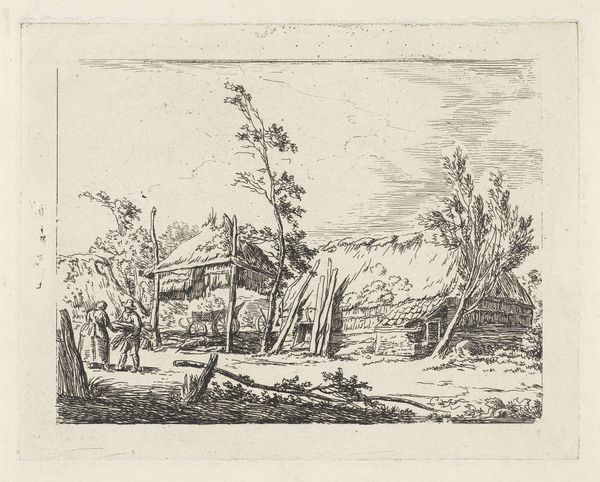
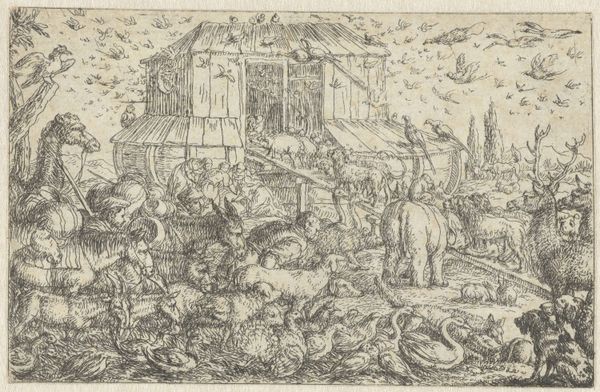
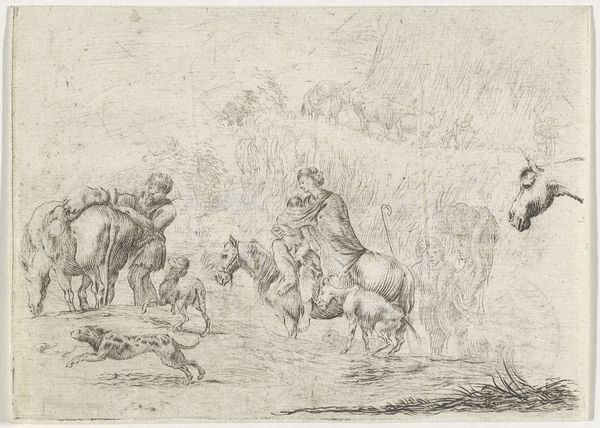
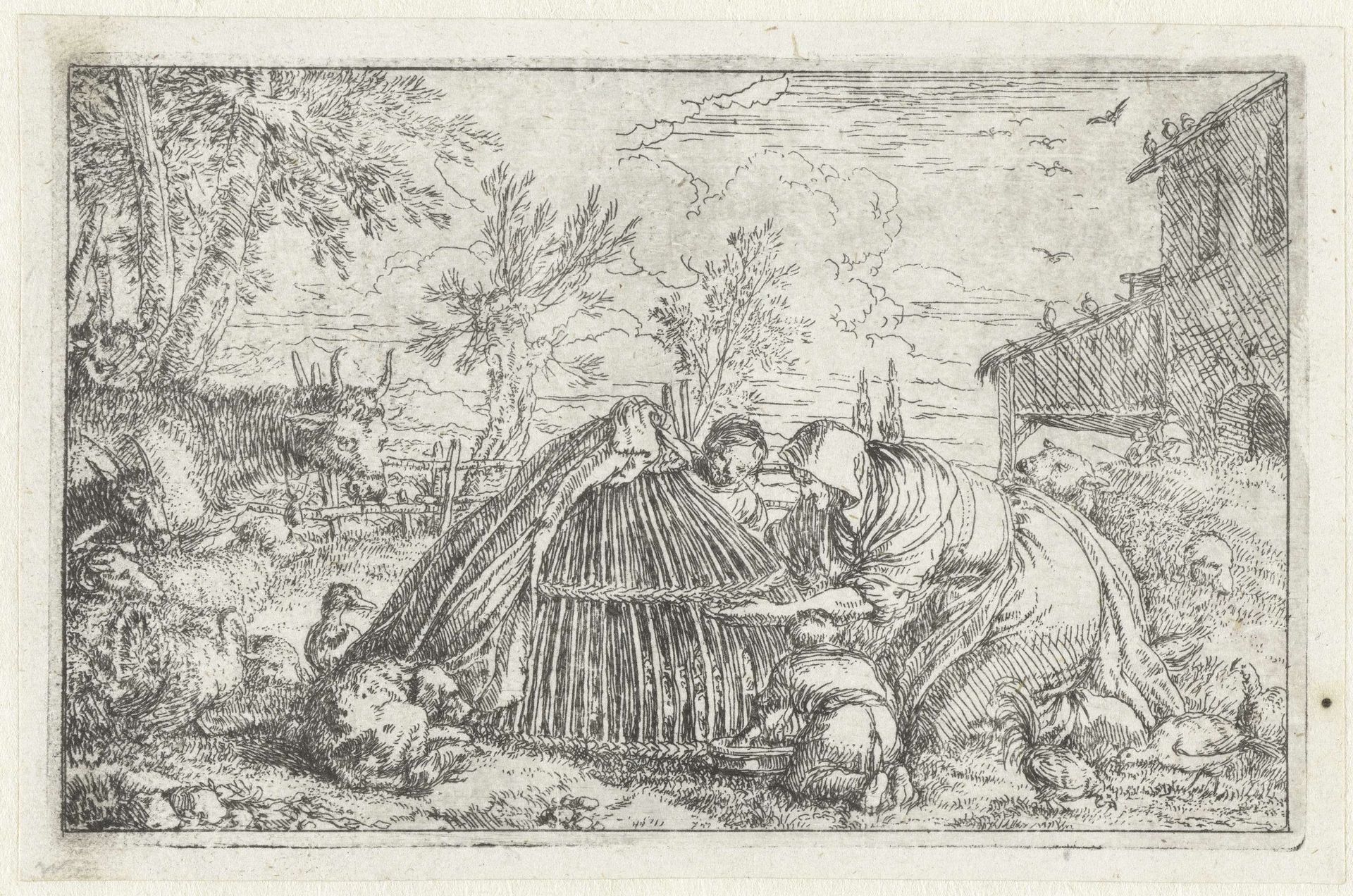
Jonas Umbach created this etching, "Boerin en twee kinderen voeren de kippen", or "Farmer's wife and two children feeding the chickens" sometime in the 17th century. Umbach was a German artist working at a time when the social and economic structures of Europe were undergoing significant change. The rise of capitalism and the growth of cities were transforming rural life. Here, Umbach presents a nostalgic view of the countryside, portraying the rural family as a symbol of stability and tradition. Note the image's composition: the figures are clustered in the center, surrounded by animals and a simple farmyard setting. This creates a sense of intimacy and connection to the natural world. The etching technique, with its fine lines and delicate shading, adds to the overall sense of tranquility. To further understand Umbach’s artistic choices, one might explore the prints and illustrated books that would have been available to him, or research the changing social status of the family unit in 17th-century Europe.
Boerin en twee kinderen voeren de kippen
1634 - 1693

Jonas Umbach
1624 - 1693Location
RijksmuseumArtwork details
- Medium
- print, etching
- Dimensions
- height 77 mm, width 123 mm
- Location
- Rijksmuseum
- Copyright
- Rijks Museum: Open Domain
Tags
Comments
Share your thoughts
About this artwork
Jonas Umbach created this etching, "Boerin en twee kinderen voeren de kippen", or "Farmer's wife and two children feeding the chickens" sometime in the 17th century. Umbach was a German artist working at a time when the social and economic structures of Europe were undergoing significant change. The rise of capitalism and the growth of cities were transforming rural life. Here, Umbach presents a nostalgic view of the countryside, portraying the rural family as a symbol of stability and tradition. Note the image's composition: the figures are clustered in the center, surrounded by animals and a simple farmyard setting. This creates a sense of intimacy and connection to the natural world. The etching technique, with its fine lines and delicate shading, adds to the overall sense of tranquility. To further understand Umbach’s artistic choices, one might explore the prints and illustrated books that would have been available to him, or research the changing social status of the family unit in 17th-century Europe.
Comments
Share your thoughts