About this artwork
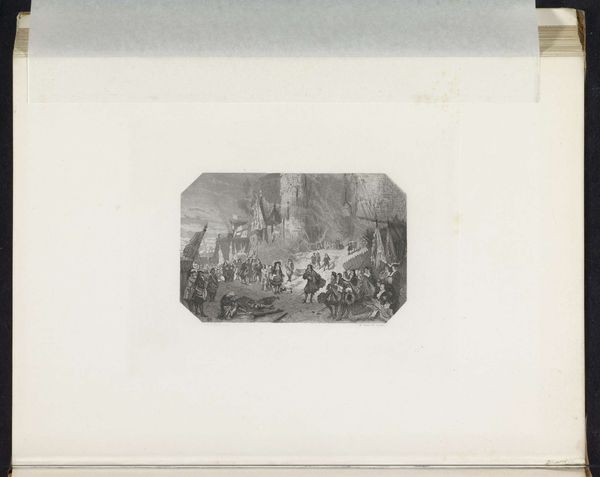
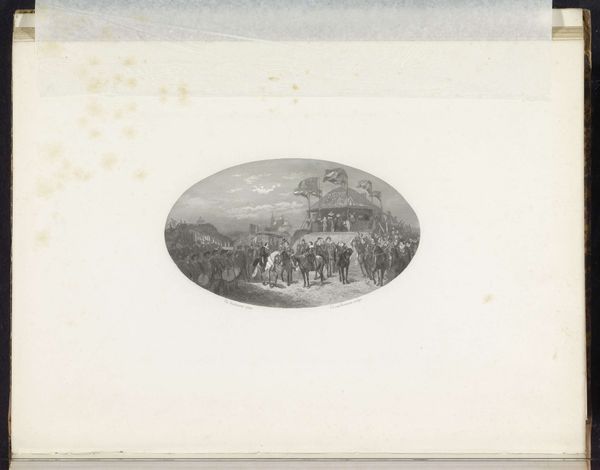
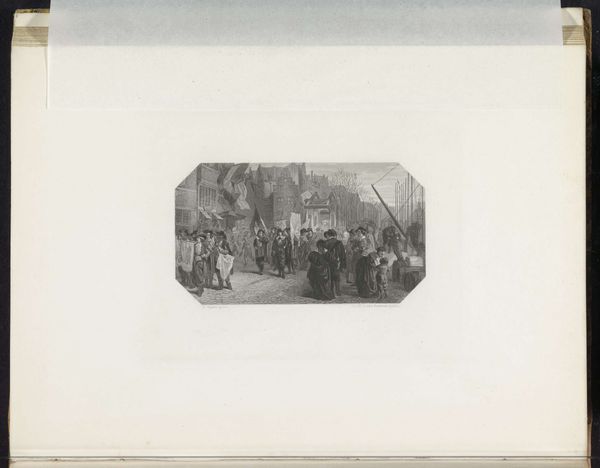
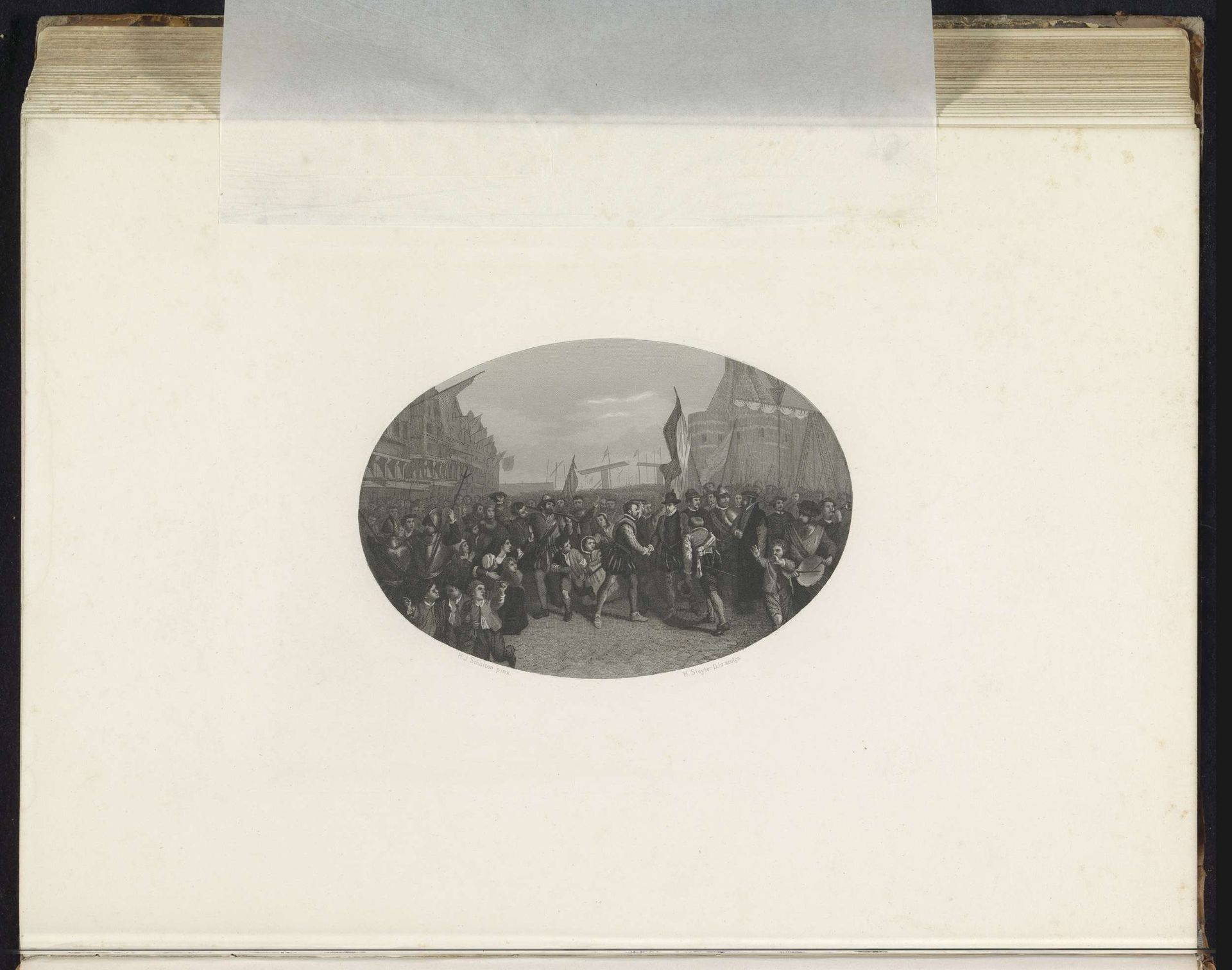
Hendrik D. Jzn Sluyter captured "Willem van Oranje te Enkhuizen, 1572" in a print, immortalizing a pivotal moment of Dutch history. Central to this image is the figure of William of Orange, a symbol of defiance against oppression. The act of carrying William into the city is not merely ceremonial; it is laden with historical weight. We see echoes of ancient Roman triumphs where victorious generals were carried aloft, a motif that resurfaces throughout Renaissance art to denote power and reverence. Observe how this gesture, laden with the memory of Roman authority, is here reinvented within a context of rebellion and liberation. It transcends time, embodying the cyclical nature of power and resistance. The waving flags, the cheering crowds – they are not just historical details, but embodiments of collective hope and the deep-seated desire for freedom. It’s a powerful, emotive scene that resonates far beyond its immediate context.
Willem van Oranje te Enkhuizen, 1572
1865 - 1870

Hendrik D. Jzn Sluyter
1839 - 1931Location
RijksmuseumArtwork details
- Medium
- print, engraving
- Dimensions
- height 190 mm, width 240 mm
- Location
- Rijksmuseum
- Copyright
- Rijks Museum: Open Domain
Tags
Comments
Share your thoughts
About this artwork
Hendrik D. Jzn Sluyter captured "Willem van Oranje te Enkhuizen, 1572" in a print, immortalizing a pivotal moment of Dutch history. Central to this image is the figure of William of Orange, a symbol of defiance against oppression. The act of carrying William into the city is not merely ceremonial; it is laden with historical weight. We see echoes of ancient Roman triumphs where victorious generals were carried aloft, a motif that resurfaces throughout Renaissance art to denote power and reverence. Observe how this gesture, laden with the memory of Roman authority, is here reinvented within a context of rebellion and liberation. It transcends time, embodying the cyclical nature of power and resistance. The waving flags, the cheering crowds – they are not just historical details, but embodiments of collective hope and the deep-seated desire for freedom. It’s a powerful, emotive scene that resonates far beyond its immediate context.
Comments
Share your thoughts