About this artwork
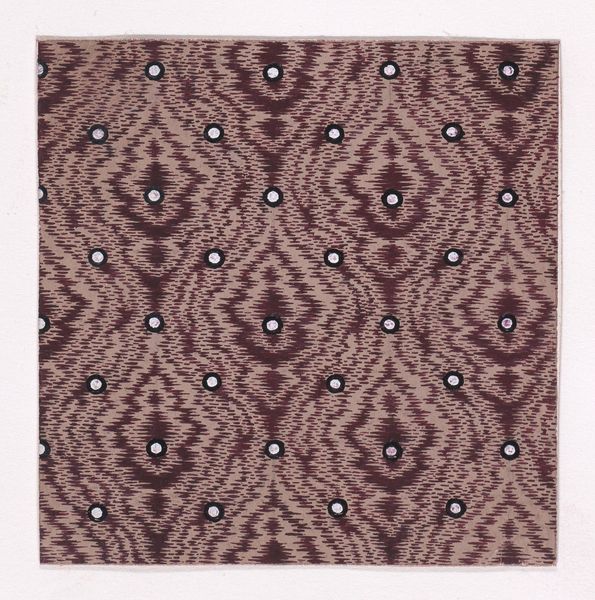
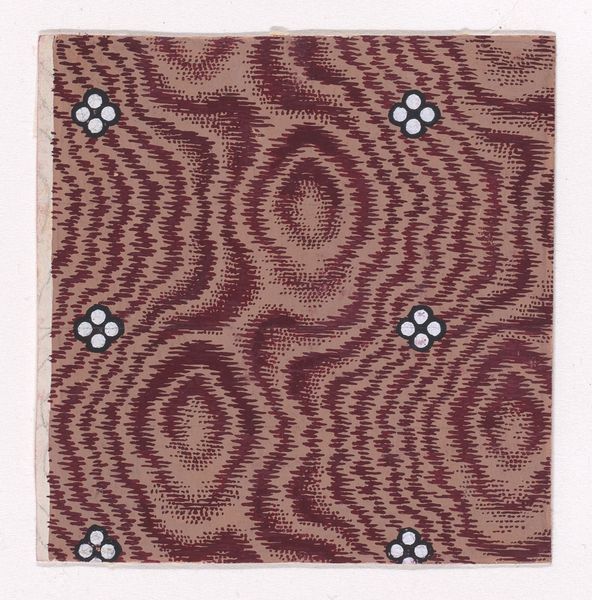
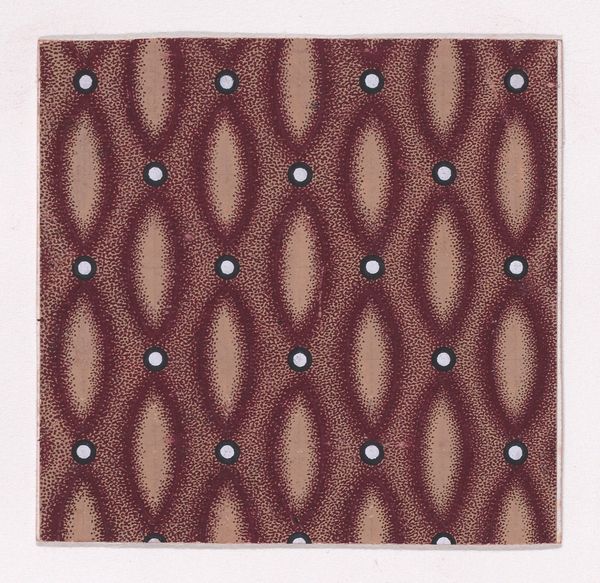
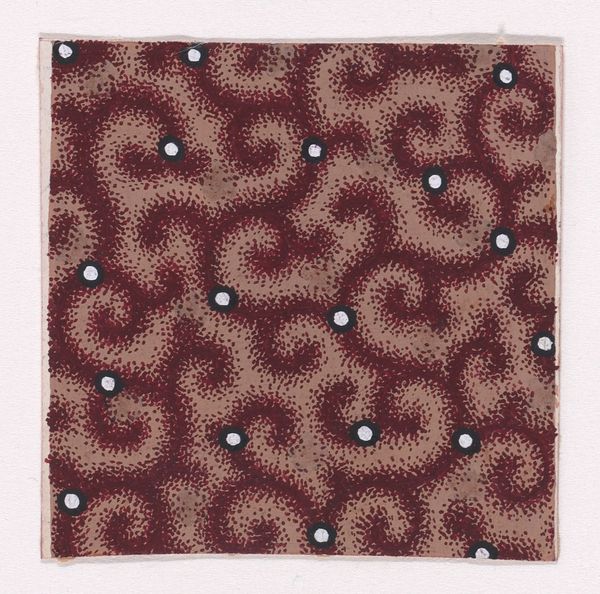
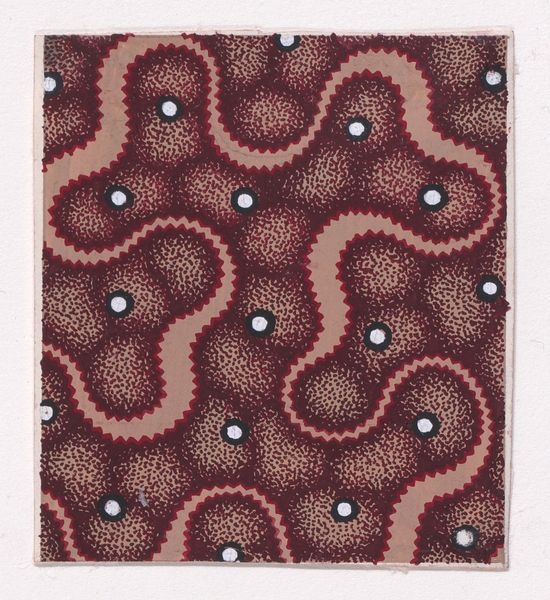
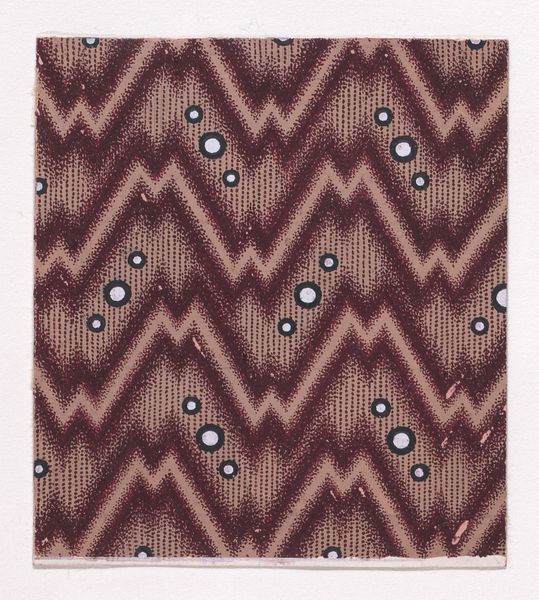
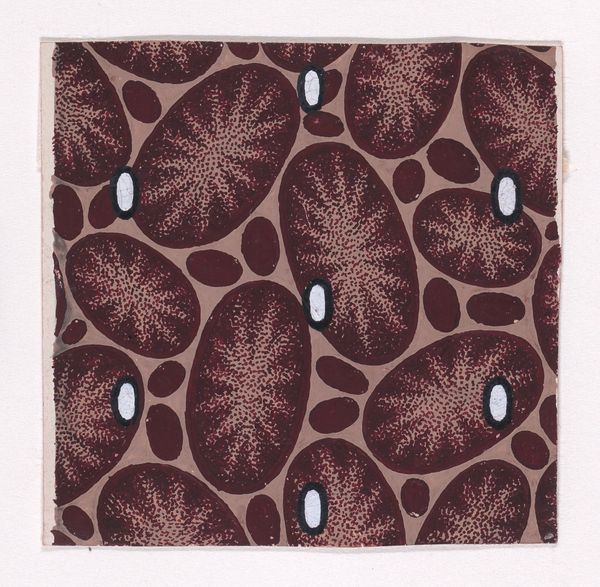
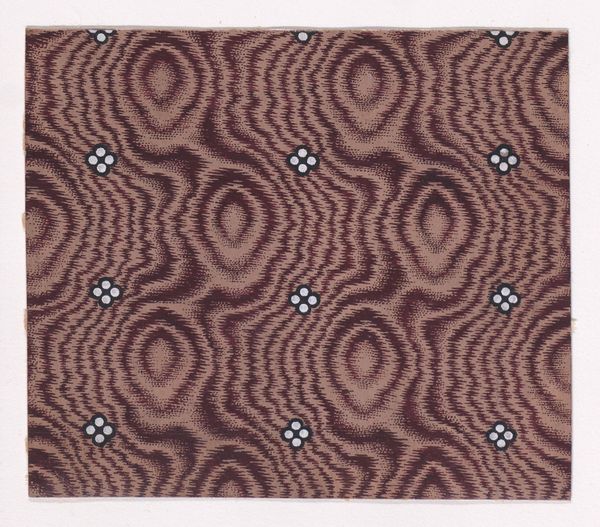
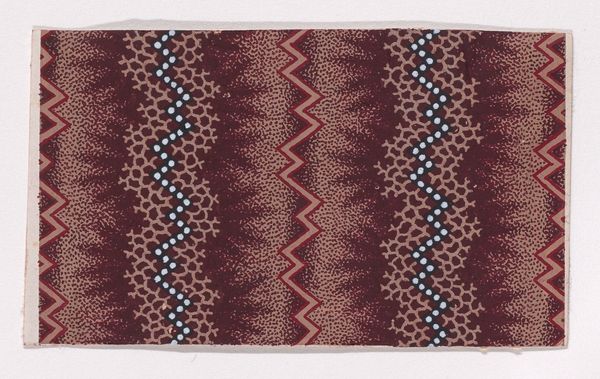
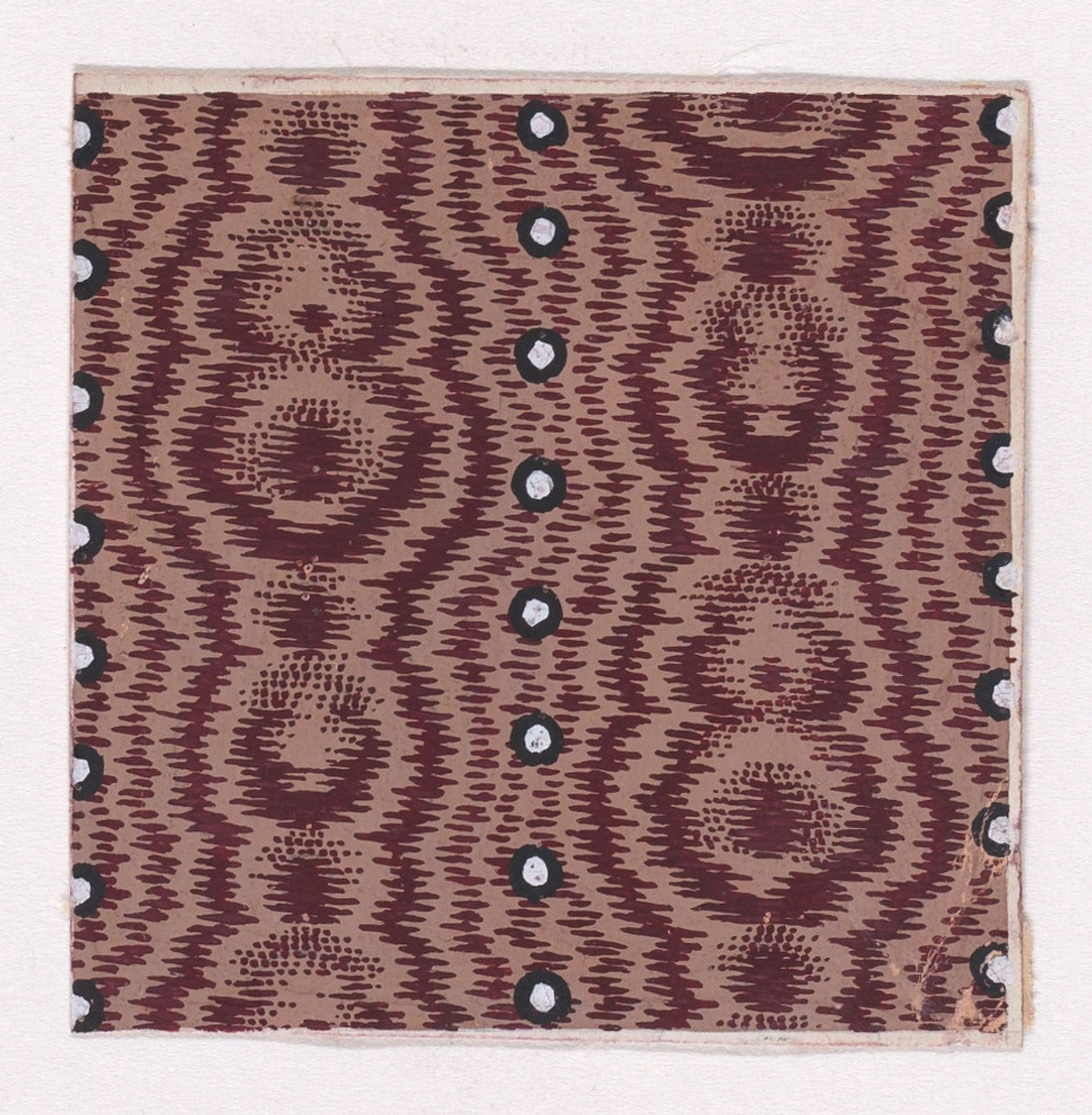
This textile design, crafted by an anonymous hand, features alternating vertical stripes of abstract figures and pearls. The circular forms evoke a sense of continuity and rhythm. Consider the pearl, a symbol of purity and transformation. It is fascinating to observe how this motif appears in Botticelli's "Birth of Venus," adorning the goddess as she emerges from the sea, and later in a still life by Jan Davidsz de Heem, where it signifies wealth and luxury. This symbol carries cultural weight, echoing through time and manifesting differently across varied contexts. The repetitive nature of the pearls suggests the cyclical nature of life, death, and rebirth. It taps into a collective memory, resonating with our subconscious understanding of nature’s rhythms. This evokes a sense of timelessness, connecting us to our ancestors who also contemplated the mysteries of existence. The powerful emotional force of such recurring motifs engages viewers on a deep, subconscious level. The cyclical progression of this symbol has resurfaced and taken on new meanings in different historical contexts.
Textile Design with Alternating Vertical Stripes of Abstract Figures and Pearls
1840


Artwork details
- Medium
- drawing, print, textile
- Dimensions
- Sheet: 1 15/16 × 1 15/16 in. (4.9 × 4.9 cm)
- Location
- Metropolitan Museum of Art, New York, NY
- Copyright
- Public Domain
Tags
Comments
Share your thoughts
About this artwork
This textile design, crafted by an anonymous hand, features alternating vertical stripes of abstract figures and pearls. The circular forms evoke a sense of continuity and rhythm. Consider the pearl, a symbol of purity and transformation. It is fascinating to observe how this motif appears in Botticelli's "Birth of Venus," adorning the goddess as she emerges from the sea, and later in a still life by Jan Davidsz de Heem, where it signifies wealth and luxury. This symbol carries cultural weight, echoing through time and manifesting differently across varied contexts. The repetitive nature of the pearls suggests the cyclical nature of life, death, and rebirth. It taps into a collective memory, resonating with our subconscious understanding of nature’s rhythms. This evokes a sense of timelessness, connecting us to our ancestors who also contemplated the mysteries of existence. The powerful emotional force of such recurring motifs engages viewers on a deep, subconscious level. The cyclical progression of this symbol has resurfaced and taken on new meanings in different historical contexts.
Comments
Share your thoughts