About this artwork
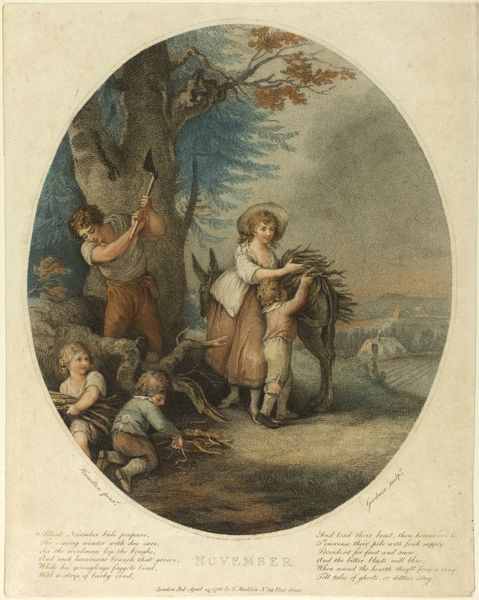
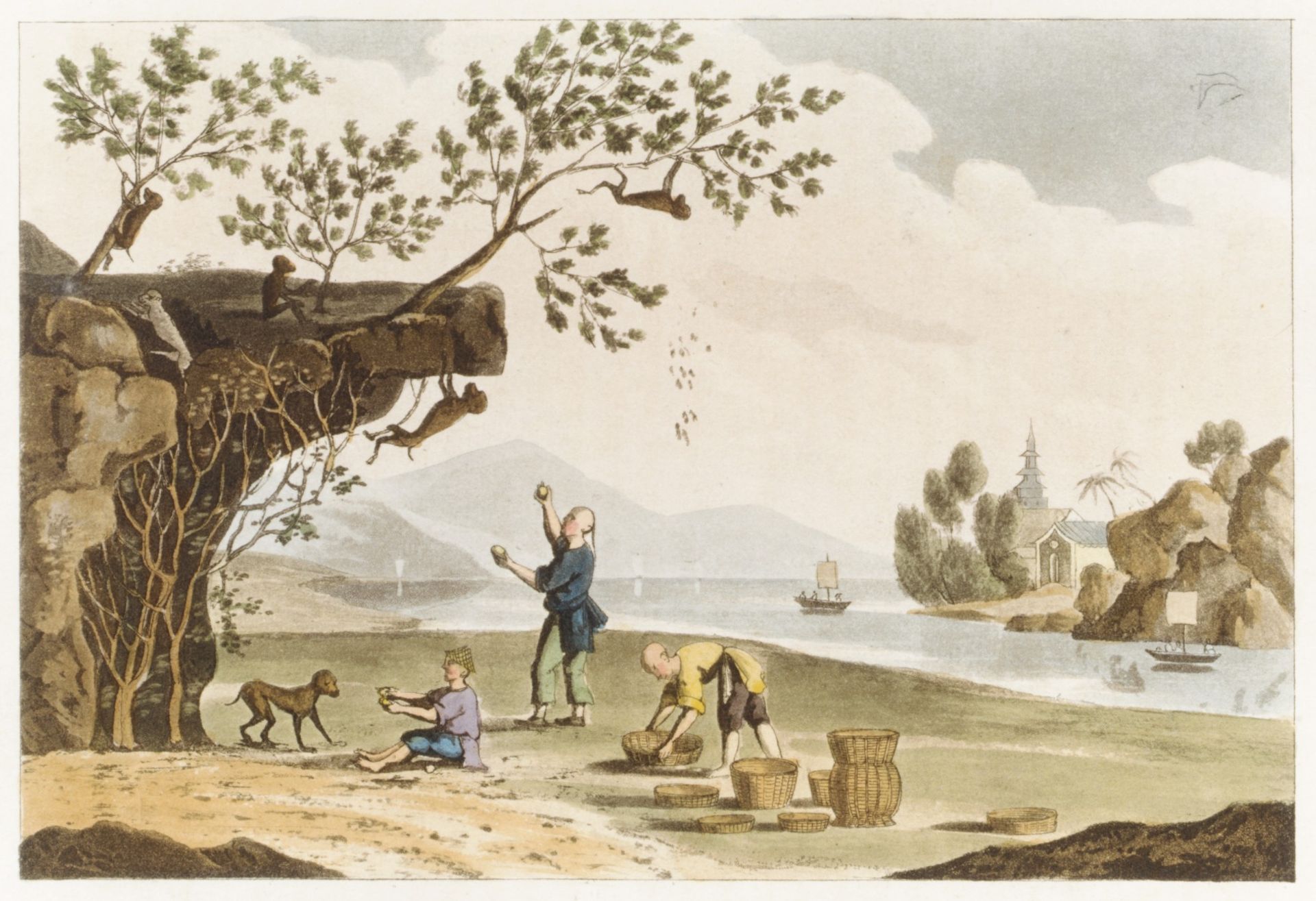
This print, made in London by Rudolph Ackermann, presents a scene of labor framed by a rocky outcrop populated by monkeys. The monkeys, seemingly mimicking human actions, introduce an element of playful satire. Monkeys have long served as symbols of imitation and folly, a motif that reappears across cultures, from ancient Egyptian art to Renaissance allegories. In medieval Europe, the image of an ape chained and leashed was used to signify base human instincts, and the triumph of reason over them. Here, Ackermann presents a twist on this archetype. While the humans below engage in methodical labor, the monkeys frolic above, seemingly mocking human actions. They are physicalizing the psychological undercurrents of human endeavor, perhaps hinting at the absurdity or the futility of their pursuits. As the monkeys swing and play, they remind us of the complex interplay between imitation and autonomy, nature and culture, that shape our collective psyche.
The Repository of Arts, Literature, Fashions, Manufactuers, &c., 2nd series, volume 12
1821

Rudolph Ackermann, London
1764 - 1834
The Metropolitan Museum of Art
Metropolitan Museum of Art, New York, NYArtwork details
- Medium
- drawing, print
- Dimensions
- 9 7/16 in. × 6 in. × 1 9/16 in. (24 × 15.3 × 4 cm)
- Location
- Metropolitan Museum of Art, New York, NY
- Copyright
- Public Domain
Tags
Comments
Share your thoughts
About this artwork
This print, made in London by Rudolph Ackermann, presents a scene of labor framed by a rocky outcrop populated by monkeys. The monkeys, seemingly mimicking human actions, introduce an element of playful satire. Monkeys have long served as symbols of imitation and folly, a motif that reappears across cultures, from ancient Egyptian art to Renaissance allegories. In medieval Europe, the image of an ape chained and leashed was used to signify base human instincts, and the triumph of reason over them. Here, Ackermann presents a twist on this archetype. While the humans below engage in methodical labor, the monkeys frolic above, seemingly mocking human actions. They are physicalizing the psychological undercurrents of human endeavor, perhaps hinting at the absurdity or the futility of their pursuits. As the monkeys swing and play, they remind us of the complex interplay between imitation and autonomy, nature and culture, that shape our collective psyche.
Comments
Share your thoughts