1859 - 1892
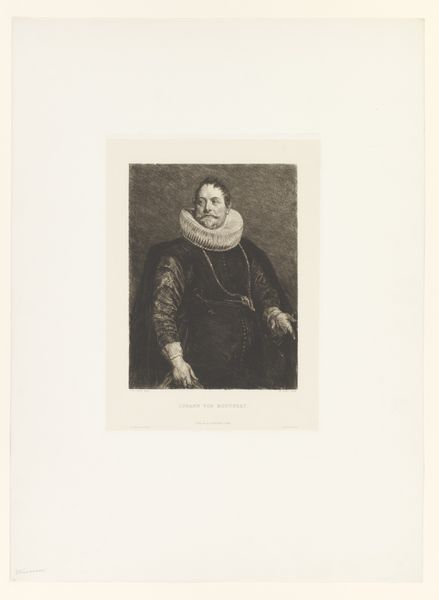
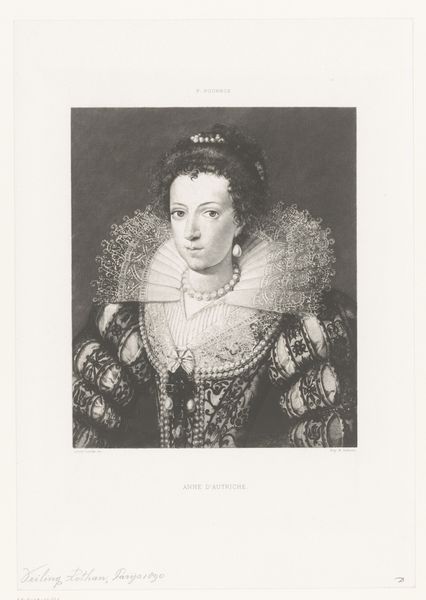
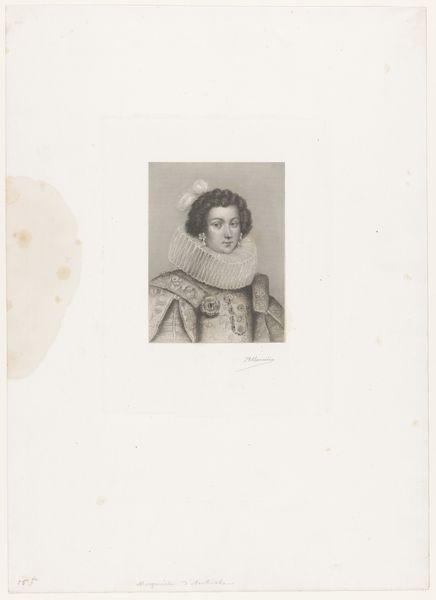
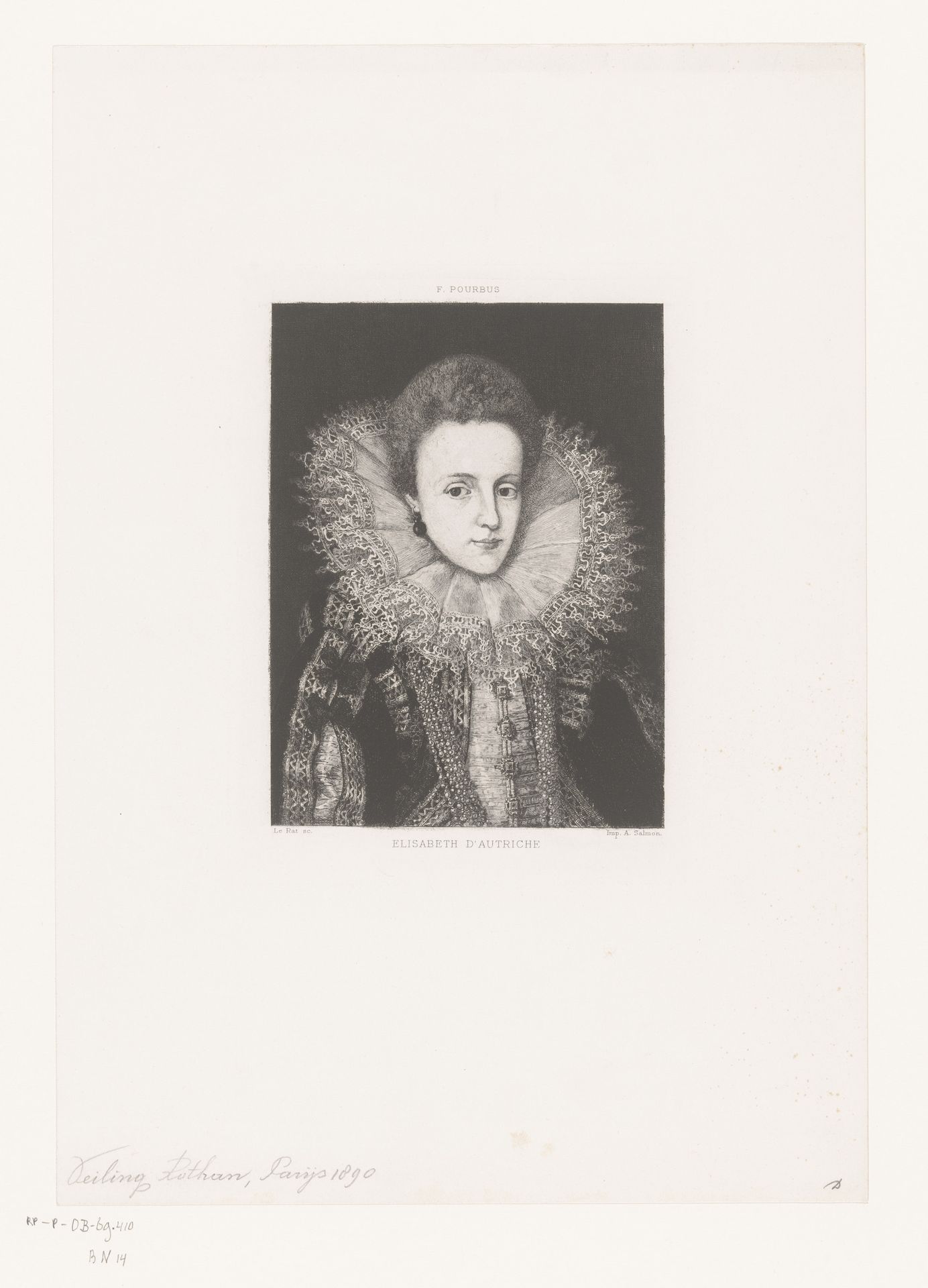
Portret van Elisabeth van Oostenrijk, koningin van Frankrijk

Listen to curator's interpretation
Curatorial notes
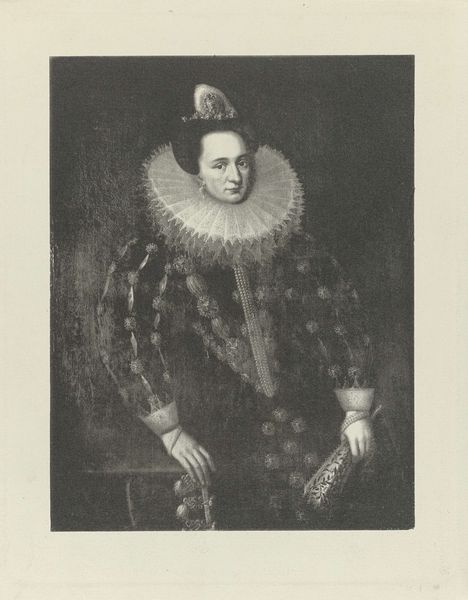
Editor: This engraving, "Portret van Elisabeth van Oostenrijk, koningin van Frankrijk" by Paul-Edme Le Rat, made sometime between 1859 and 1892, has such a fascinating, almost haunting quality to it. What do you see when you look at it? Curator: The symbols are potent here. The ruff, for instance, that massive lace collar – it's more than mere fashion. Think about its symbolism: confinement, separation, yet also a halo-like grandeur, signifying her elevated status, physically distancing her from the commoners. Do you feel the tension in that visual contradiction? Editor: I hadn't considered the 'confinement' aspect. I was more drawn to the elaborate detail of the lace, the wealth it implies. Curator: Precisely. And wealth, in portraiture, acts as a visible manifestation of power, an outward symbol reflecting inward character and destiny. Consider how her Habsburg lineage imprints itself on this image; a carefully crafted performance of queenship etched into the very lines of the engraving. How does this iconography affect our understanding of female power in that era? Editor: So, we’re not just seeing a picture of a queen, but all of the ideas and expectations of her role at that moment in time, and the weight of her ancestry too. It's like visual shorthand for her entire story. Curator: Exactly. This portrait isn’t just an image, it’s an active carrier of cultural memory. Understanding the symbols unlocks a richer narrative, showing the intricate layering of identity and historical role-play. Editor: I'll definitely look at portraits differently from now on! Thanks for making me see the hidden meanings. Curator: And thank you for helping me view it with fresh eyes. It is always a pleasure to revisit these emblems and unlock their deeper meanings.