About this artwork
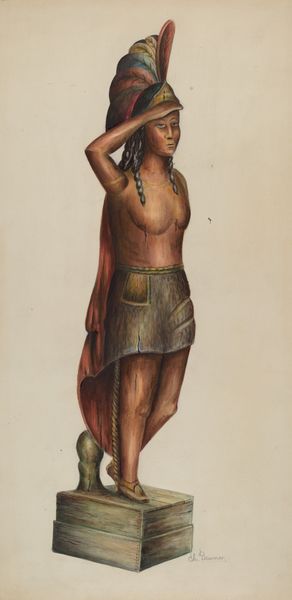
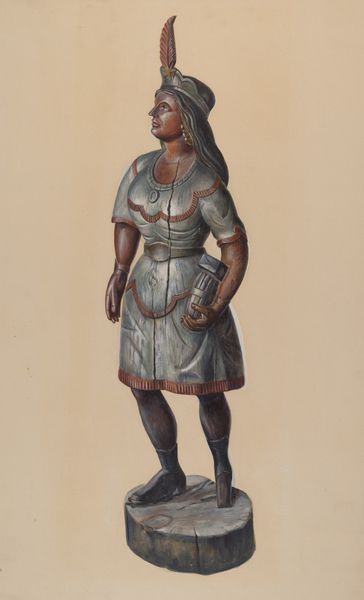
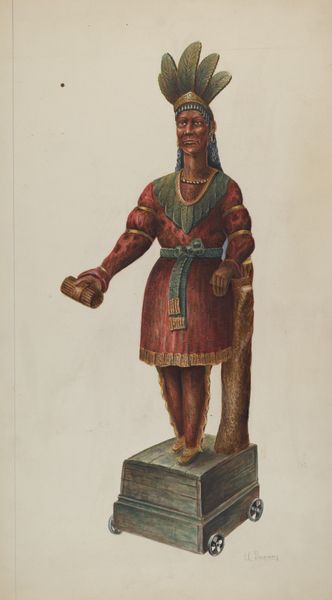
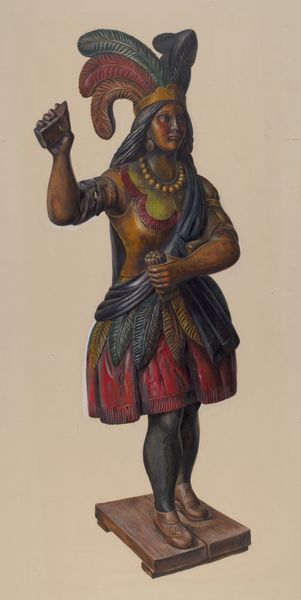
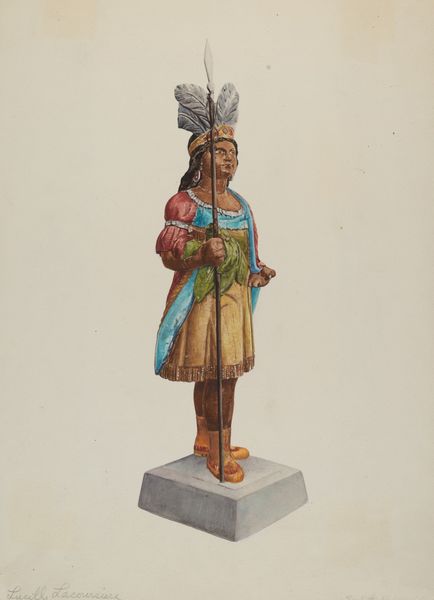
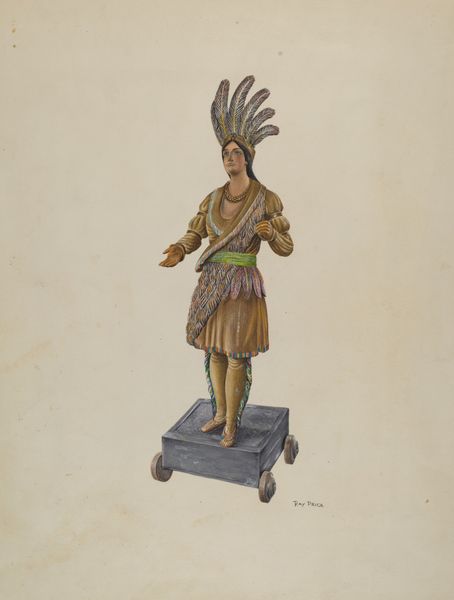
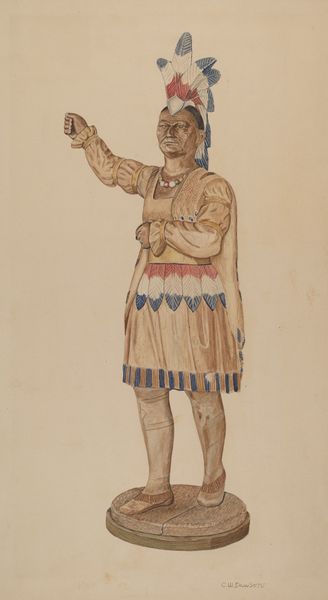
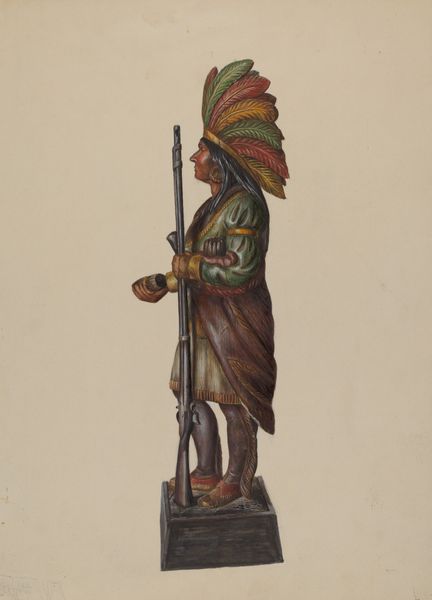
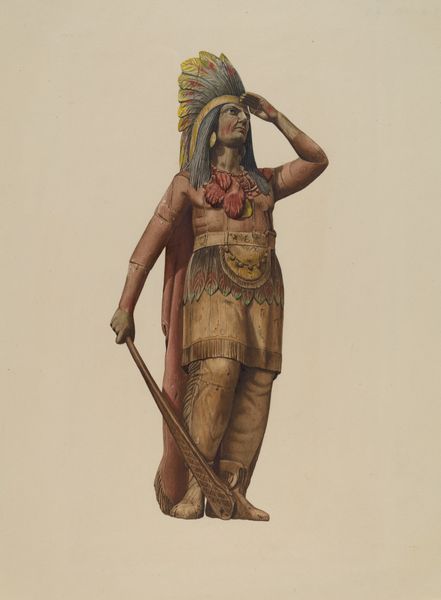
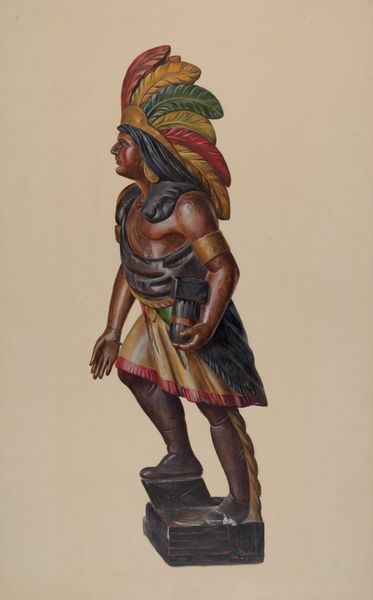
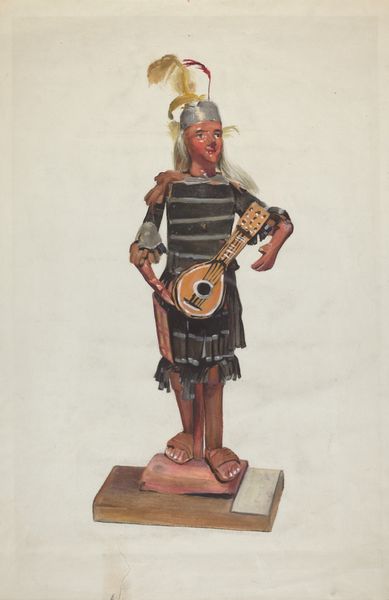
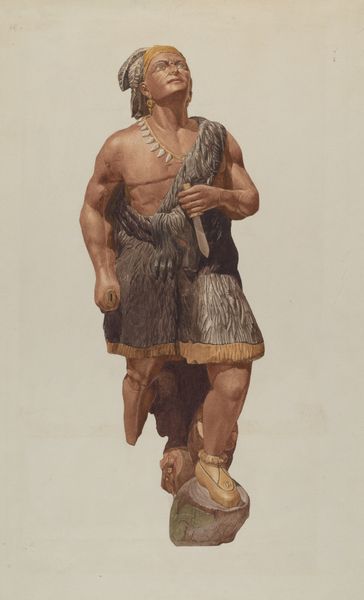
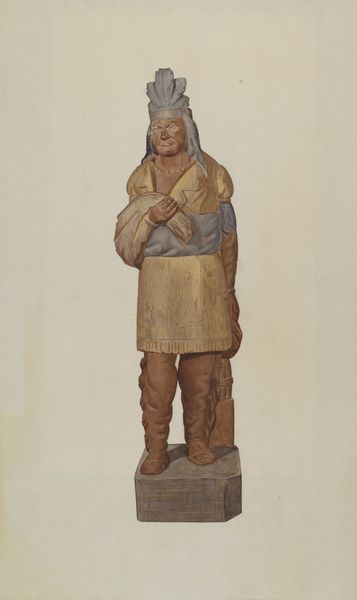
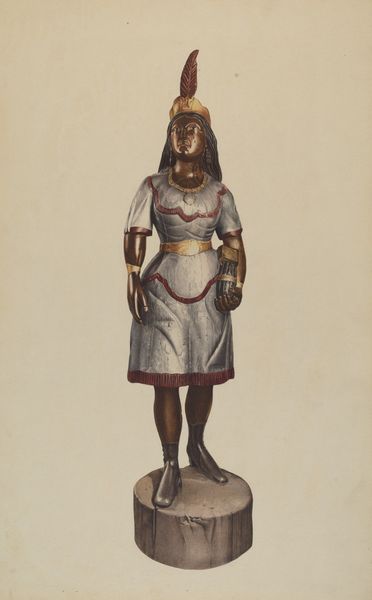
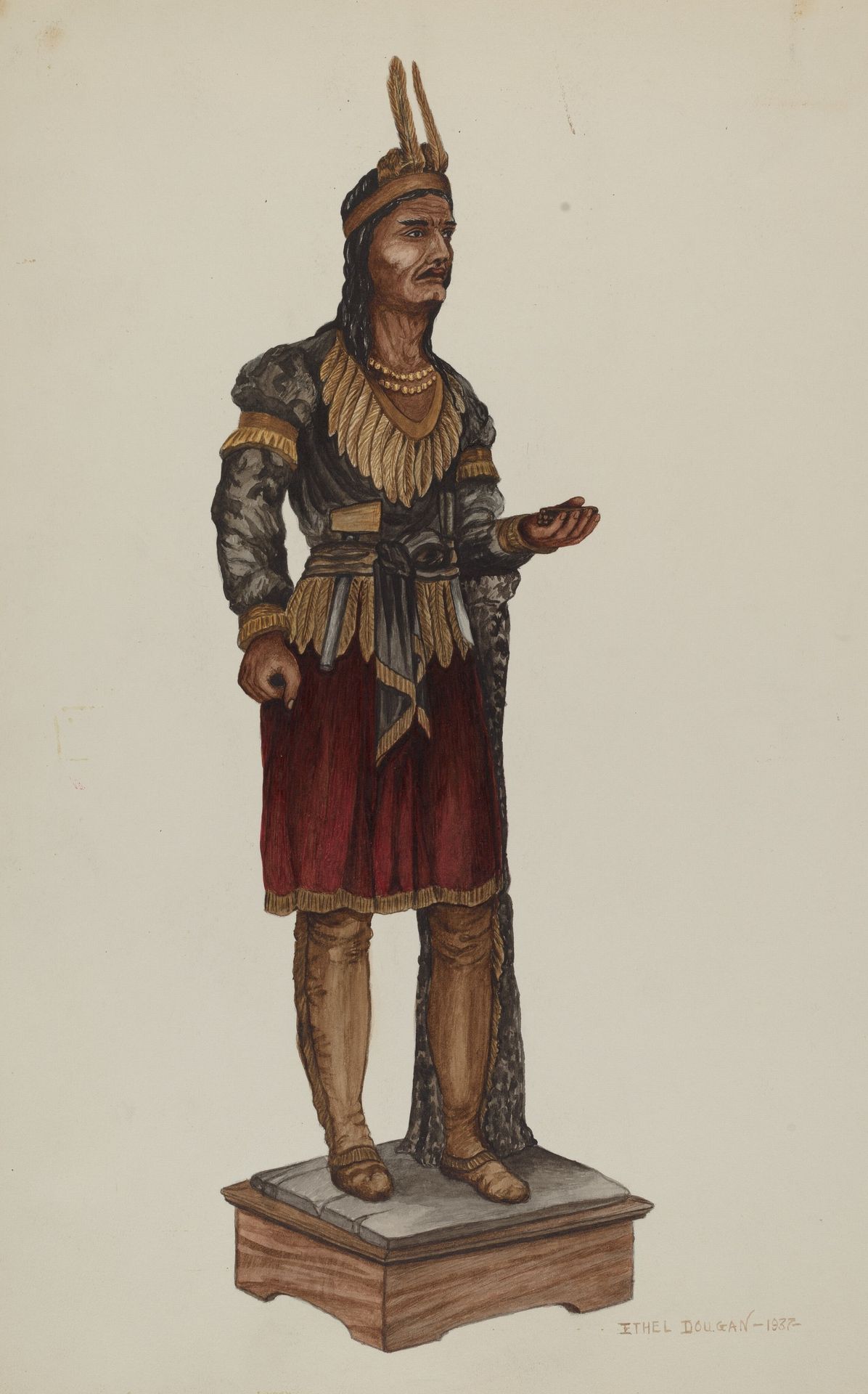
Ethel Dougan made this watercolor, titled Cigar Store Indian, sometime in the middle of the 20th century. You can see how Dougan layers translucent washes of color to slowly build up the image. It’s a process of adding and subtracting, letting the watercolor find its own way. The image itself feels haunted by history. The colors are muted, almost faded, like a memory. The figure is carefully rendered, yet there's a flatness to the image, like a photograph, that suggests the three-dimensional sculpture it represents. The hand that is open feels like it is in anticipation of something. It is empty, but full of possibilities. I love the play with representation here - it is an image of an object that represents an image. This layering and doubling back reminds me of the work of Philip Guston, who was also interested in using artmaking as a space for reflection. Art is an ongoing exchange, full of echoes and reinterpretations, where meaning shifts like sand.


Artwork details
- Medium
- painting
- Dimensions
- overall: 35.8 x 31.9 cm (14 1/8 x 12 9/16 in.)
- Copyright
- National Gallery of Art: CC0 1.0
Tags
painting
charcoal drawing
figuration
oil painting
portrait drawing
watercolor
Comments
Be the first to share your thoughts about this work.
About this artwork
Ethel Dougan made this watercolor, titled Cigar Store Indian, sometime in the middle of the 20th century. You can see how Dougan layers translucent washes of color to slowly build up the image. It’s a process of adding and subtracting, letting the watercolor find its own way. The image itself feels haunted by history. The colors are muted, almost faded, like a memory. The figure is carefully rendered, yet there's a flatness to the image, like a photograph, that suggests the three-dimensional sculpture it represents. The hand that is open feels like it is in anticipation of something. It is empty, but full of possibilities. I love the play with representation here - it is an image of an object that represents an image. This layering and doubling back reminds me of the work of Philip Guston, who was also interested in using artmaking as a space for reflection. Art is an ongoing exchange, full of echoes and reinterpretations, where meaning shifts like sand.
Comments
Be the first to share your thoughts about this work.