About this artwork
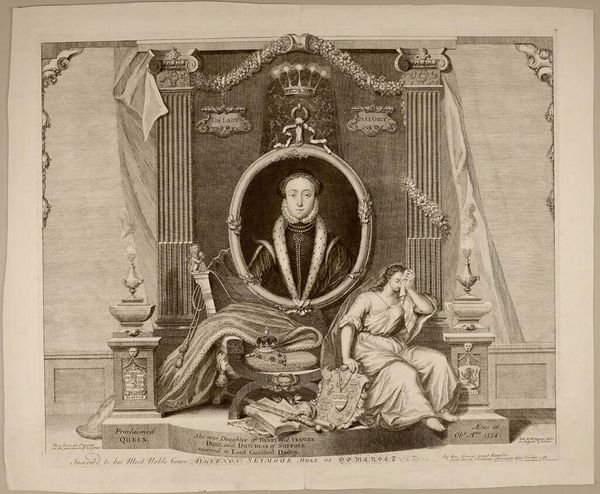
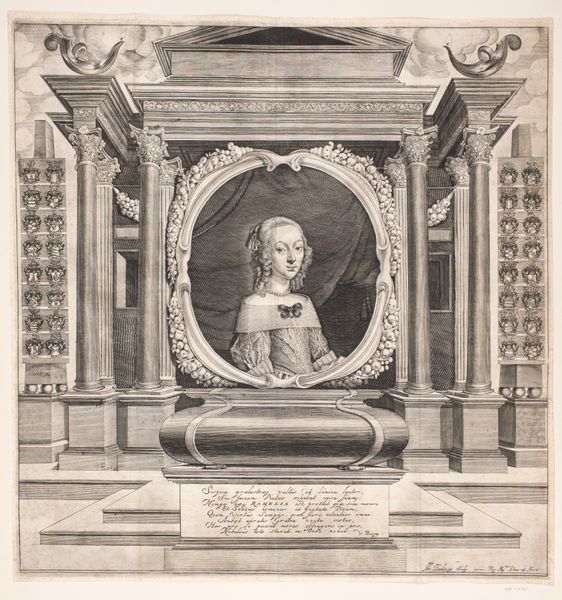
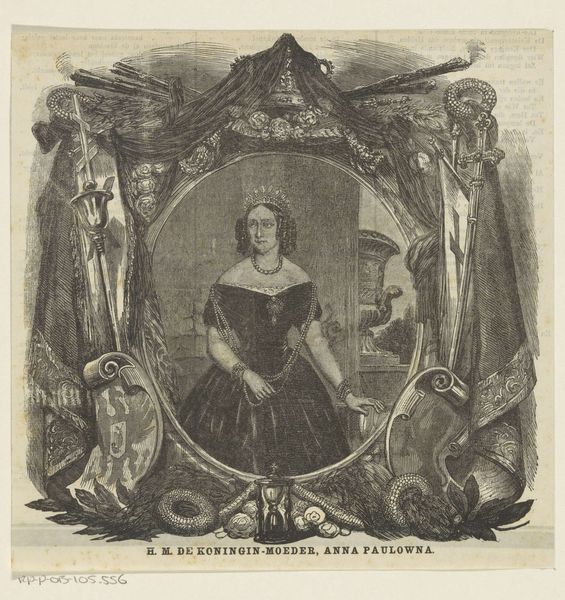
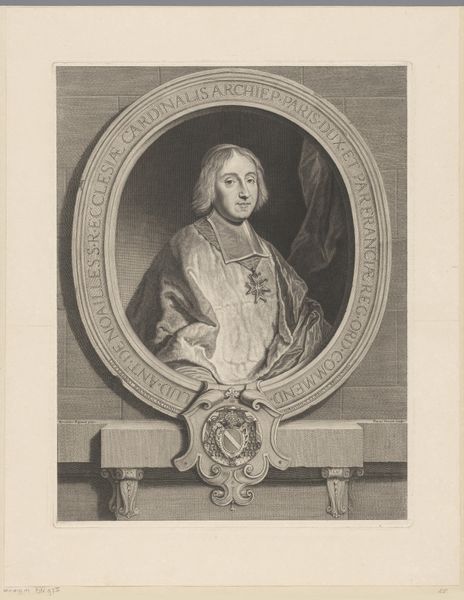
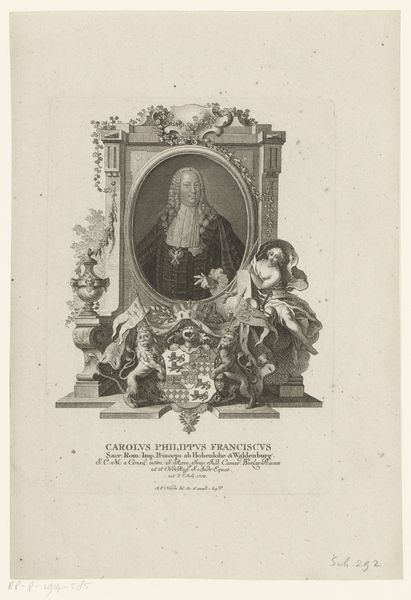
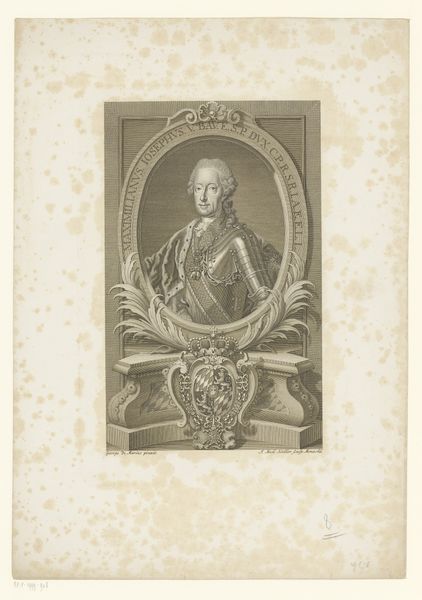
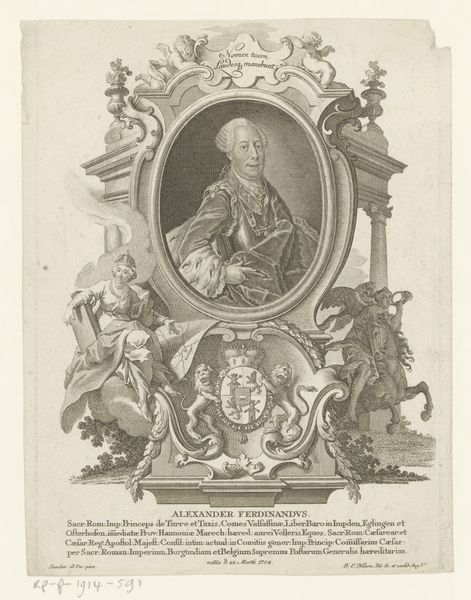
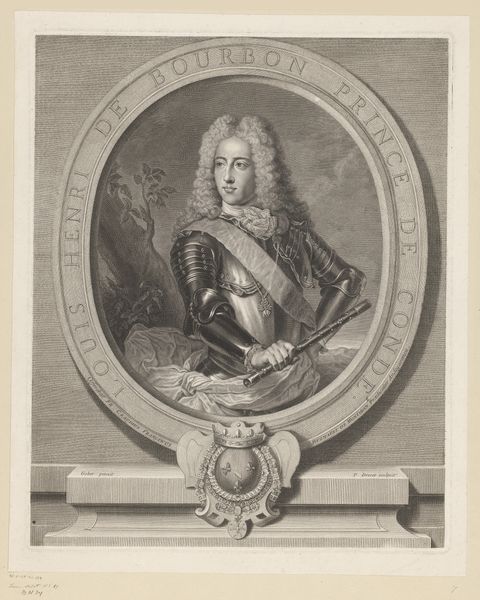
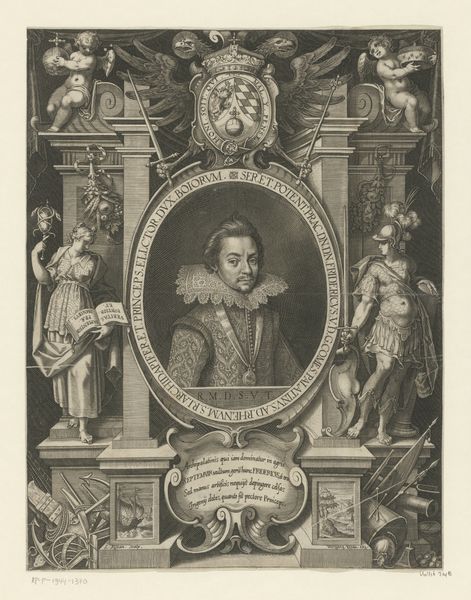
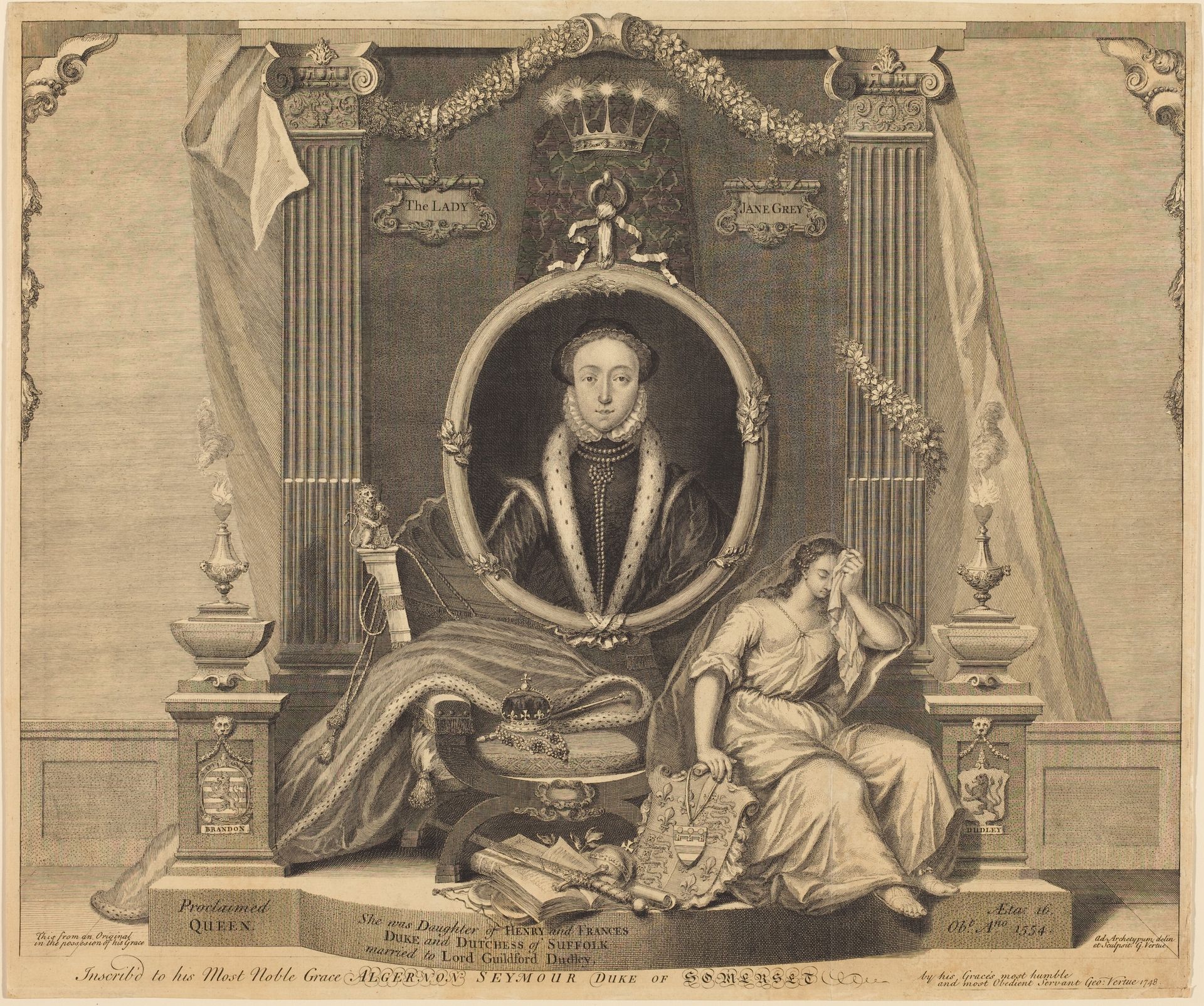
This print of Lady Jane Grey was made by George Vertue in the 18th century. The composition centres on an oval portrait of Lady Jane, flanked by architectural motifs and symbolic elements. The artist uses the etching technique to create delicate lines and subtle tonal variations, resulting in an image that is both detailed and refined. Vertue employs a symmetrical arrangement to emphasize the subject's nobility, contrasting her idealized image with allegorical figures of mourning. The surrounding objects, such as the crown and coat of arms, function as semiotic markers that speak to ideas of status and tragedy. The artist thus destabilizes the meaning of royalty by contrasting it with mortality. Notice how the artist uses line and form not merely for aesthetic purposes, but also as a means of engaging with cultural codes and the philosophical discourse surrounding power and representation. This print serves not just as an historical portrait, but also as a site for interpreting ideas about sovereignty.


Artwork details
- Medium
- print, engraving
- Copyright
- National Gallery of Art: CC0 1.0
Tags
Comments
Share your thoughts
About this artwork
This print of Lady Jane Grey was made by George Vertue in the 18th century. The composition centres on an oval portrait of Lady Jane, flanked by architectural motifs and symbolic elements. The artist uses the etching technique to create delicate lines and subtle tonal variations, resulting in an image that is both detailed and refined. Vertue employs a symmetrical arrangement to emphasize the subject's nobility, contrasting her idealized image with allegorical figures of mourning. The surrounding objects, such as the crown and coat of arms, function as semiotic markers that speak to ideas of status and tragedy. The artist thus destabilizes the meaning of royalty by contrasting it with mortality. Notice how the artist uses line and form not merely for aesthetic purposes, but also as a means of engaging with cultural codes and the philosophical discourse surrounding power and representation. This print serves not just as an historical portrait, but also as a site for interpreting ideas about sovereignty.
Comments
Share your thoughts