About this artwork
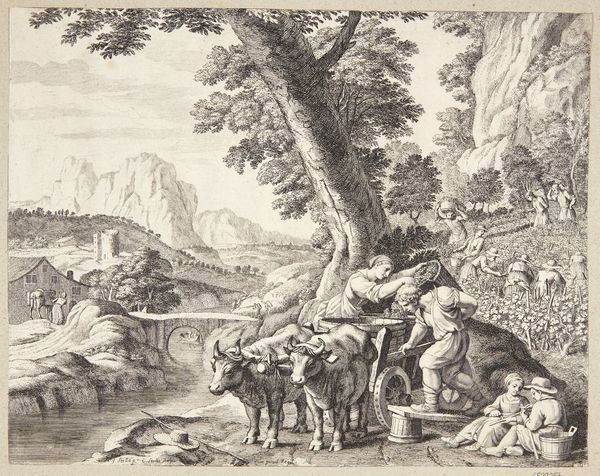
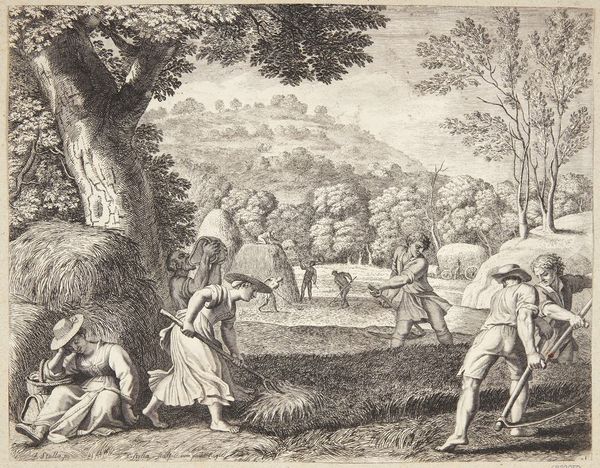
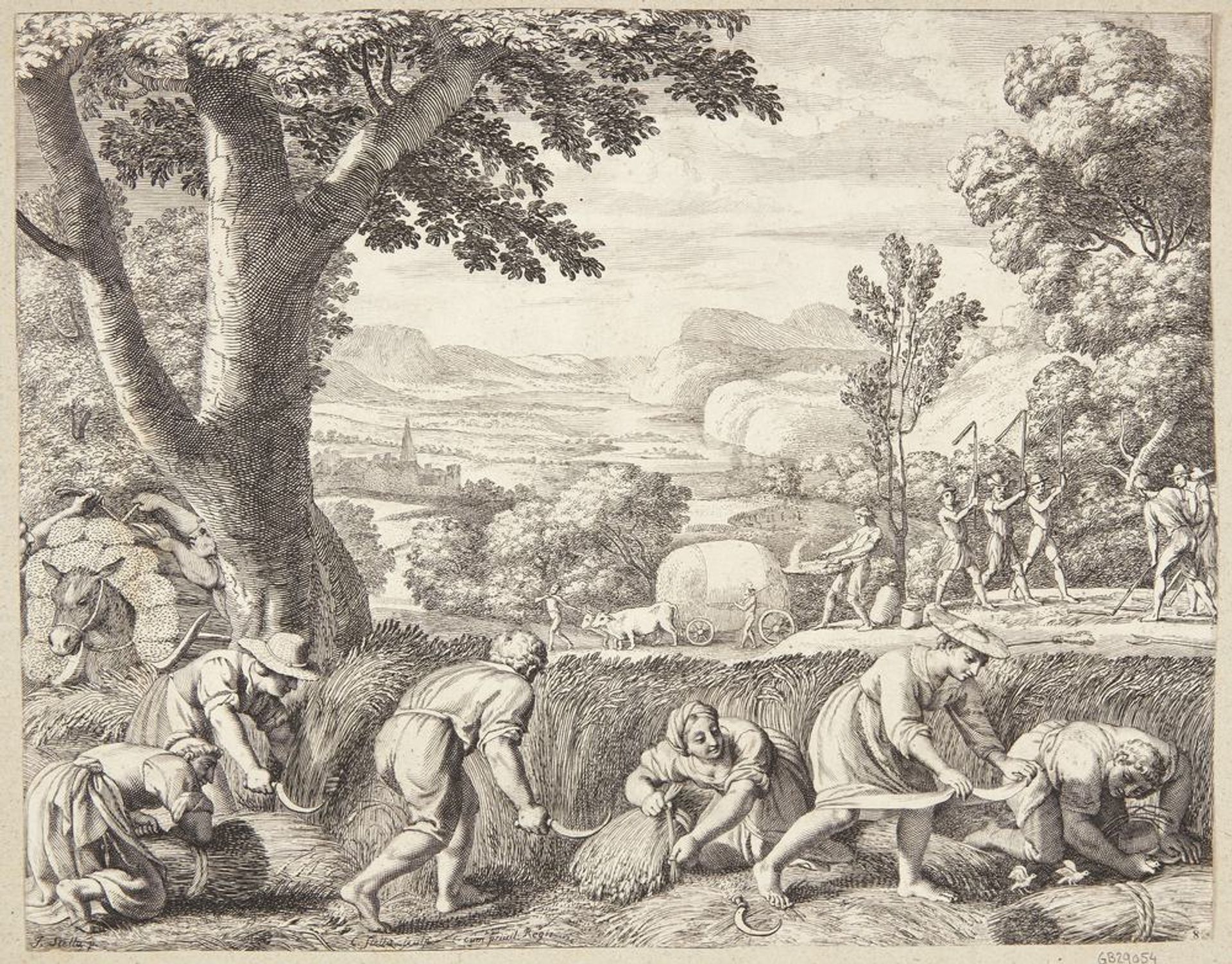
Claudine Bouzonnet Stella etched ‘Kornet høstes’, or ‘The Grain Harvest’, sometime in the 17th century. This print exemplifies a burgeoning interest in rural life and labor that was also reflected in other art forms, like literature. Made in France, this image reflects the period's social hierarchy. While seemingly celebrating the agricultural workforce, prints like these also served to aestheticize and, in a sense, control perceptions of labor, presenting an idealized version that arguably distanced the upper classes from the harsh realities of peasant life. Note the picturesque landscape in the background and the orderly arrangement of the figures. These elements contribute to a sense of harmony and idealized rural life. Understanding such a piece necessitates looking at period documents. Estate records, economic treatises, and even literature from the time provide insight into the complex relationship between the elite and the working class. By examining these sources, we can better understand the social conditions that shaped Stella’s work.
Kornet høstes
1667


Artwork details
- Medium
- print, engraving
- Dimensions
- 240 mm (height) x 305 mm (width) (bladmaal)
- Location
- SMK - Statens Museum for Kunst
Tags
Comments
Share your thoughts
About this artwork
Claudine Bouzonnet Stella etched ‘Kornet høstes’, or ‘The Grain Harvest’, sometime in the 17th century. This print exemplifies a burgeoning interest in rural life and labor that was also reflected in other art forms, like literature. Made in France, this image reflects the period's social hierarchy. While seemingly celebrating the agricultural workforce, prints like these also served to aestheticize and, in a sense, control perceptions of labor, presenting an idealized version that arguably distanced the upper classes from the harsh realities of peasant life. Note the picturesque landscape in the background and the orderly arrangement of the figures. These elements contribute to a sense of harmony and idealized rural life. Understanding such a piece necessitates looking at period documents. Estate records, economic treatises, and even literature from the time provide insight into the complex relationship between the elite and the working class. By examining these sources, we can better understand the social conditions that shaped Stella’s work.
Comments
Share your thoughts