About this artwork
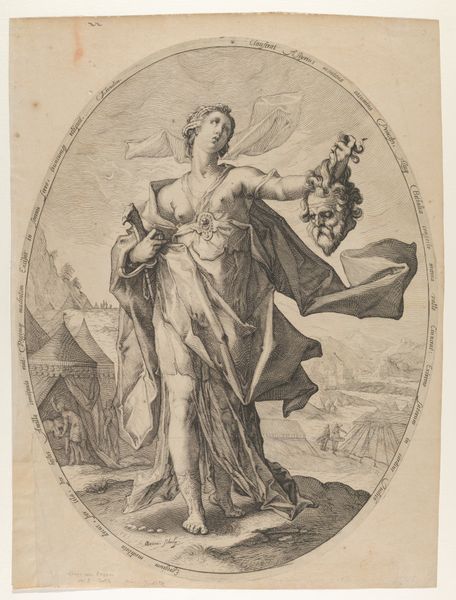
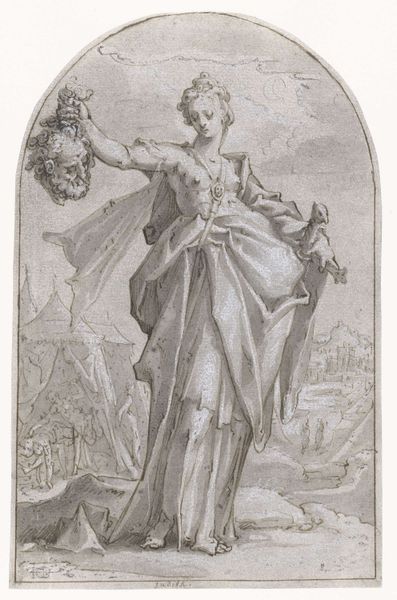
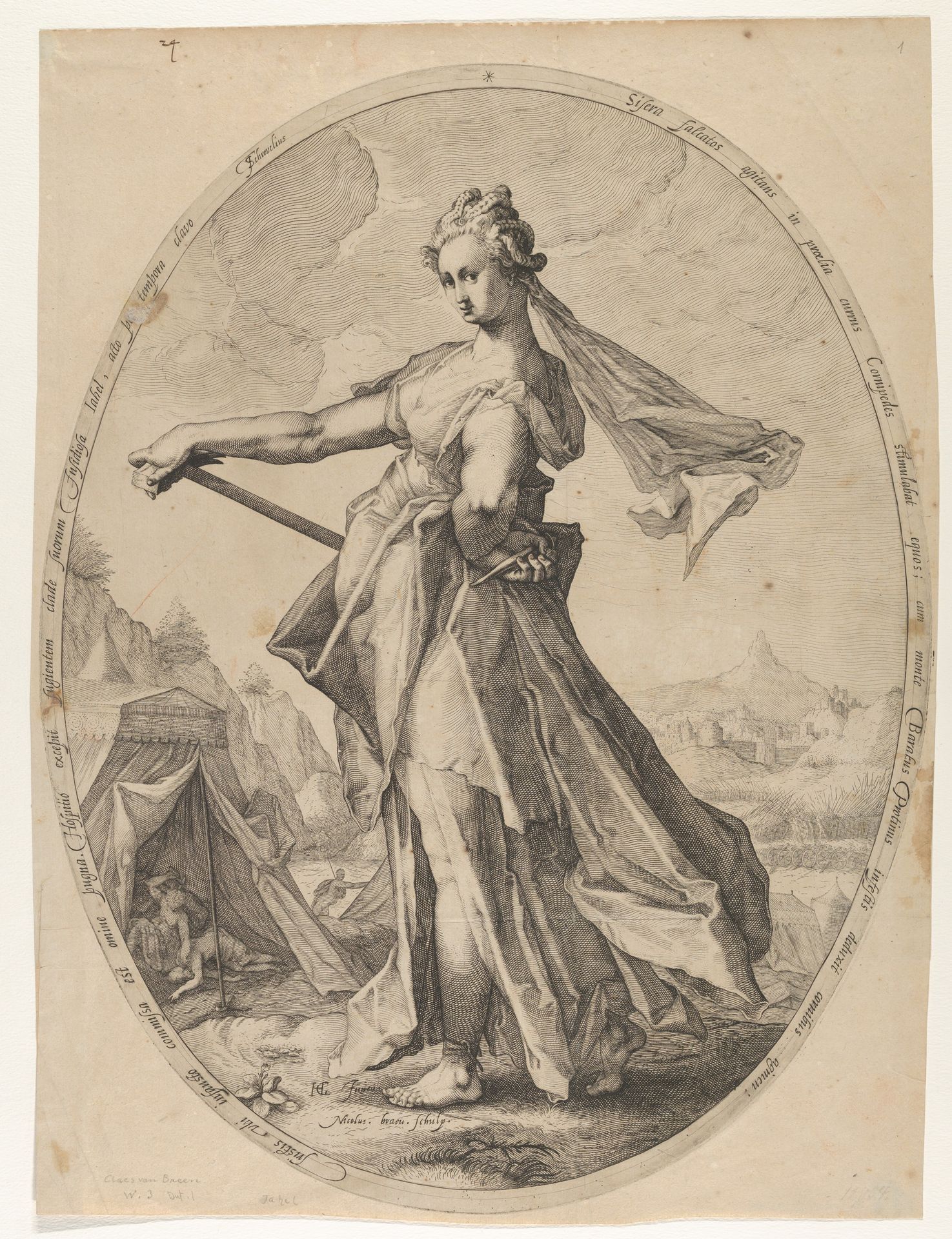
Nicolaes Braeu created this print, Jahel from Heroes and Heroines of the Old Testament, sometime around the late 16th century. Here, the biblical figure Jael is presented as an idealized heroine, a common trope in art of this period. But let’s consider the story behind the image. Jael, a woman, defeats Sisera, a military leader, by driving a tent peg through his skull while he sleeps. Braeu's choice to depict Jael as a physically imposing figure subtly challenges traditional gender roles, yet the romanticized style somewhat softens the violence of her act. The print reflects the cultural norms of its time, where biblical narratives were often used to reinforce moral and social values. By emphasizing Jael's strength and resolve, Braeu’s Jahel both upholds and subtly questions the period's expectations of women. The serene landscape in the background offers a stark contrast to the violent act she commits, adding a layer of complexity to her character and raising questions about the justifications for violence, even in the name of righteousness.
Jahel from Heroes and Heroines of the Old Testament
1592 - 1602


Artwork details
- Medium
- drawing, print, engraving
- Dimensions
- Sheet: 17 x 12 11/16 in. (43.2 x 32.3 cm) Plate (oval): 16 7/16 x 12 3/4 in. (41.8 x 32.4 cm)
- Location
- Metropolitan Museum of Art, New York, NY
- Copyright
- Public Domain
Tags
Comments
Share your thoughts
About this artwork
Nicolaes Braeu created this print, Jahel from Heroes and Heroines of the Old Testament, sometime around the late 16th century. Here, the biblical figure Jael is presented as an idealized heroine, a common trope in art of this period. But let’s consider the story behind the image. Jael, a woman, defeats Sisera, a military leader, by driving a tent peg through his skull while he sleeps. Braeu's choice to depict Jael as a physically imposing figure subtly challenges traditional gender roles, yet the romanticized style somewhat softens the violence of her act. The print reflects the cultural norms of its time, where biblical narratives were often used to reinforce moral and social values. By emphasizing Jael's strength and resolve, Braeu’s Jahel both upholds and subtly questions the period's expectations of women. The serene landscape in the background offers a stark contrast to the violent act she commits, adding a layer of complexity to her character and raising questions about the justifications for violence, even in the name of righteousness.
Comments
Share your thoughts