c. 19th century
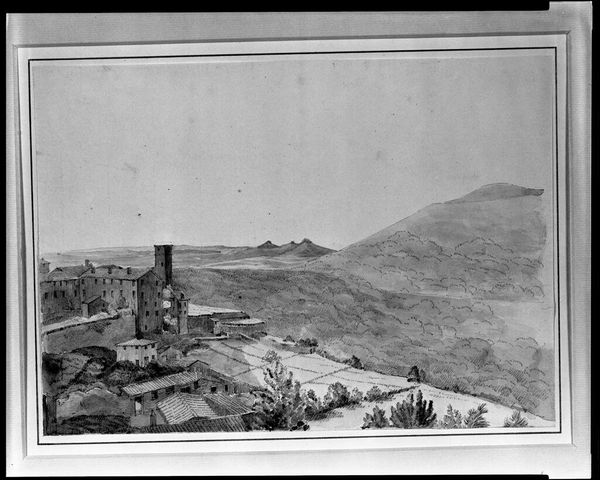
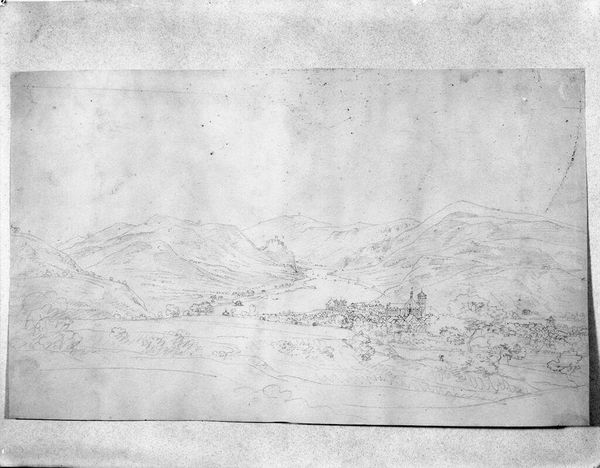
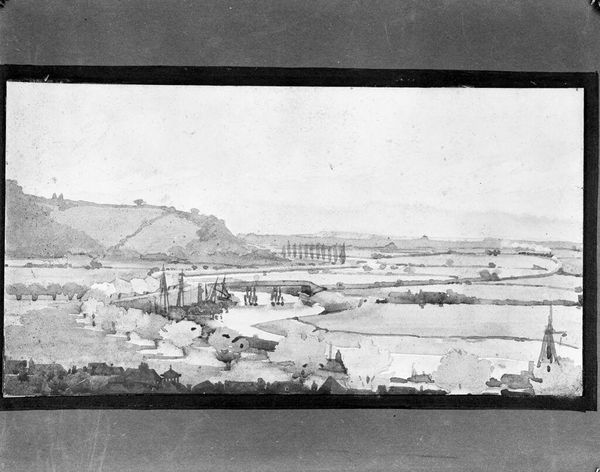
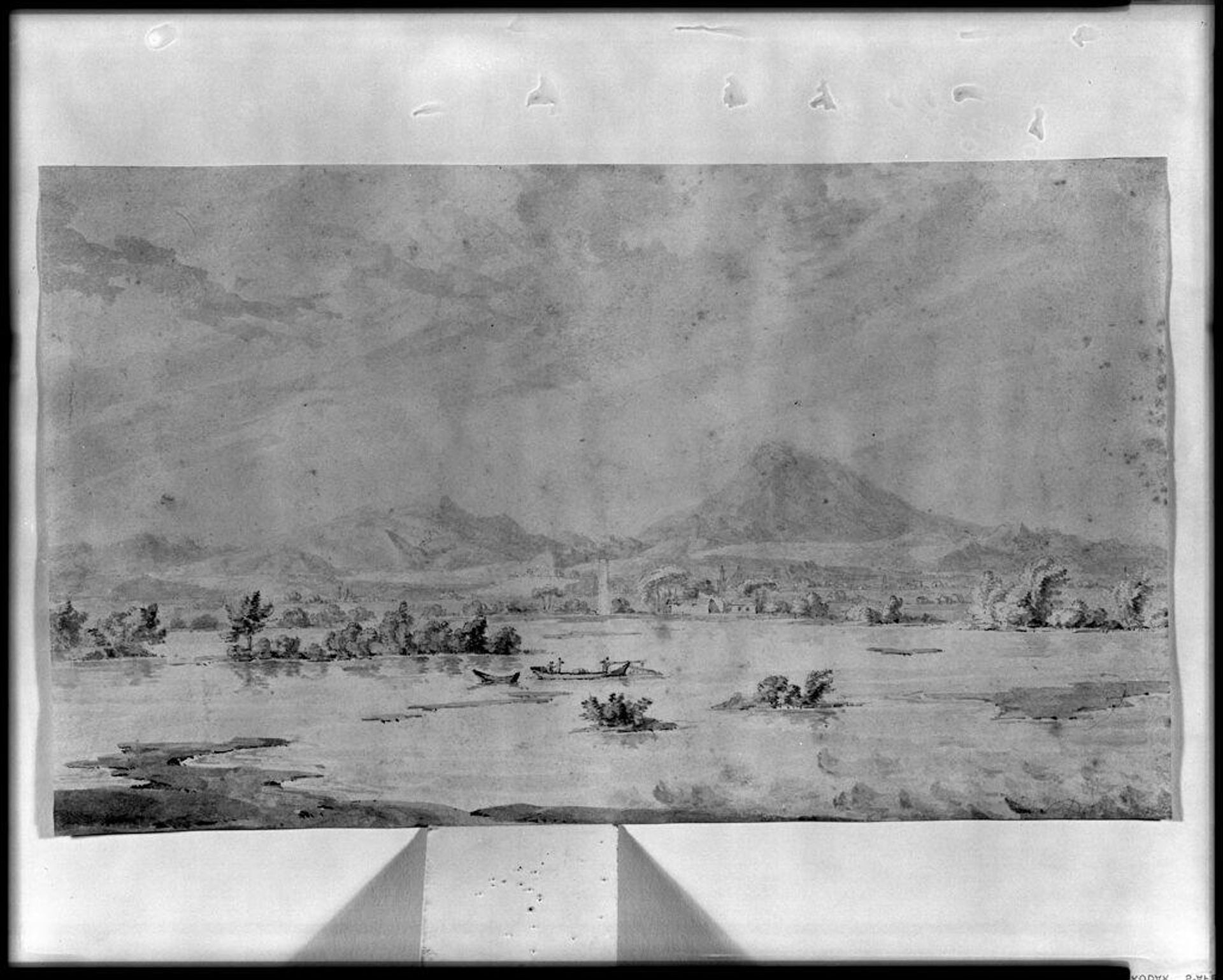
Landscape in the Dauphiné


Listen to curator's interpretation
Curatorial notes
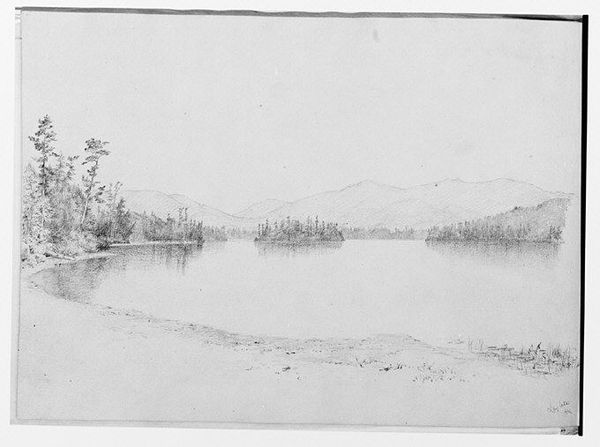
Editor: This is Charles François Daubigny's "Landscape in the Dauphiné" from the Harvard Art Museums. It's a delicate wash drawing, and I'm struck by how the artist uses such simple means to suggest depth and atmosphere. What compositional elements do you find most compelling? Curator: The artist’s masterful use of tonal gradation is intriguing. Notice how the darker washes define the foreground, gradually lightening as our eye moves toward the distant mountains. This creates a sense of spatial recession. Editor: Yes, the contrast really establishes the foreground. Curator: And consider the horizontal bands. The composition is structured around these distinct layers—water, land, and sky—each rendered with subtle variations in texture and value. Editor: It’s like a series of planes stacked one behind the other. I never considered landscape like that. Curator: Precisely. It’s a fascinating study in the interplay of form and space. Editor: I'll definitely be looking at landscapes differently now. Thanks for sharing your insight.