1836
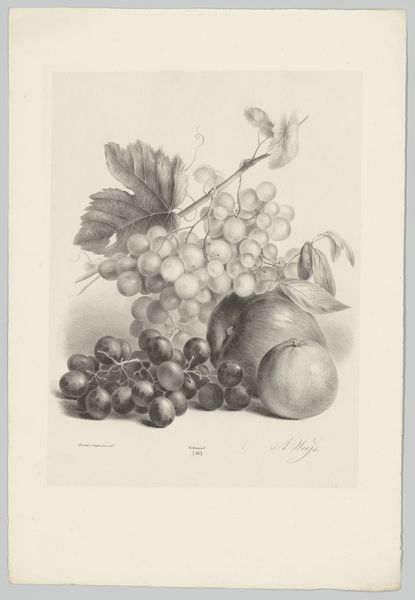
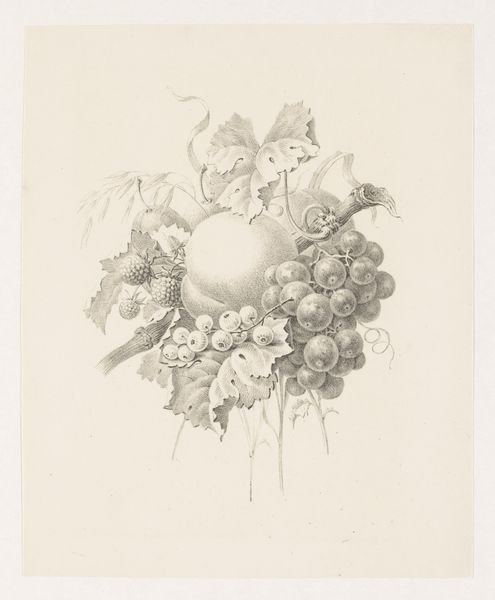
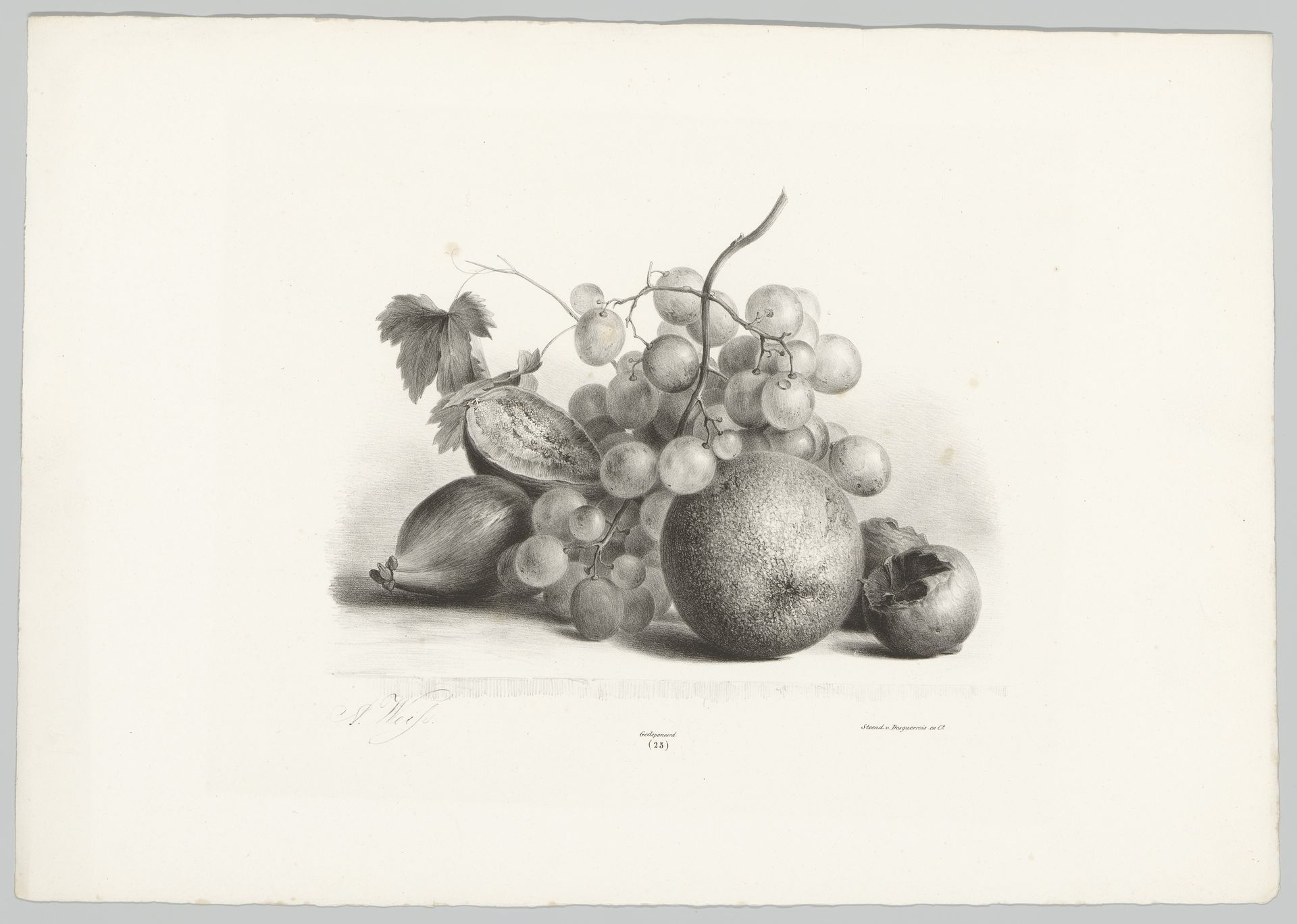
Vijgen, druiven en sinaasappel

Anton Weiss
1801 - 1851Location
RijksmuseumListen to curator's interpretation
Curatorial notes
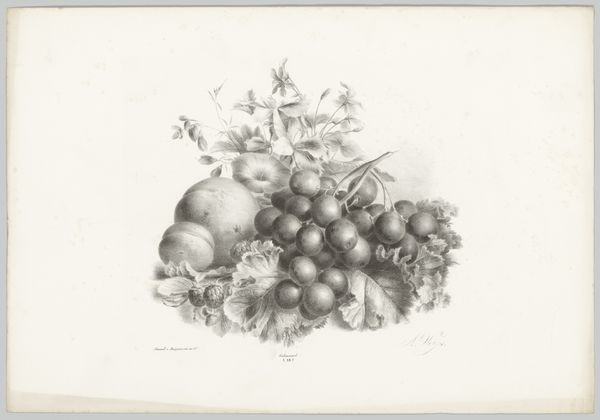
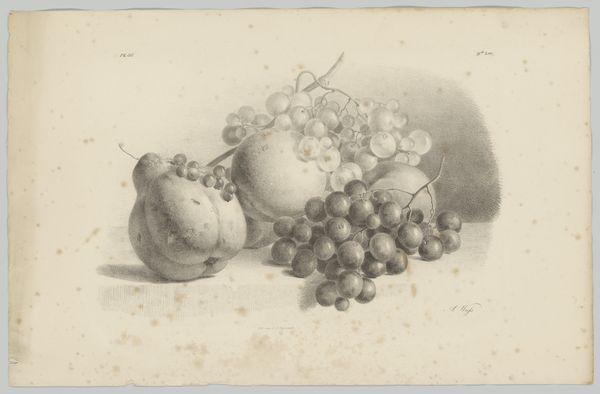
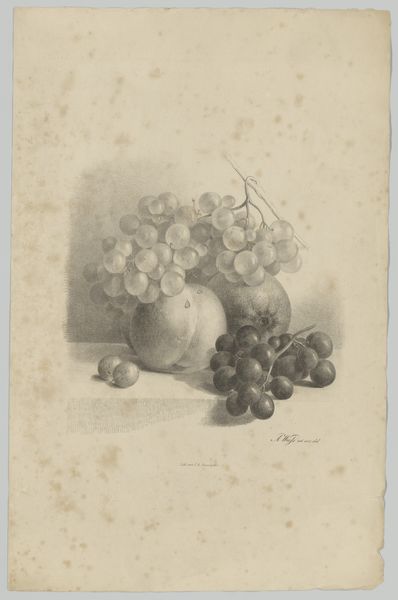
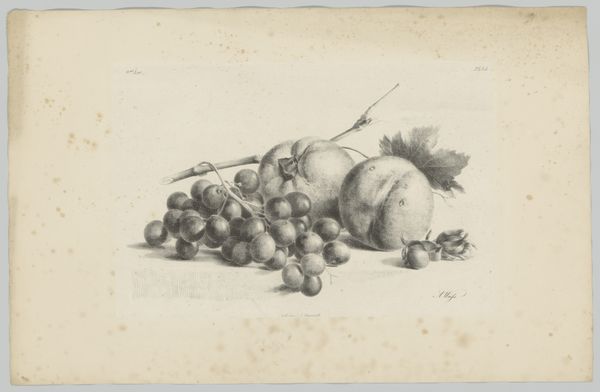
Anton Weiss rendered this lithograph of figs, grapes, and an orange in the early 19th century. The arrangement of these fruits carries echoes of classical and religious symbolism. Grapes, historically linked to Dionysus and later Christ, symbolize both earthly pleasure and spiritual communion. Think of Bacchus, crowned with vine leaves, his ecstatic revelry a precursor to the Christian Eucharist, where wine embodies the blood of Christ. The fig, often associated with knowledge and sexuality, is split open, revealing its inner seeds, reminiscent of the tale of Adam and Eve, who covered themselves with fig leaves after gaining knowledge of good and evil. This evokes a sense of awakened consciousness. Consider, too, how the still life, as a genre, allows artists to explore themes of mortality and the transience of earthly pleasures. This assemblage of fruit, pregnant with symbolic weight, engages us on a subconscious level, inviting contemplation of life's ephemeral beauty.