About this artwork
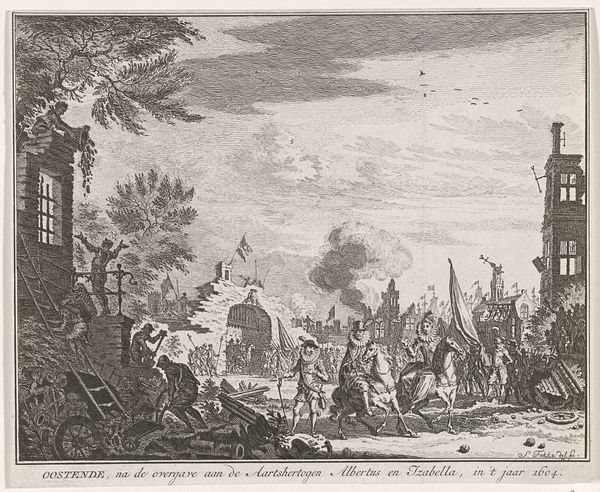
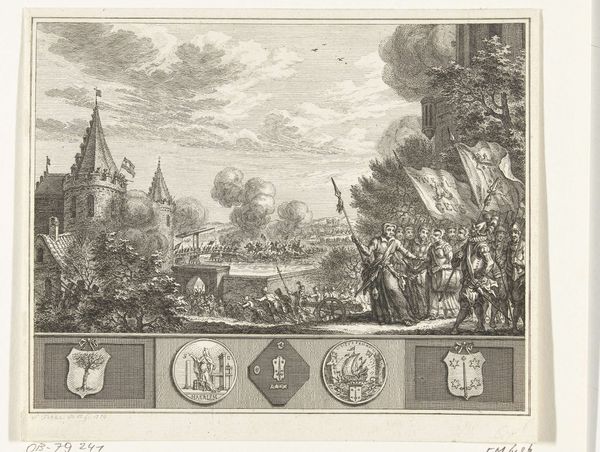
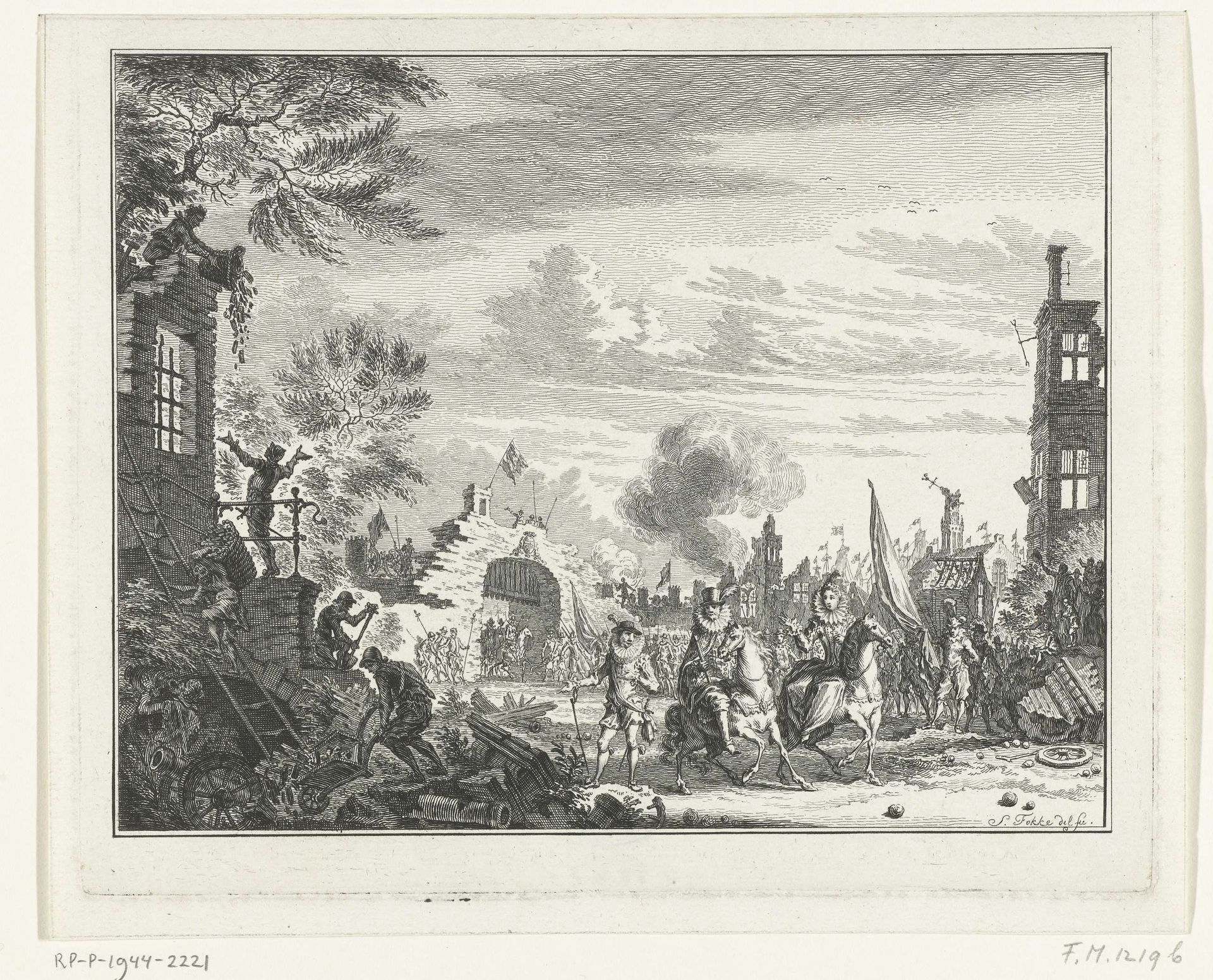
Simon Fokke’s engraving captures Albrecht and Isabella’s visit to the devastated city of Oostende in 1604. The stark contrast between the detailed foreground and the smoky, ruined background immediately draws the eye. Fokke masterfully uses line and form to convey the desolation of war. The composition is structured to emphasize the dichotomy between the rulers and the ruin. Note the diagonal lines that pull our gaze from the left foreground, filled with broken structures and distressed figures, towards the mounted royals in the center. This directional pull creates a visual tension, highlighting the distance—both physical and symbolic—between authority and suffering. The scale and detail diminish toward the horizon, reinforcing a sense of vast destruction. Consider how Fokke’s engraving, through its formal arrangement, not only documents a historical event but also offers a commentary on power, ruin, and the act of observation itself. The aesthetic choices invite ongoing interpretation.
Albrecht en Isabella bezoeken de verwoeste stad Oostende, 1604
1747 - 1759

Simon Fokke
1712 - 1784Location
RijksmuseumArtwork details
- Medium
- print, engraving
- Dimensions
- height 167 mm, width 205 mm
- Location
- Rijksmuseum
- Copyright
- Rijks Museum: Open Domain
Tags
Comments
Share your thoughts
About this artwork
Simon Fokke’s engraving captures Albrecht and Isabella’s visit to the devastated city of Oostende in 1604. The stark contrast between the detailed foreground and the smoky, ruined background immediately draws the eye. Fokke masterfully uses line and form to convey the desolation of war. The composition is structured to emphasize the dichotomy between the rulers and the ruin. Note the diagonal lines that pull our gaze from the left foreground, filled with broken structures and distressed figures, towards the mounted royals in the center. This directional pull creates a visual tension, highlighting the distance—both physical and symbolic—between authority and suffering. The scale and detail diminish toward the horizon, reinforcing a sense of vast destruction. Consider how Fokke’s engraving, through its formal arrangement, not only documents a historical event but also offers a commentary on power, ruin, and the act of observation itself. The aesthetic choices invite ongoing interpretation.
Comments
Share your thoughts