About this artwork
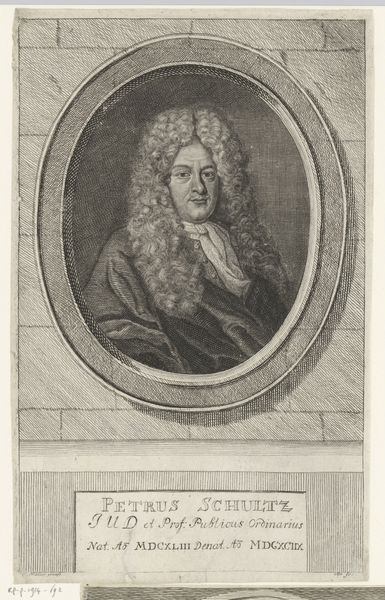
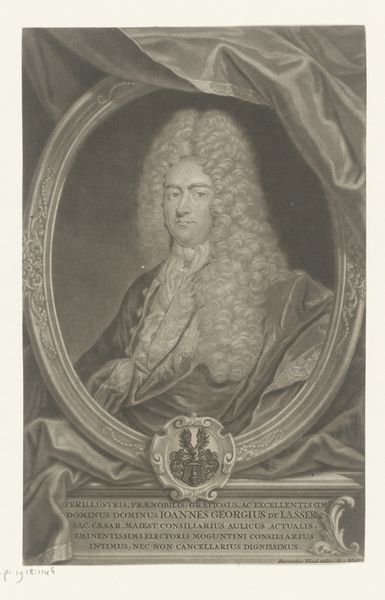
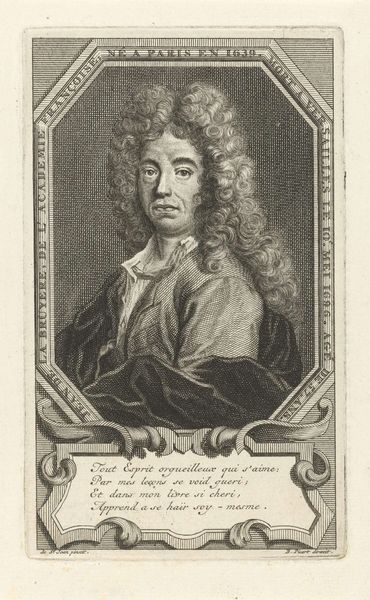
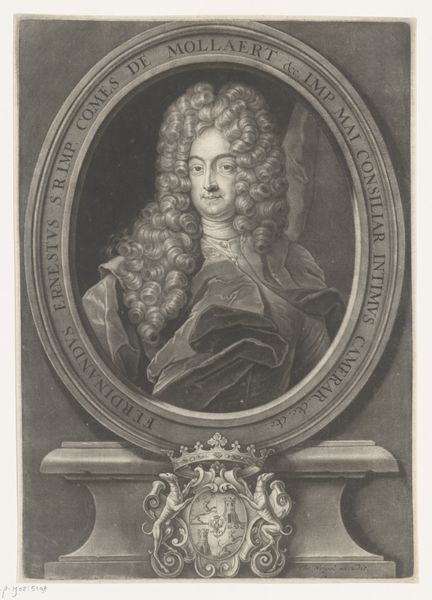
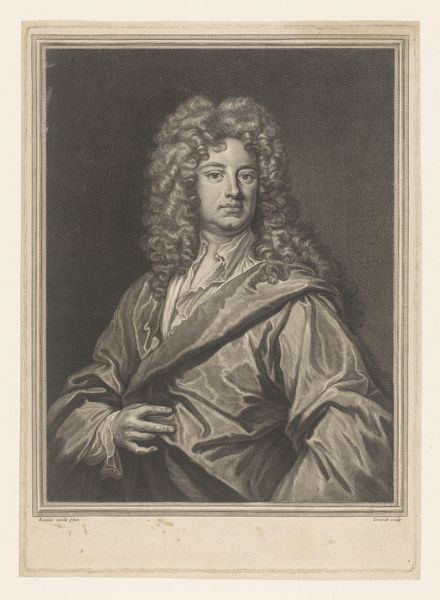
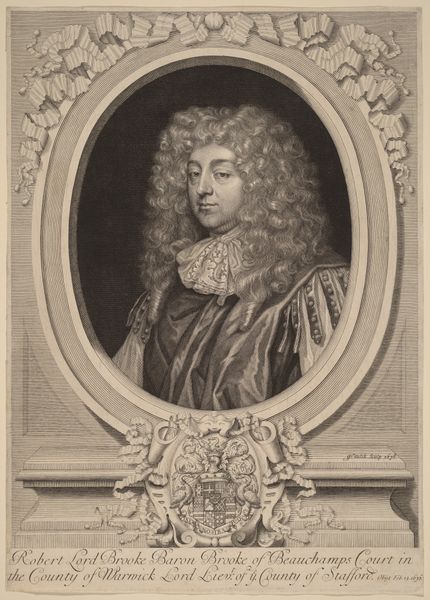
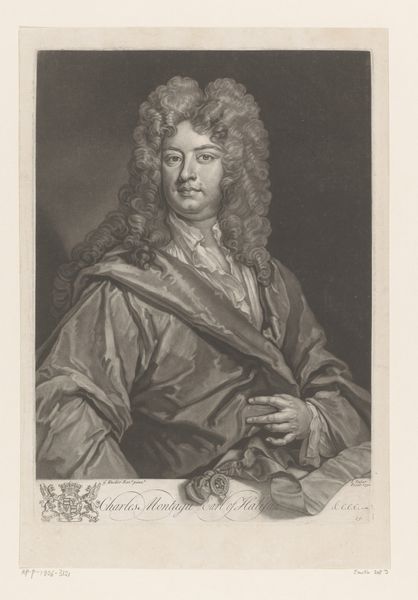
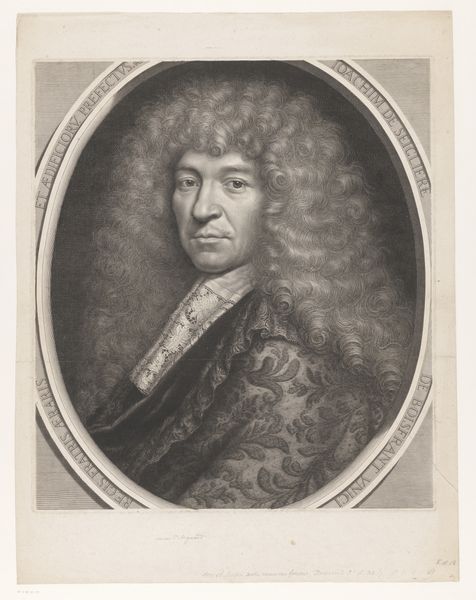
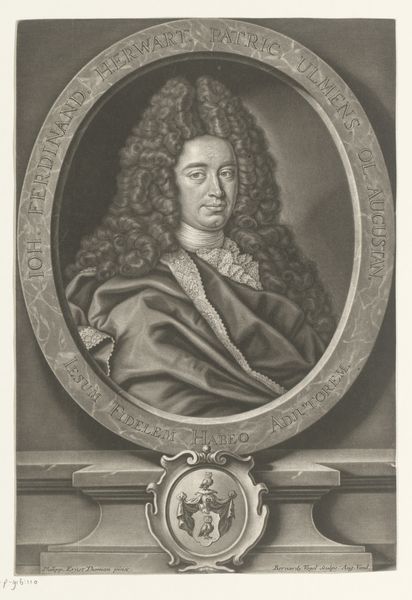
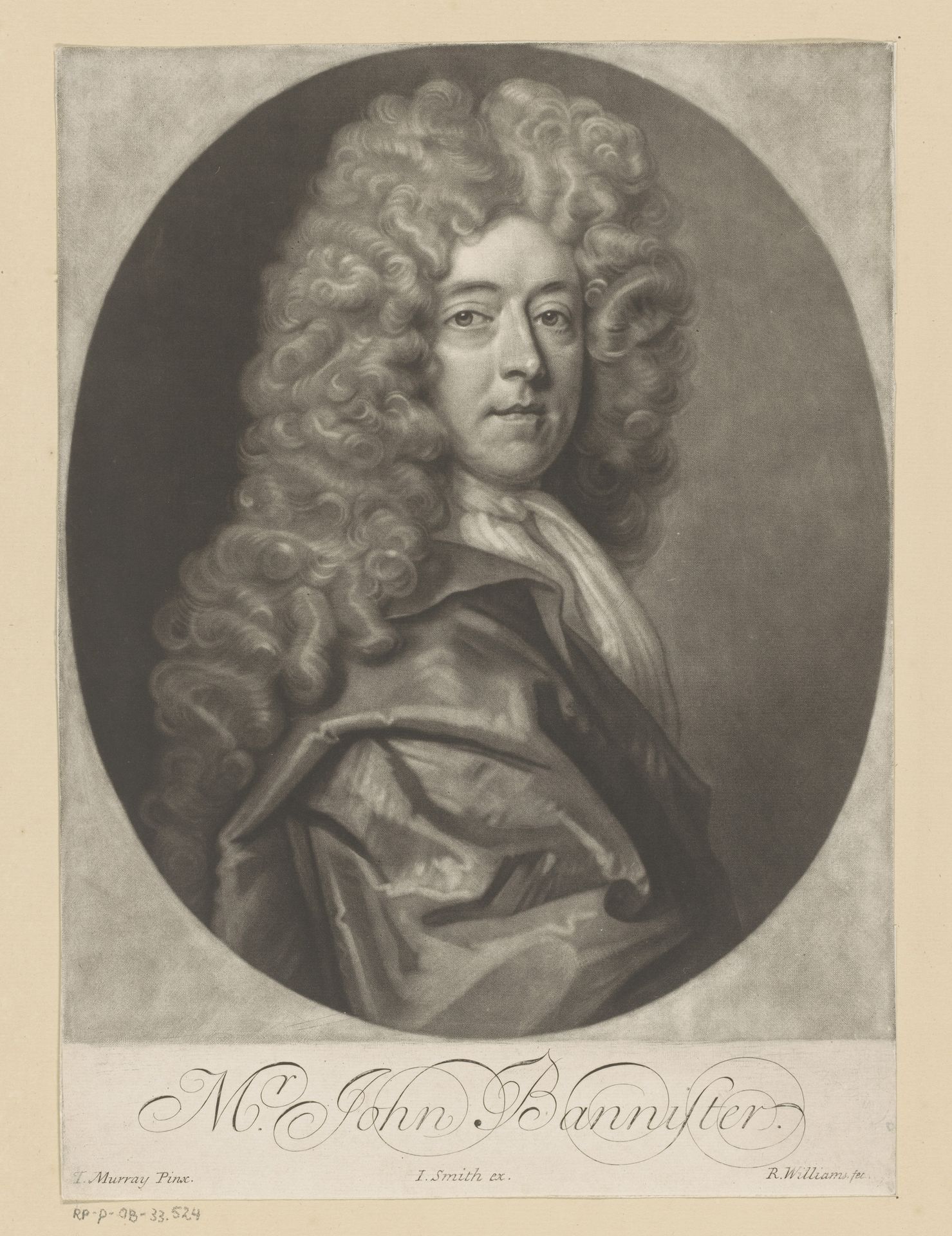
Curator: The print before us is a portrait of John Bannister, dating from somewhere between 1690 and 1704. It's rendered through engraving, giving it a unique textural quality. Editor: It feels… self-conscious. He seems aware of being seen, carefully composed. Curator: It certainly projects a carefully constructed image. Consider the politics of portraiture at the time; these images weren't simply likenesses. What might the wig signify in terms of power and status during this era? Editor: Oh, absolutely! That elaborate wig speaks volumes. Think of the symbols embedded in its very shape, the controlled curls suggesting order, reason, and a mastery of nature itself – all crucial virtues for the ruling class at the time. Curator: And look at how the drapery falls – it isn't merely decorative. Its cascade around his shoulders mirrors the weight and importance he carries in society. How does this portrait work within larger socio-political frameworks? Editor: Indeed, it reminds me of other engraved portraits of the period— almost a type that stood for belonging to a specific moment in history. Beyond wealth, it represents the ideals of a specific social strata and it evokes associations with intellectual prowess. Curator: I agree, the engraving adds another layer of significance. The act of creating this image through that medium reflects the mechanical reproduction and dissemination of power in a rapidly changing world. How do you see this artwork functioning as a tool of social control? Editor: It's a subtle but persistent form of affirmation, creating and perpetuating an image that reinforces the structures in place. This makes me wonder about how Bannister saw himself. Is this a true reflection or is it wish fulfillment? Curator: That ambiguity, I think, is at the heart of the piece's complexity. Even now, centuries later, the question of representation versus reality remains resonant. Editor: Yes, and I find that tension profoundly captivating. Curator: It encourages us to critically examine who holds power, how it's visualized, and what systems of belief those representations support. Editor: And for me, reflecting on its symbolic layers adds depth to what could simply be seen as just another portrait.

Artwork details
- Medium
- print, engraving
- Dimensions
- height 348 mm, width 252 mm
- Copyright
- Rijks Museum: Open Domain
Tags
portrait
baroque
charcoal drawing
pencil drawing
portrait drawing
engraving
Comments
No comments
About this artwork
Curator: The print before us is a portrait of John Bannister, dating from somewhere between 1690 and 1704. It's rendered through engraving, giving it a unique textural quality. Editor: It feels… self-conscious. He seems aware of being seen, carefully composed. Curator: It certainly projects a carefully constructed image. Consider the politics of portraiture at the time; these images weren't simply likenesses. What might the wig signify in terms of power and status during this era? Editor: Oh, absolutely! That elaborate wig speaks volumes. Think of the symbols embedded in its very shape, the controlled curls suggesting order, reason, and a mastery of nature itself – all crucial virtues for the ruling class at the time. Curator: And look at how the drapery falls – it isn't merely decorative. Its cascade around his shoulders mirrors the weight and importance he carries in society. How does this portrait work within larger socio-political frameworks? Editor: Indeed, it reminds me of other engraved portraits of the period— almost a type that stood for belonging to a specific moment in history. Beyond wealth, it represents the ideals of a specific social strata and it evokes associations with intellectual prowess. Curator: I agree, the engraving adds another layer of significance. The act of creating this image through that medium reflects the mechanical reproduction and dissemination of power in a rapidly changing world. How do you see this artwork functioning as a tool of social control? Editor: It's a subtle but persistent form of affirmation, creating and perpetuating an image that reinforces the structures in place. This makes me wonder about how Bannister saw himself. Is this a true reflection or is it wish fulfillment? Curator: That ambiguity, I think, is at the heart of the piece's complexity. Even now, centuries later, the question of representation versus reality remains resonant. Editor: Yes, and I find that tension profoundly captivating. Curator: It encourages us to critically examine who holds power, how it's visualized, and what systems of belief those representations support. Editor: And for me, reflecting on its symbolic layers adds depth to what could simply be seen as just another portrait.
Comments
No comments